The headlines are screaming. You’ve seen the banners flashing "Supply Shock" and "Blockade" in blood-red text. Al Jazeera and the rest of the legacy press are dusting off their 1973 playbooks, convinced that a U.S. blockade of Iran and a surge past $103 a barrel signals a global cardiac arrest. They want you to believe we are one tanker skirmish away from societal collapse.
They are wrong. Recently making headlines in this space: The Mechanics of Private Credit and the Suppression of Volatility.
This isn’t the 1970s. It isn’t even 2008. The obsession with "geopolitical risk premiums" is a relic—a ghost story told by traders who need volatility to justify their commissions and by journalists who need a crisis to drive clicks. While the mainstream media fixates on the Strait of Hormuz, they are missing the structural reality: the world has developed a terrifyingly high pain threshold for expensive crude, and the "blockade" is more of a psychological speed bump than a brick wall.
The Myth of the Iranian Death Grip
The prevailing narrative suggests that removing Iranian barrels from the market creates an unfillable void. This assumes the global energy market is a fragile, static glass sculpture. It isn’t. It’s a self-healing organism. Additional insights into this topic are explored by Harvard Business Review.
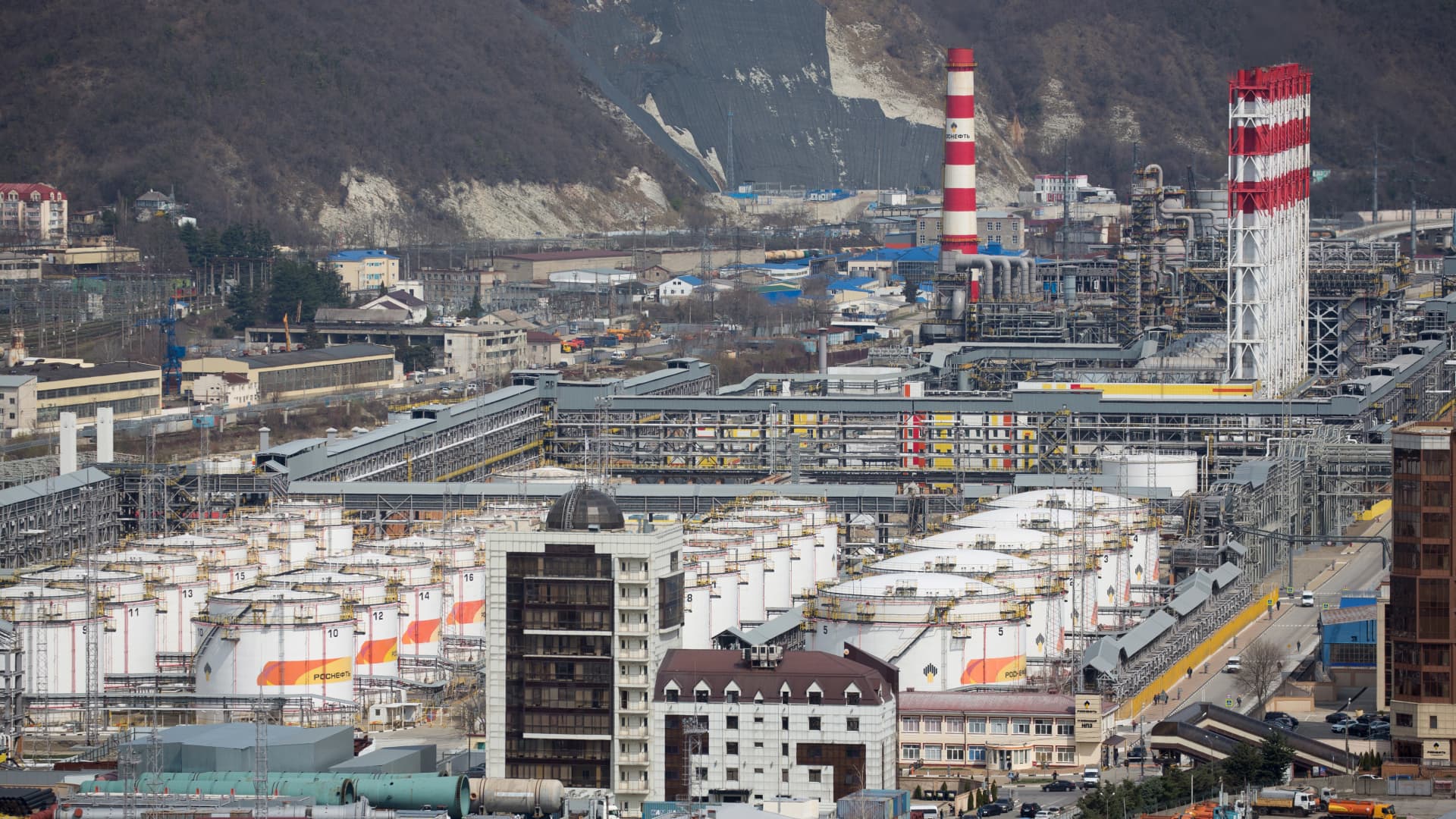
When the U.S. announces a blockade, the immediate $5 or $10 jump is almost entirely speculative "fear juice." It’s the sound of algorithms reacting to keywords, not the sound of actual dry pumps. Iran’s official exports hover around 1.5 million barrels per day. In a global market consuming over 100 million barrels daily, that is a rounding error.
More importantly, "blockade" is a flexible term in the shadow economy. I’ve watched commodity desks navigate these waters for a decade; "ghost fleets" don't disappear because of a press release from the State Department. Dark ship-to-ship transfers in the Malacca Strait will continue. China, the primary destination for this crude, doesn't recognize U.S. unilateral sanctions as binding law. They see it as a clearance sale. The oil will flow; the only thing that changes is the complexity of the invoice.
Why $100 Crude is the New $60
We’ve been conditioned to view triple-digit oil as a harbinger of the apocalypse. This is an outdated benchmark that ignores inflation and efficiency.
If you adjust the $147 peak of 2008 for inflation, you’re looking at well over $210 in today’s currency. At $103, oil is actually "cheap" in historical, inflation-adjusted terms. Furthermore, the energy intensity of global GDP has plummeted. We produce more "stuff" with less oil than at any point in human history.
The Efficiency Trap
- The Fleet Transition: Even without the EV hype, internal combustion engines are twice as efficient as they were thirty years ago.
- The Permian Buffer: The U.S. is now the world’s largest producer. The "shale gale" didn't just provide more oil; it provided short-cycle oil. Unlike deep-water rigs that take a decade to build, shale drillers can turn the taps on in months.
- Strategic Reserves: The SPR (Strategic Petroleum Reserve) is often mocked when it's drawn down, but its mere existence acts as a psychological ceiling on prices.
The panic over $103 oil is like panicking because a gallon of milk now costs more than it did in 1995. The world has already adjusted. The real danger isn't the price of the barrel; it's the volatility of the narrative.
The China Factor: The Silent Liquidity Provider
The competitor pieces love to frame this as a "US vs. Iran" showdown. That is a mid-twentieth-century perspective. The real story is Beijing.
China has spent the last five years building the world’s most massive strategic and commercial oil stockpiles. They aren't just buying for today; they are hoarding for a decade. When the U.S. squeezes Iran, China doesn't panic—they negotiate a deeper discount.
By forcing Iranian oil into the "gray market," the U.S. isn't stopping the oil; it is merely subsidizing the Chinese industrial machine. China gets the energy it needs at a price lower than Brent or WTI, while Western consumers pay the "democracy premium" at the pump. The blockade is essentially a tax on Western allies that transfers wealth directly to the East.
The ESG Irony
Here is the truth no one wants to admit: the "Green Revolution" made this price spike inevitable, and now it’s making it irrelevant.
By starving oil majors of capital for long-term exploration (CAPEX), ESG (Environmental, Social, and Governance) mandates created a supply floor. We stopped looking for the "big" oil fields five years ago. Now, the market is tight by design.
But here is the twist: because the West is so hell-bent on electrification, the demand for oil is becoming "de-coupled" from economic growth in the G7. In the past, high oil prices killed the economy. Today, high oil prices just accelerate the installation of heat pumps and solar panels. The "oil weapon" is being dismantled by the very people who fear it most.
Stop Asking if Oil Will Hit $120
The question is wrong. The price of the barrel is a distraction. You should be asking about the crack spread—the difference between the price of crude and the price of the refined products like diesel and jet fuel.
You can have $80 oil and a collapsing economy if refineries are offline. Conversely, you can have $120 oil and a booming economy if refinery capacity is high and the "spread" is manageable. The blockade of Iran affects the raw feedstock, but it doesn't touch the global refining bottleneck, which is the true source of pain.
If you want to understand the modern energy market, stop looking at the maps of the Persian Gulf. Start looking at the maintenance schedules of refineries in New Jersey and Gujarat. That’s where the real wars are won and lost.
The Uncomfortable Truth About "Risk"
Wall Street analysts love to talk about "geopolitical risk" because it’s a variable they can’t quantify, which means they can never be proven wrong. If prices go up, they say "risk realized." If prices go down, they say "risk priced in."
It’s a shell game.
The reality is that a blockade is an act of desperation, not strength. It is an admission that diplomacy has failed and that the U.S. is relying on a 20th-century tool to manage a 21st-century commodity. The market knows this. That’s why, despite the "surge," there is no true panic in the long-dated futures contracts. The "smart money" isn't betting on $150 oil. They are betting that this flare-up will burn out, just like every other "unprecedented" crisis of the last decade.
Practical Realities for the Investor
If you are dumping stocks or hoarding cash because of a headline about a blockade, you are the "exit liquidity" for the pros.
- Ignore the Brent/WTI Delta: The spread between these two benchmarks will widen as the blockade creates localized gluts and shortages. It’s a trade for the big houses, not a signal for your 401k.
- Watch the Dollar: Oil is priced in Greenbacks. Often, a "surge" in oil is just a "slump" in the dollar. You aren't seeing an energy crisis; you're seeing currency debasement.
- The "Peak Oil" Fallacy: We aren't running out of oil; we are running out of cheap ways to transport it under political duress.
The U.S. blockade of Iran is a theatrical performance. It allows Washington to look "tough" while knowing full well that the global economy is too interconnected to actually stop the flow of molecules. The oil will find its way to a burner tip somewhere in the world. It always does.
The only thing that has truly "surged" is the level of noise. If you want to survive this market, stop listening to the sirens and start looking at the balance sheets. The world isn't ending at $103 a barrel. It's just getting more expensive to pretend that geography still matters in a digital age.
The blockade is a ghost. Stop being afraid of the dark.