The global energy market is currently held hostage by a 21-mile-wide strip of water and a geopolitical stalemate that shows no signs of breaking. Brent crude futures surged to $126 a barrel this week, a level of volatility not seen since the initial shocks of 2022, after President Trump signaled that the U.S. naval blockade of Iranian ports could persist for "months." This is no longer just a diplomatic skirmish; it is a fundamental rewiring of global trade routes that has already removed approximately 20 million barrels of oil per day from the primary seaborne market.
While the administration argues that American energy independence provides a shield against this chaos, the reality on the ground—and at the pump—suggests a much more precarious situation. The national average for gasoline has climbed to $4.30 a gallon, a 44% increase since the conflict began in late February. By effectively sealing the Strait of Hormuz, the administration has not just isolated Iran; it has inadvertently triggered a massive diversion of U.S. domestic supply to hungry Asian markets, driving up costs for American consumers in a classic "bathtub" effect where a drain anywhere lowers the level everywhere.
The Blockade as a Blunt Instrument
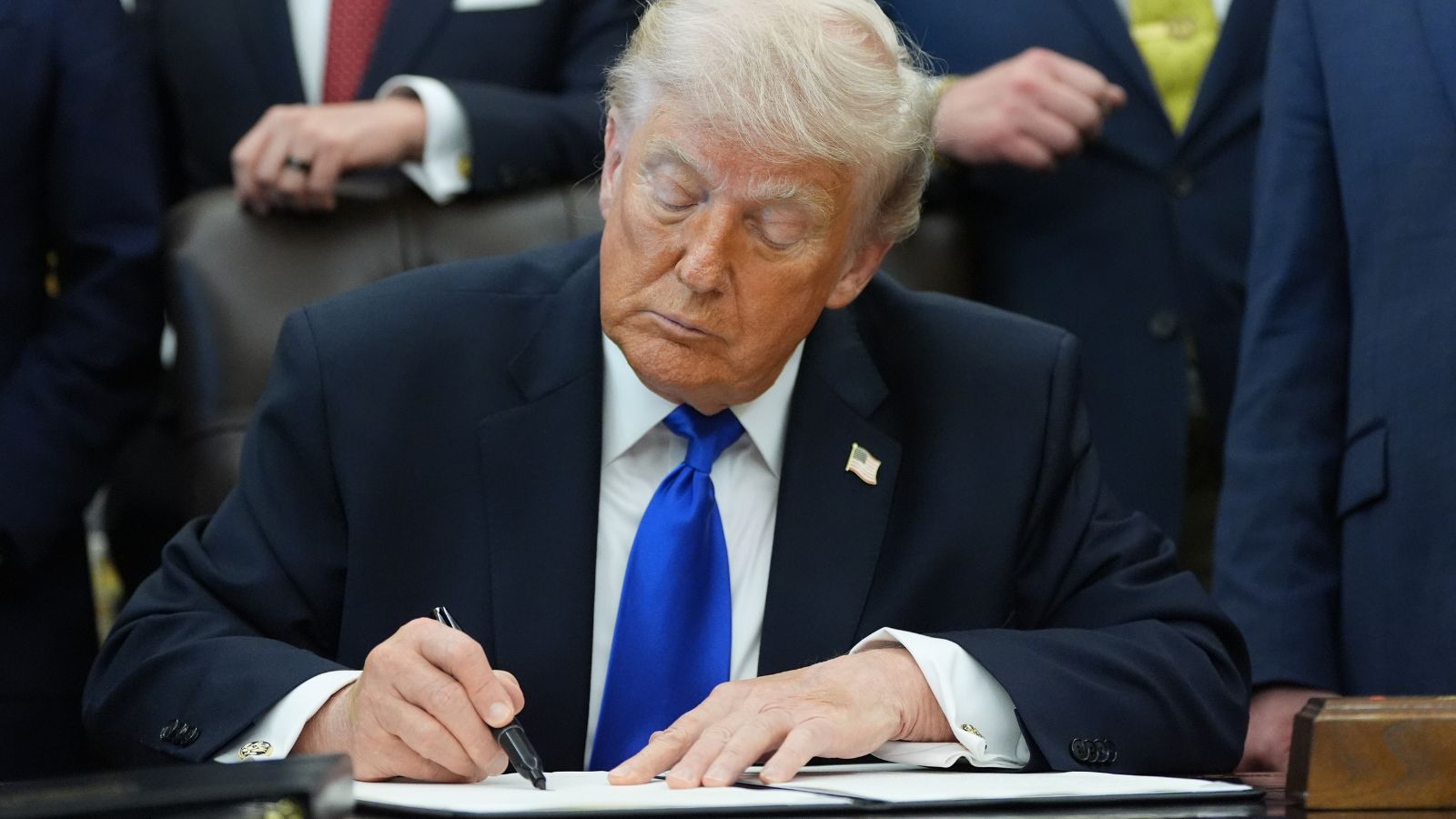
The White House has shifted its strategy from active bombardment to what the President describes as a "choking" maneuver. By maintaining a naval blockade on Iranian ports, the U.S. intends to force Tehran to cap its wells once storage facilities at Kharg Island reach capacity. However, this strategy ignores the collateral damage inflicted on neutral neighbors.
The Strait of Hormuz is the exit ramp for roughly 25% of the world’s seaborne oil. When the U.S. blockades Iranian terminals, Iran responds by making the entire Strait impassable for other tankers. This has left the production of Kuwait, Iraq, and the United Arab Emirates—collectively representing over 10 million barrels per day—stranded behind a wall of warships and sea mines.
The Infrastructure Gap
There is a common misconception that pipelines can easily bypass this chokepoint. They cannot. Currently, only Saudi Arabia and the UAE possess operational pipelines capable of redirecting crude to the Red Sea or the Gulf of Oman. Even at maximum throughput, these routes can only handle about 3.5 to 5.5 million barrels per day, leaving a massive deficit that the global market cannot simply "absorb."
The Qatar Factor
The crisis has extended beyond oil into the realm of heating and electricity. Qatar, the world’s second-largest LNG exporter, sends nearly all of its gas through the Strait. With the blockade in effect, QatarEnergy has been forced to declare force majeure on exports. In Asia, spot prices for LNG have skyrocketed by over 140%, threatening industrial output in Japan and South Korea. This isn't just an "oil problem"—it is a total energy supply chain failure.
Why Domestic Production Won't Save the U.S. Consumer
A persistent talking point from the administration is that the U.S. is the world’s top oil producer, and therefore immune to Middle Eastern instability. This is technically true but economically irrelevant. Oil is a global fungible commodity. When the Strait of Hormuz closes, Asian refiners who normally buy Gulf crude begin outbidding American refiners for barrels produced in Texas and North Dakota.
Data from the Energy Information Administration (EIA) for the final week of April showed a massive drawdown of 6.2 million barrels from U.S. inventories. These barrels aren't being used at home; they are being loaded onto tankers bound for Asia, where prices are high enough to justify the shipping costs. This "export drain" is the mechanism through which global price shocks are imported directly into the American Midwest and Mountain states. In states like Utah and Ohio, gas prices have jumped by more than 58% since the start of the war.
The Shadow Economy of the Blockade
As the official market tightens, a shadow market is beginning to emerge. Investigative tracking of maritime data shows that while baseline throughput has plummeted, a handful of "ghost tankers" continue to attempt the passage under various flags of convenience.
- Risk Premiums: Freight rates for the few tankers willing to navigate the Gulf have quadrupled.
- Insurance Blackouts: Most major maritime insurers have withdrawn coverage for the region, meaning any ship entering the Strait is effectively "self-insured" or backed by state guarantees from countries like China.
- Refining Bottlenecks: Refineries in Singapore and India are cutting runs by 6 million barrels per day because they simply cannot secure the specific grades of heavy sour crude that the Gulf provides.
This shortage of specific crude types has doubled the price of kerosene-based products, including diesel and jet fuel. The ripple effect is hitting the logistics industry first, with airfares rising and shipping surcharges becoming the new normal for global retail.
The Stalemate Dynamics
Tehran has countered the U.S. blockade with a proposal to reopen the Strait in exchange for a full ceasefire and the lifting of all naval restrictions. The Trump administration has rejected this, betting that Iran will collapse under the weight of its own unexportable oil. It is a high-stakes game of economic chicken.
The U.S. military estimates the cost of maintaining this posture at roughly $25 billion, but the real cost is being paid by the global economy. The European Central Bank has already slashed GDP growth projections, warning that energy-intensive industries face a "technical recession" if the blockade persists through the summer.
There is no "clean" way to blockade a global chokepoint. Every day the Strait remains contested is another day that the global economy bleeds capital into a supply void. The administration may find that "choking" the enemy is impossible without also suffocating the allies—and the voters—who rely on the very energy they are trying to weaponize.
The market is no longer looking for a diplomatic "win." It is looking for a way to get 20 million barrels of oil back into the pipes before the global storage tanks run dry. At $126 a barrel, the world is paying for a war it never voted for, and the bill is only getting higher.