ZSL is about to turn 200, and like any aging titan of industry, it is reacting to its mid-life crisis by building a monument to itself. The announcement of a new "Vet Gallery" at London Zoo is being framed as an inspiring tribute to two centuries of clinical excellence. It is actually a textbook case of institutional navel-gazing.
While the biodiversity crisis accelerates, one of the world's most influential scientific charities is spending its social and financial capital on a museum exhibit. It is the equivalent of a hospital building a wing dedicated to 19th-century stethoscopes while the emergency room is overflowing. If you found value in this article, you should look at: this related article.
The "lazy consensus" here is that celebrating heritage automatically fuels future progress. It doesn't. It creates a feedback loop where organizations fall in love with their own origin stories rather than the brutal, messy reality of modern extinction rates.
The Veterinary Industrial Complex
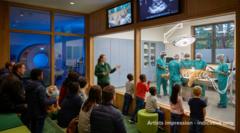
The proposed gallery focuses on the clinical precision of zoo medicine. This is a PR masterstroke designed to humanize the institution. If you see a vet in a lab coat saving a tiger, you stop asking why that tiger is in a cage in central London in the first place. For another perspective on this story, see the recent coverage from The Guardian.
I have watched NGOs blow millions on "educational hubs" that do nothing for the species on the ground. We have fetishized the process of conservation—the labs, the whiteboards, the shiny surgical suites—while the outcome remains a downward trend on a population graph.
The hard truth? Clinical veterinary medicine at the individual level is a luxury. True conservation happens at the landscape level. It is dirty, political, and involves stopping bulldozers, not just suturing wounds. By centering the "Vet Gallery," ZSL is shifting the narrative from systemic environmental protection to individual clinical intervention. It is easier to sell a ticket to see a high-tech animal hospital than it is to explain the complex, often failing politics of habitat preservation in the Cerrado or the Mekong Delta.
The Cost of Looking Backward
Financial reports from major conservation bodies often reveal a staggering "heritage tax." When an institution hits a milestone like 200 years, the temptation to spend on archives, galas, and galleries becomes irresistible.
But let’s look at the opportunity cost.
- What is the burn rate for a permanent gallery in a prime London location?
- How many anti-poaching units in the field could that capital fund for a decade?
- How many hectares of peatland could be bought and protected with the budget allocated for "interactive displays"?
We are told these galleries inspire the next generation. This is a dated assumption. The next generation isn't looking for a curated walk through the 1820s; they are looking for evidence that the planet won't be a husk by the time they hit 40. A gallery dedicated to how well we’ve treated animals in the past feels like a distraction from the fact that we are currently overseeing the sixth mass extinction.
The Myth of the "Inspirational Exhibit"
The industry standard for zoo-based education is the "Knowledge-Attitude-Behavior" model. The theory suggests that if people see a vet gallery (Knowledge), they will care more (Attitude) and then donate or change their lifestyle (Behavior).
Data from the Journal of Environmental Education and similar peer-reviewed sources suggests this link is tenuous at best. Most visitors experience a "hedonic lift" during the visit—they feel good—but their behavior remains unchanged once they hit the gift shop.
If ZSL wanted to be truly radical for its bicentenary, it wouldn't build a gallery. It would dismantle its own bureaucracy. It would take the millions earmarked for this celebration and put it into a high-risk, high-reward venture fund for grassroots rewilding projects where the ZSL brand acts as a shield for local activists. Instead, we get a walk-through history lesson.
The Professionalization of Failure
There is a specific kind of comfort in professionalized conservation. It feels safe. It has peer-reviewed papers and clean surgical scrubs. ZSL is excellent at this. Their science is top-tier. But excellence in science is not the same as success in conservation.
I’ve seen this play out in the tech world and the non-profit sector alike: when you can’t move the needle on the main problem, you start measuring and celebrating the peripheral activities. We can’t stop the illegal wildlife trade effectively, so we build a gallery showing how good we are at treating the animals we manage to intercept. It is a victory lap in a race we are losing.
The "People Also Ask" Fallacy
Does ZSL need a new gallery to stay relevant?
No. It needs a new gallery to justify its gate prices. In an era of high-definition immersive media and VR, the physical "gallery" is an archaic format. If the goal is truly education, you don't build a room in London; you digitize the data and give it to every school in the global south for free.
Is 200 years of history worth celebrating?
Only if the history is used as a confession, not a trophy. The early history of ZSL and all colonial-era zoos is a history of extraction. A "Vet Gallery" risks sanitizing that extraction by focusing on the "care" provided after the fact.
The Pivot to Reality
The contrarian approach to a bicentenary would be a "Transparency Gallery."
- Show the failed projects.
- Show the species that went extinct on our watch despite the best veterinary care.
- Show the carbon footprint of flying animals around the world for breeding programs that often result in stagnant populations.
That would be brave. That would be "industry-leading."
The current plan is simply more of the same—a polished, professionalized look at the past to avoid the terrifying uncertainty of the future. We don't need more galleries. We need more wild space. Every pound spent on a glass case in London is a pound not spent on a fence, a forest guard, or a legislative lobbyist.
If you want to celebrate 200 years of ZSL, don't buy a ticket to a new exhibit. Demand to know why, after two centuries of expertise, the natural world is in a worse state than when the gates first opened.
Stop building monuments to the process. Start funding the results.