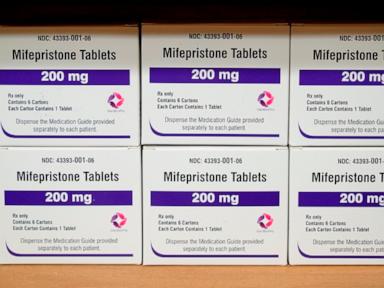
You’d think after the dust settled on the overturning of Roe v. Wade, the legal landscape would’ve found some kind of equilibrium. Instead, we’re looking at a messy, high-stakes tug-of-war over a tiny pill that fits in the palm of your hand.
The battle over mifepristone isn’t just a legal footnote; it’s the primary engine driving political strategy for the 2024 midterms. For voters, it’s no longer about abstract constitutional rights. It’s about whether a package can show up in their mailbox. For politicians, it’s a math problem: how to fire up the base without alienating the suburban moderates who actually decide elections.
The Legal Chaos Making Headlines
Just this week, the Supreme Court stepped in with a temporary stay that effectively hits the pause button on a lower court’s attempt to roll back access. This isn't a final "yes" or "no" on the drug itself. It’s a procedural breather. But in an election year, a "procedural breather" is a lifetime.
The 5th Circuit Court of Appeals recently tried to turn the clock back to 2016. They wanted to ban mail-order prescriptions and require three in-person doctor visits. For many women in rural states or places with "trigger bans," those extra steps aren’t just hurdles—they’re dead ends. When Justice Samuel Alito signed the order to maintain current access for another week, he wasn't necessarily siding with the FDA. He was managing a "five-alarm crisis," as some advocates call it, that threatens to upend the pharmaceutical industry's entire regulatory framework.
What’s Actually at Stake
If the 2016-era rules return, we aren’t just talking about a minor inconvenience. We’re talking about:
- The end of telehealth for medication abortions.
- A shorter window for use (dropping from 10 weeks to seven).
- Mandatory in-person visits, which are nearly impossible for those living hundreds of miles from the nearest clinic.
Honestly, the stakes for the FDA are just as high. If a judge can overrule a scientific approval from two decades ago because they don't like the policy, what happens to the next heart medication or vaccine?
Why This Matters for the 2024 Midterms
Political strategists aren't looking at these rulings through a legal lens—they’re looking at them through a turnout lens. In 2022, we saw how abortion rights drove surprising Democratic wins. Now, both parties are trying to figure out if that lightning can strike twice.
The Republican Tightrope
Republicans are in a tough spot. Their most loyal voters want a total ban on the pill. But the data doesn't look great for a national ban. A recent KFF poll showed that about two-thirds of Americans oppose a nationwide ban on mifepristone.
The Trump administration has been accused of "dragging its feet" on this issue to avoid a blowout at the polls. It’s a classic political dilemma: satisfy the base and lose the general, or moderate the stance and risk the base staying home on election day.
The Democratic Rallying Cry
For Democrats, the pill is the ultimate proof of "overreach." They’re framing the rulings as a direct threat to privacy and medical freedom. By highlighting the mail-order aspect, they’re making the issue feel personal to people in every state—not just the ones where abortion is already banned.
The goal here is simple: turn the midterm into a referendum on who gets to control your medicine cabinet.
The Comstock Act is the New Wildcard
You probably haven’t thought about the Comstock Act of 1873 since high school history, if ever. It’s an "obscenity" law that bans the mailing of "lewd" items or drugs used for abortion. It’s been dormant for decades, but it’s suddenly the hottest topic in legal circles.
Anti-abortion groups are pushing to revive it. If they succeed, they wouldn't need a new law from Congress to effectively ban abortion nationwide. They’d just need the Department of Justice to start enforcing a law that’s already on the books. This is the "backdoor ban" that keeps pro-choice advocates up at night.
Real-World Impact by the Numbers
- 63%: The percentage of all U.S. abortions that were medication-based in 2023.
- 1.1 Million: The estimated number of clinician-involved abortions in 2025—the highest in over a decade.
- 13: The number of states where abortion is currently banned, making the pill the only remaining "underground" or "telehealth" option for many.
What You Should Do Now
The legal landscape is shifting every few days. If you're trying to keep up or take action, don't just wait for the next "breaking news" alert.
- Check your state laws: Access isn't just about the Supreme Court. State "shield laws" in places like Massachusetts or New York currently protect doctors who ship pills to "ban states." Know if your state is a protector or a prosecutor.
- Look at the candidates: Don't just look at their "Pro-Life" or "Pro-Choice" label. Ask where they stand on telehealth and the FDA’s authority. That’s where the actual fight is happening.
- Support independent clinics: These are the frontline workers who have to pivot every time a judge in Texas or Louisiana signs a piece of paper. They need resources to handle the administrative nightmare of changing rules.
The 2024 midterms won't just decide who sits in Congress. They'll decide if the most common method of abortion in America remains a private medical decision or a federal crime. Keep your eyes on the courts, but your focus on the ballot.