Nineteen dead Afghans off the coast of Turkey is not a tragedy of "bad luck" or "criminal smuggling." It is the intended result of a geopolitical architecture designed to outsource morality. Every time a dinghy capsizes near Lesbos or Chios, the international press cycles through the same script: mourn the victims, blame the "unscrupulous" smugglers, and call for "better border management."
This script is a lie.
The "lazy consensus" suggests that these deaths are accidental byproduct of a broken system. In reality, the system is functioning exactly as engineered. We are witnessing the brutal efficiency of a "deterrence by death" framework where the Mediterranean and Aegean seas are utilized as passive executioners.
The Myth of the Evil Smuggler
Mainstream reporting loves a villain. It’s easy to point the finger at a shadowy figure in a Turkish basement charging $3,000 for a seat on a literal death trap. But smugglers don’t create the market; they respond to it.
When legal pathways are systematically cauterized, the smuggler becomes a service provider for the desperate. If you want to eliminate the smugglers, you open a visa office. But the European Union doesn't want to eliminate smugglers; it wants to use the fear of smugglers—and the subsequent shipwrecks—as a psychological barrier.
By hyper-focusing on the "criminality" of the transport, we ignore the state-sponsored criminality of the pushback. These nineteen Afghans didn't die because a motor failed. They died because the current maritime regime ensures that the only way to claim asylum—a legal right under the 1951 Refugee Convention—is to survive a gauntlet that is mathematically designed to kill a percentage of those who attempt it.
The Outsourcing of the Conscience
Brussels has turned Turkey into a massive, open-air holding cell. The 2016 EU-Turkey deal wasn't a humanitarian triumph; it was a bribe. Billions of euros were traded for the promise that Turkey would act as the continent's bouncer.
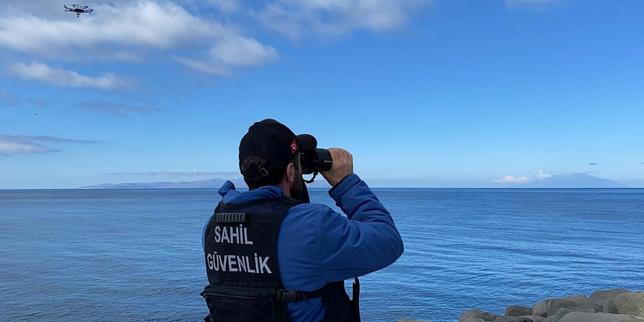
When a boat sinks, the "civilized" world offers thoughts and prayers while simultaneously funding the very coast guards that play cat-and-mouse games with overladen rubber rafts. I have seen the way these budgets are allocated. Millions go into thermal imaging, high-speed interceptors, and drone surveillance. Almost nothing goes into the safe, regulated transit of people who have already been displaced by wars—wars often fueled by the same nations now closing their ports.
The logic is simple: if the journey is safe, more people come. Therefore, the journey must remain lethal.
The Afghanistan Blind Spot
The irony of nineteen Afghans drowning in the Aegean is particularly sharp. These are people fleeing a country that was the centerpiece of Western foreign policy for two decades. We spent trillions of dollars and twenty years claiming to build a "stable" Afghanistan, only to retreat and act shocked when the resulting vacuum forces the population to flee.
The "People Also Ask" sections of the internet want to know: "Why don't they just stay in the first safe country they reach?"
This question is fundamentally flawed. It assumes "safety" is merely the absence of active gunfire. In Turkey, Afghans live in a legal gray area, often unable to work legally, access healthcare, or secure a future for their children. They are "safe" from the Taliban but trapped in a purgatory of poverty and resentment. Suggesting they stay put is not a policy; it is a sentence to a slow death instead of a quick one at sea.
The Math of Deterrence
Let’s talk about the cold mechanics of $death / arrival$ ratios.
If the mortality rate of crossing the Aegean is $2%$, policy makers in Berlin and Paris view that as a manageable cost of doing business. If it rises to $5%$, it’s a "crisis" only because of the optics. The goal is never zero deaths; the goal is a high enough body count to discourage the next ten thousand people, but a low enough count to avoid a Hague tribunal.
Imagine a scenario where an airline had a $2%$ fatality rate. The entire industry would be grounded in hours. But because the "passengers" in the Aegean are stateless, their lives are treated as externalities.
The Aegean isn't a border; it's a filter.
Stop Calling it a "Crisis"
A "crisis" implies a sudden, unexpected event that overwhelms the capacity to respond. This has been happening for over a decade. It is a permanent state of affairs. Using the word "crisis" allows politicians to claim "emergency powers" and bypass human rights obligations. It creates a fog of war where the basic duty of rescue—the oldest law of the sea—is treated as an optional act of charity.
The truth is that we have the technology to monitor every square inch of the Aegean. We know where the boats are. We know when they leave the Turkish coast. We choose to watch them sink.
The False Comfort of "Regional Solutions"
The current "expert" advice is to focus on "regional solutions." This is code for: "Keep them in the Global South."
The data shows that $85%$ of the world's refugees are hosted by developing nations. The idea that Europe is "full" or "under siege" is a statistical hallucination. Lebanon, Jordan, and Turkey carry the weight while the wealthiest nations on earth argue over whether nineteen bodies in the water is a tragedy or a statistic.
If you actually want to stop the drownings, you don't buy more patrol boats. You stop the farce of "externalization." You process asylum claims in the countries of origin or in transit hubs with the guarantee of safe passage for those who qualify.
But that would mean admitting that the "migrant threat" is a political fiction used to win elections. It would mean treating an Afghan father the same way we treat a corporate traveler.
The nineteen people who died this week weren't victims of the sea. They were victims of a spreadsheet that decided their lives were less valuable than the political optics of a "secure" border.
Until we stop pretending the sea is the killer, we are all complicit in the drowning. The blood isn't on the hands of the smuggler; it's on the ink of the treaties that made the smuggler necessary.
Turn off the cameras. Stop the vigils. Open the gates or stop pretending you care about the bodies.