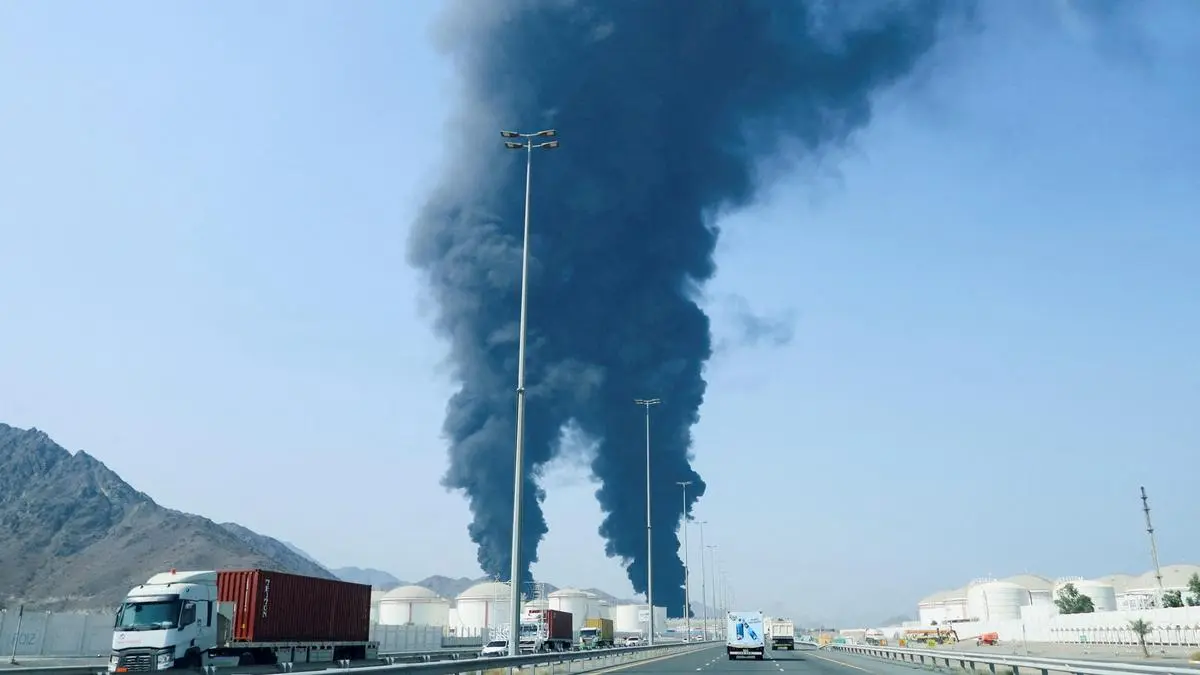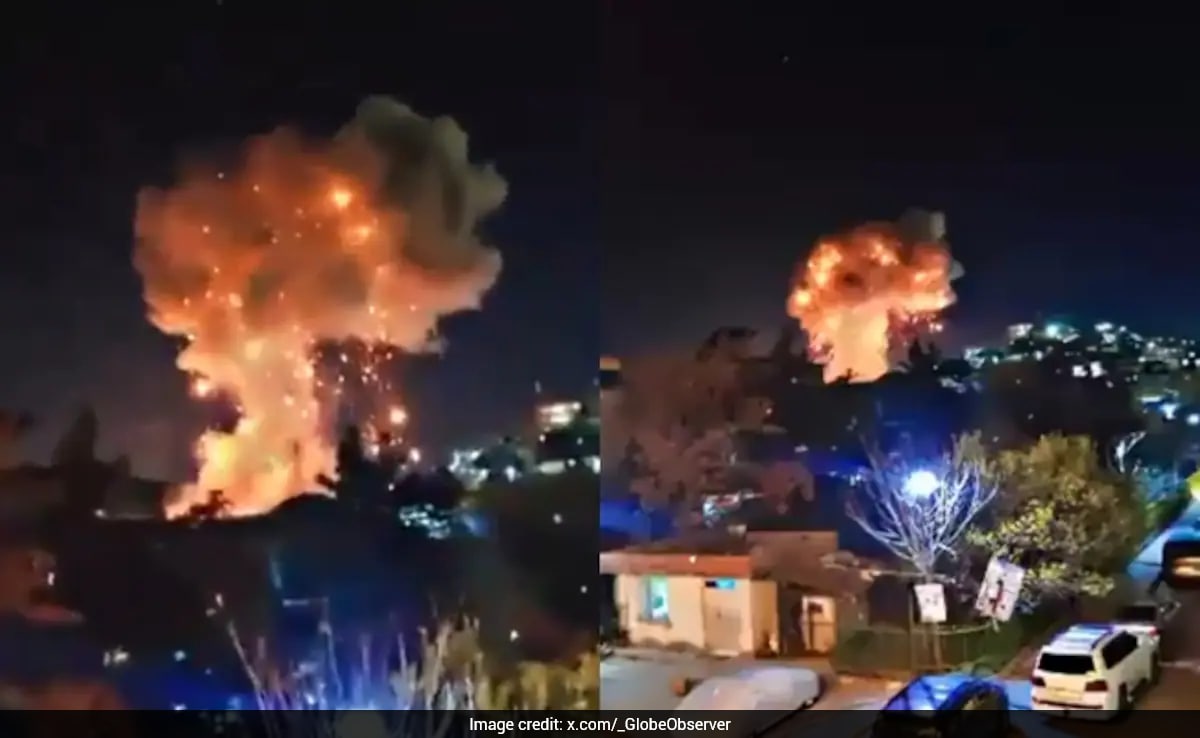
The footage is grainy, captured on a handheld device from a distance that suggests both fear and a desperate need to document. A sharp, rhythmic whistle of descending ordnance precedes a bloom of orange and black smoke that dwarfs the surrounding low-rise skyline of Kabul. While official channels in Islamabad and the Taliban-led administration in Kabul scramble to control the narrative, the reality on the ground points toward a catastrophic escalation in cross-border military aggression. This strike, which reportedly leveled structures near or within a medical compound, represents more than a tactical error. It is the physical manifestation of a decades-long proxy war finally collapsing under its own weight.
Pakistan’s military has long maintained a policy of "strategic depth" regarding its northwestern neighbor, but that strategy is currently backfiring with lethal consequences. The strike comes amidst a surge in Tehrik-i-Taliban Pakistan (TTP) activity, which Islamabad insists is being orchestrated from safe havens on Afghan soil. However, when steel meets concrete in a civilian-dense environment like a hospital district, the geopolitical justifications lose their luster. We are seeing a shift from covert pressure to overt kinetic action, a move that signals Pakistan’s dwindling patience and Kabul’s inability—or refusal—to leash the militants living within its borders. Meanwhile, you can find other stories here: The Calculated Silence Behind the June Strikes on Iran.
The Intelligence Failure Behind the Fireball
Military strikes in urban centers are rarely the result of a single person’s decision. They are the culmination of a "kill chain" that involves signals intelligence, human assets on the ground, and often, a heavy dose of confirmation bias. If the target was indeed a hospital or a facility adjacent to it, the intelligence community must answer whether they were targeting a high-value TTP commander or if they fell for a classic insurgent tactic: using civilian infrastructure as a human shield.
Modern warfare relies on precision, but precision is a myth without accurate ground-truth. In the chaos of post-2021 Afghanistan, the traditional intelligence networks that Pakistan relied on have become fractured and unreliable. Sources often have their own agendas, feeding misinformation to settle local scores or to draw foreign powers into internal disputes. When an airstrike hits a medical facility, it suggests a breakdown in the verification process. Either the military knew the risks and proceeded anyway, or their data was so compromised that they didn't know what they were hitting. Neither scenario provides much comfort to the international community. To explore the full picture, check out the recent article by The New York Times.
A Pattern of Escalation
This isn't an isolated incident. Over the last eighteen months, the border regions of Khyber Pakhtunkhwa and Balochistan have seen a steady increase in bloodletting. Pakistan has tried diplomacy. They have tried border fencing. They have tried economic leverage. None of it stopped the TTP from crossing the Durand Line to launch attacks on Pakistani police stations and military outposts.
The decision to put jets in the air over Kabul marks a point of no return. It tells the Taliban leadership that their sovereignty is secondary to Pakistan’s internal security. For a regime that prides itself on "freedom" from foreign interference, the sight of Pakistani wings over their capital is a humiliation that cannot be ignored. This creates a feedback loop of violence. Kabul feels forced to retaliate, perhaps by loosening the leash on militants even further, which in turn prompts more aggressive strikes from Islamabad.
The Human Cost of Strategic Desperation
While analysts talk about "surgical strikes" and "strategic objectives," the people in the wards of a Kabul hospital experience a different reality. Shrapnel does not distinguish between a combatant and a caregiver. The psychological impact of an airstrike in a capital city is profound. It shatters the illusion of safety that the Taliban has tried to cultivate since taking power.
Medical facilities in Afghanistan were already operating on a knife’s edge. Sanctions, a lack of qualified staff, and dwindling supplies had turned basic healthcare into a luxury. Now, they must contend with the threat of being labeled a military target. When a hospital is hit, the ripple effect goes beyond the immediate casualties. It creates a vacuum of care. Doctors flee. Patients stay home and die of treatable illnesses because the fear of a roof collapsing is greater than the fear of infection.
The Durand Line Dilemma
The root of this conflict is a line on a map drawn in 1893. Afghanistan has never officially recognized the Durand Line as a formal international border, viewing it instead as a colonial relic that split the Pashtun heartland in two. Pakistan, conversely, views it as a sacrosanct boundary.
As long as this fundamental disagreement exists, the border will remain a sieve. Militants move through the rugged terrain with ease, blending into local populations that share their language and customs. Pakistan’s attempt to "solve" this problem through air power is a short-term tactic applied to a long-term identity crisis. You cannot bomb a border into legitimacy, especially when the people on both sides of it don't believe the border should exist in the first place.
The Economic Suicide of Regional Conflict
Beyond the immediate loss of life, these strikes are an act of economic self-sabotage for both nations. Pakistan is currently grappling with a precarious economy, relying on international bailouts and razor-thin margins to keep the lights on. Engaging in a prolonged air campaign is expensive. It drains resources that could be used for domestic stabilization and further isolates the country from regional trade partners who value stability above all else.
Afghanistan is in even worse shape. The country is essentially a pariah state, kept afloat by humanitarian aid and black-market trade. Kabul needs Islamabad for access to ports and markets; Islamabad needs Kabul to be a stable gateway to Central Asian energy. By trading missiles, they are burning the very bridges that could lead them out of poverty. Every explosion in Kabul or Peshawar is a signal to potential investors that this region is a "no-go" zone for the foreseeable future.
The Role of Silent Neighbors
China and Iran are watching this escalation with growing concern. Beijing, in particular, has invested billions in the China-Pakistan Economic Corridor (CPEC) and has high hopes for tapping into Afghanistan’s mineral wealth. They want a quiet neighborhood. A hot war between two "brotherly" Islamic nations complicates China’s Belt and Road Initiative and threatens the safety of their workers on the ground.
If Pakistan continues these strikes, they risk alienating their most important patron. China’s foreign policy is built on the principle of non-interference, but they have little patience for regional instability that threatens their bottom line. We may soon see Beijing move from the role of a silent partner to an active mediator, using their financial "carrot" and "stick" to force both sides back to the negotiating table.
The Propaganda War and the Missing Truth
In the minutes following the blast, the internet was flooded with conflicting reports. Pro-Taliban accounts claimed dozens of civilian casualties, including children and medical staff. Pro-Pakistan accounts argued that the site was a command-and-control center for the TTP and that the "hospital" was merely a front.
In this environment, truth is the first casualty. Both sides use social media as a battlefield, deploying bot farms and doctored footage to sway public opinion. This is why the independent verification of these events is so vital, yet so difficult. International journalists are largely barred from the country or operate under strict Taliban supervision. This leaves a vacuum that is filled by propaganda, making it nearly impossible for the global community to formulate an informed response.
The Failure of the Global Community
The United Nations and various Western powers will issue the standard "deep concern" statements. They will call for restraint. They will remind both parties of their obligations under international law. And then, they will do nothing.
The world has largely moved on from Afghanistan. The focus has shifted to Eastern Europe and the Middle East, leaving Central Asia to simmer in its own grievances. This neglect is dangerous. When a nuclear-armed state like Pakistan starts bombing the capital of its neighbor, the risk of a wider regional conflagration is high. We are witnessing the slow-motion collapse of regional security, and the international community’s silence is being interpreted as a green light for further aggression.
Tactical Success or Strategic Blunder?
Even if Pakistan successfully eliminated a high-ranking militant in this strike, the cost-benefit analysis remains skewed. Tactical successes mean nothing if they result in a strategic catastrophe. By striking Kabul, Pakistan has given the Taliban a rallying cry. They have turned a domestic security issue into a nationalistic cause for the Afghan people.
The Taliban are experts at asymmetric warfare. They don't need a sophisticated air force to hurt Pakistan. They only need to look the other way while militant groups increase their cross-border raids. They can ramp up support for separatist movements in Balochistan. They can shut down vital trade routes. In a war of attrition, the side with the least to lose often has the upper hand. Afghanistan, after forty years of war, has very little left to lose.
The Myth of the Surgical Strike
There is no such thing as a "clean" airstrike in a city like Kabul. The dense population, the crumbling infrastructure, and the proximity of residential zones to government buildings ensure that collateral damage is a certainty, not a possibility. Using high-altitude bombers or even armed drones in this context is a blunt instrument approach to a problem that requires a scalpel.
If the goal was to "send a message," the message has been received: Pakistan is willing to risk total diplomatic rupture to protect its internal security. But messages are often misinterpreted. Kabul’s interpretation isn't that they need to stop the TTP; it’s that they need better air defense systems. We may soon see the Taliban seeking out surface-to-air missiles from the global black market, further militarizing a region that is already drowning in weapons.
The Inevitable Reckoning
The explosion in Kabul is a warning shot for a conflict that has been brewing for years. The relationship between Pakistan and the Taliban was always a marriage of convenience, built on a foundation of mutual distrust and shared enemies. Now that the shared enemy (the US-backed Republic) is gone, the underlying tensions have surfaced.
Islamabad cannot bomb its way to security. As long as the TTP finds ideological and physical sanctuary in Afghanistan, the attacks on Pakistani soil will continue. Conversely, the Taliban cannot govern a functional state if they are constantly at odds with their most powerful neighbor. They are locked in a deadly embrace, and each strike moves them closer to a cliff edge.
The path forward requires more than just military restraint. It requires a fundamental shift in how both nations view their borders and their obligations to one another. Pakistan must realize that its "strategic depth" has become a strategic liability. The Taliban must realize that harboring global and regional militants is a recipe for perpetual war and economic ruin.
Neither side seems ready to make that pivot. Instead, they choose the language of fire and steel. As the smoke clears over the Kabul skyline, the only thing that is certain is that this will happen again. The next whistle of descending ordnance is already being prepared, and the next hospital may not be so lucky.
Ask yourself what happens when the deniability runs out and the border becomes a permanent front line.