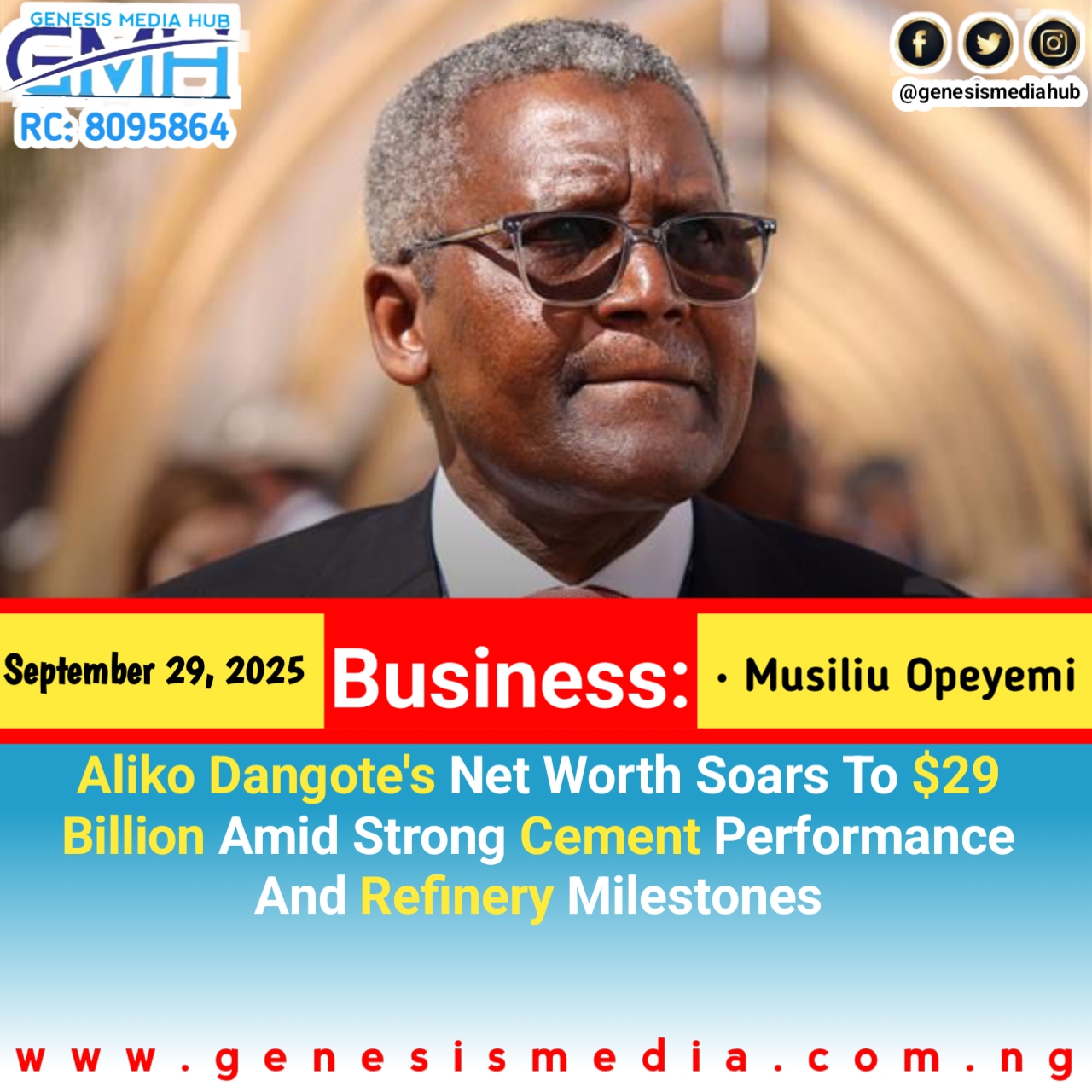
The era of East Africa relying on erratic fuel shipments from the Gulf may be nearing its end, provided a certain Nigerian billionaire gets his way. Aliko Dangote, the titan behind the massive 650,000-barrel-per-day (bpd) refinery in Lagos, has officially set his sights on Kenya. Speaking at the "Africa We Build" summit in Nairobi in April 2026, Dangote issued an ultimatum masquerading as a promise: he will replicate his Nigerian industrial complex in East Africa, but only if regional governments stop the bickering and align their policies.
This is not just another memorandum of understanding signed in a plush hotel ballroom. It is a direct challenge to the "Government-to-Government" (G2G) fuel import frameworks that have defined Kenyan energy politics for years. By proposing a second 650,000 bpd refinery—likely situated in the deep-water port of Mombasa—Dangote is betting that the region's hunger for energy security will finally outweigh its addiction to import-based patronage networks. In other news, we also covered: Why Iran just hijacked its own oil and what it means for your wallet.
The Mombasa versus Tanga Tug of War
For months, the official narrative from the East African Community (EAC) focused on Tanga, Tanzania. Presidents William Ruto of Kenya and Yoweri Museveni of Uganda had been discussing a joint refinery at Tanga, designed to process crude from the Albertine Graben in Uganda and the South Lokichar basin in Kenya. The logic was simple: Tanga is the terminus of the East African Crude Oil Pipeline (EACOP).
However, Dangote has just thrown a massive, multi-billion-dollar wrench into those plans. He is leaning toward Mombasa. His reasoning is clinical and purely commercial. Mombasa has the deeper port and, more importantly, Kenya is the largest consumer in the region. To Dangote, building where the customers are makes more sense than building where the pipe ends. Investopedia has also covered this important issue in great detail.
This creates a significant geopolitical headache. If Kenya pulls toward a private-led Dangote project in Mombasa, the joint Tanga initiative could lose the critical mass needed to secure international financing. It is a classic case of industrial logic clashing with regional diplomacy.
The Commercial Logic of 650,000 Barrels
Why does Dangote insist on 650,000 bpd? Most industry analysts argue that a refinery in East Africa only needs about 200,000 to 300,000 bpd to satisfy local demand. Building a "twin" of the Lagos facility seems like overkill. But for Aliko Dangote, scale is the only defense against the volatility of the global oil market.
A larger refinery allows for the sophisticated "cracking" units required to produce high-value products like Euro-V gasoline and aviation fuel. Small refineries often struggle with "bottom-of-the-barrel" residuals—low-value sludge that eats into margins. By building at 650,000 bpd, Dangote isn't just looking to supply Nairobi or Kampala; he is looking to export to the entire Indian Ocean rim.
The economics of the South Lokichar oil fields in Turkana add another layer of complexity. Current estimates suggest Kenya will produce roughly 50,000 to 80,000 bpd at peak production. That is barely a snack for a 650,000 bpd monster. To keep the gears turning, a Mombasa refinery would have to import massive amounts of crude from the Middle East or West Africa. This exposes a harsh truth: building the refinery doesn't automatically mean "African oil for Africans." It means "Global oil refined on African soil."
Dismantling the Import Cartels
The true obstacle to Dangote’s vision isn't engineering; it is the entrenched interests of the fuel importers. For decades, a small group of well-connected firms has controlled the flow of refined products into Mombasa. These players profit from the status quo—from the demurrage charges paid when ships sit idle in the harbor to the margins baked into the G2G deals.
Kenya recently blocked a second major fuel shipment from the Gulf due to "irregularities" in the G2G framework. High-level resignations have followed. President Ruto has publicly vowed to dismantle these "oil cartels," but doing so is a dangerous game. These entities provide the liquidity that keeps the lights on. Dangote is essentially asking the Kenyan government to burn its current bridge before the new one is even built.
The IPO and the Question of Ownership
A unique feature of Dangote’s strategy is the upcoming 2026 Initial Public Offering (IPO) of his Nigerian refinery. He has signaled a desire to offer shares to investors across the continent. This is a brilliant, if calculated, move to gain "Authoritative" status in the region. By turning the refinery into a "continental asset" with dollar-denominated dividends, he isn't just a Nigerian billionaire building a factory in Kenya; he is inviting the Kenyan middle class and pension funds to own a piece of their own energy future.
This ownership model is intended to provide a "political shield." If thousands of Kenyans own shares in the refinery, it becomes much harder for a future government to nationalize it or squeeze it with punitive taxes. It is industrialization via popular mandate.
The Brutal Reality of Five Year Timelines
Dangote claims he can deliver the refinery in four to five years. In the world of African infrastructure, that is an eye-blink. His Lagos refinery took over a decade and faced massive cost overruns, eventually hitting a $20 billion price tag.
Kenya’s previous attempt at refining—the Kenya Petroleum Refineries Ltd (KPRL) in Mombasa—was shut down in 2013 because it was "economically unsustainable." It was an old, inefficient "hydroskimming" plant that couldn't compete with modern mega-refineries in India and the Middle East. Dangote’s proposal is the exact opposite: a high-complexity, high-volume beast.
But can Kenya's infrastructure handle it? To support a refinery of this scale, the country needs:
- Massive Power Upgrades: Refining is energy-intensive. Kenya's grid is notorious for its instability during heavy rains.
- Pipeline Expansion: The current pipeline from Mombasa to Nairobi and onward to Western Kenya is already operating near capacity.
- Regulatory Overhaul: The Energy and Petroleum Regulatory Authority (EPRA) would need to manage a monopoly supplier—a role it hasn't truly played since the KPRL days.
The High-Stakes Endgame
If Dangote builds in Mombasa, he wins the East African market. If the regional governments stick with the Tanga plan, the project may languish for another decade in feasibility studies.
The choice for President Ruto is stark. He can continue with the collaborative, state-led model that satisfies his neighbors but risks moving at a snail's pace, or he can hand the keys to the kingdom to Aliko Dangote. One path offers diplomatic safety; the other offers a high-speed, high-risk transformation of the Kenyan economy.
The refinery business is a matter of commercial logic. As Kenya’s Energy Cabinet Secretary recently admitted, a business must "make sense" to survive. Dangote is betting that his version of sense is the only one that can survive the 2030s. He is no longer just selling cement and sugar; he is selling the idea that Africa can refine its own destiny, one barrel at a time. The ball, as Dangote himself put it, is now firmly in Ruto's court.