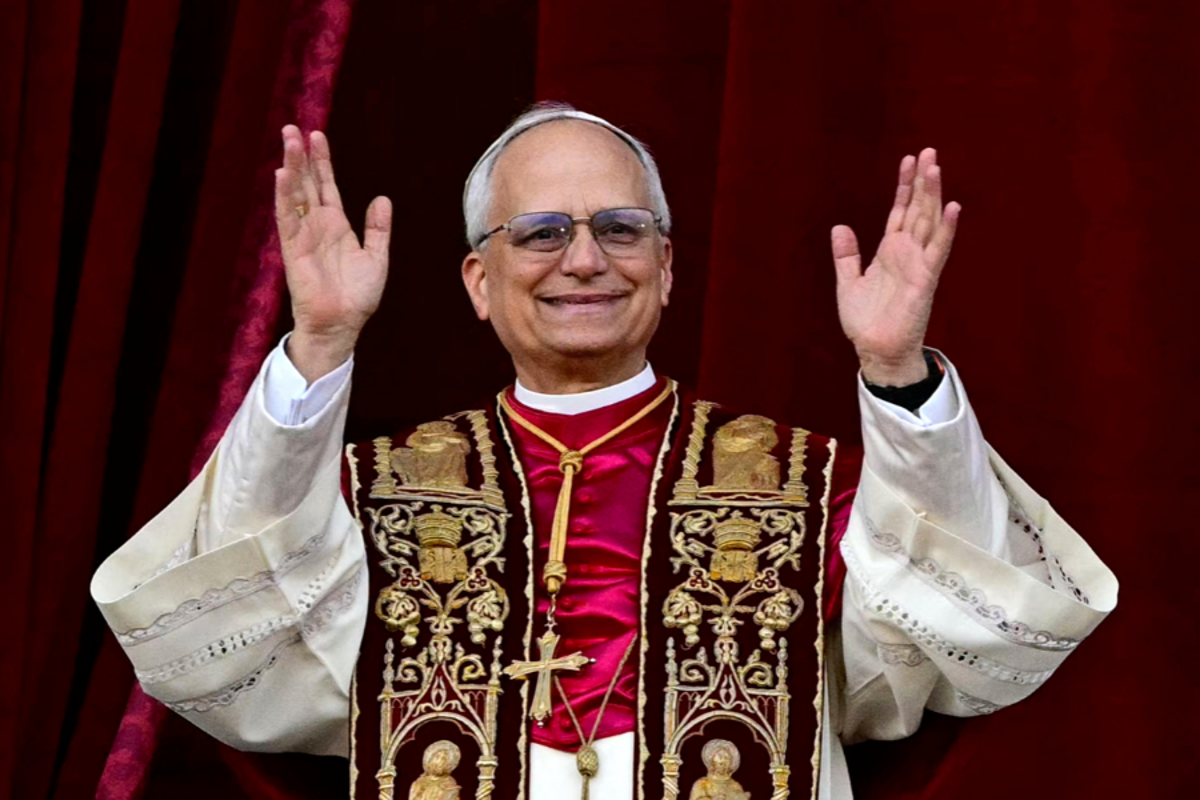
Pope Leo XIV won't be in Philadelphia this July. It's a snub that has some people scratching their heads and others nodding in approval. As the United States prepares to throw the biggest party in its history for the semiquincentennial—the 250th anniversary of the Declaration of Independence—the first American-born pontiff has decided to stay on the other side of the Atlantic. Instead of a red-white-and-blue victory lap through his home country, he’s opting for a digital appearance from the Vatican.
It’s a massive moment for the National Constitution Center. They’re awarding him the 38th annual Liberty Medal on July 3, the eve of the big day. But the man of the hour will be a face on a giant screen on Independence Mall, not a figure in a popemobile.
The choice to stay away
You’d think a Chicago-born Pope—the former Robert F. Prevost—would jump at the chance to celebrate America’s 250th on home soil. His election in 2025 was a tectonic shift for the Catholic Church. For the first time, the leader of 1.4 billion Catholics is someone who grew up with baseball and the Bill of Rights. But Leo XIV is making a point by not showing up.
While Philadelphia prepares for millions of visitors and enough fireworks to light up the Eastern Seaboard, the Pope is heading to Lampedusa. That’s a tiny island in the Mediterranean that has become a flashpoint for the global migrant crisis. By choosing a remote island over a Philadelphia podium, he's sending a message about where he thinks the Church's focus should be. He isn't interested in the "civil religion" of a national birthday. He’s looking at the "huddled masses" that the Statue of Liberty used to talk about.
Accepting the Liberty Medal from a distance
The Liberty Medal is no small thing. Past winners include Nelson Mandela, Sandra Day O’Connor, and Volodymyr Zelenskyy. The National Constitution Center is giving it to Leo XIV for his "lifelong work promoting religious liberty and freedom of conscience." These are values that the American Founders baked into the First Amendment, but for this Pope, they aren't just American ideals. They're universal ones.
The ceremony on July 3 will be a high-tech affair.
- Live from Rome: The Pope will deliver his acceptance speech via a satellite link.
- Philadelphia backdrop: The screen will be set up right outside the Constitution Center, with Independence Hall in the background.
- Global reach: Comcast NBCUniversal is handling the tech to make sure the stream doesn't glitch in front of the world.
Villanova University, the Pope’s alma mater, helped bridge the gap between Philly and the Vatican. Even though he’s not coming in person, the local ties remain deep. But the decision to remain virtual isn't just about a busy schedule. It’s a calculated move to avoid the political circus that always follows a papal visit, especially during a milestone year for a country as polarized as the U.S. is right now.
A different kind of 250th celebration
While the Pope stays in Europe, the American Catholic Church isn't sitting the anniversary out. The U.S. bishops are planning a massive consecration of the United States to the Sacred Heart of Jesus in June 2026. They're pushing initiatives like "250 Hours of Adoration" and "250 Works of Mercy." It’s an attempt to reclaim the spiritual side of the anniversary, separate from the secular parades and drone shows.
There’s a tension here that’s hard to ignore. On one hand, you have the "Freedom 250" and "America Prays" initiatives, which lean heavily into a "one nation under God" narrative. On the other, you have a Pope who seems wary of nationalistic fervor. He’s been clear that religious liberty shouldn't be a political weapon or a badge of national superiority. By staying away, he avoids being used as a prop in anyone's political campaign.
What the virtual appearance means for the crowds
If you’re planning to be in Philadelphia for the festivities, don't expect the usual papal frenzy.
- Security will still be tight, but not "Secret Service lockdown" tight.
- The focus shifts to the message, rather than the person. Without the physical presence, the actual words of his speech will have to do the heavy lifting.
- It sets a precedent for how the Vatican handles high-profile national invitations in an era of digital diplomacy.
Why this matters more than a missed flight
Critics might say he’s turning his back on his roots. I’d argue he’s actually being more "American" by exercising his independence. He knows that his presence in Philadelphia would be the only thing the news talks about for a week. By staying in Rome and visiting a migrant center on July 4, he forces the conversation toward global human rights rather than American exceptionalism.
It’s a gutsy move for a new Pope. It tells us that Leo XIV won't be the "American Pope" the way people expected. He’s the Pope who happens to be American, and there's a big difference. He’s prioritizing the periphery over the center of power.
If you want to catch the speech, keep an eye on the National Constitution Center’s livestream schedule for the evening of July 3. It’ll be the closest we get to a papal visit in 2026. After that, the focus shifts to the massive "Salute to America 250" fireworks on the Ben Franklin Parkway. Just don't look for the white skullcap in the VIP section.
To stay updated on the Philadelphia event logistics, check the official Wawa Welcome America calendar for July 2026. Pack plenty of water and expect the cell towers to be jammed regardless of who's on the screen.