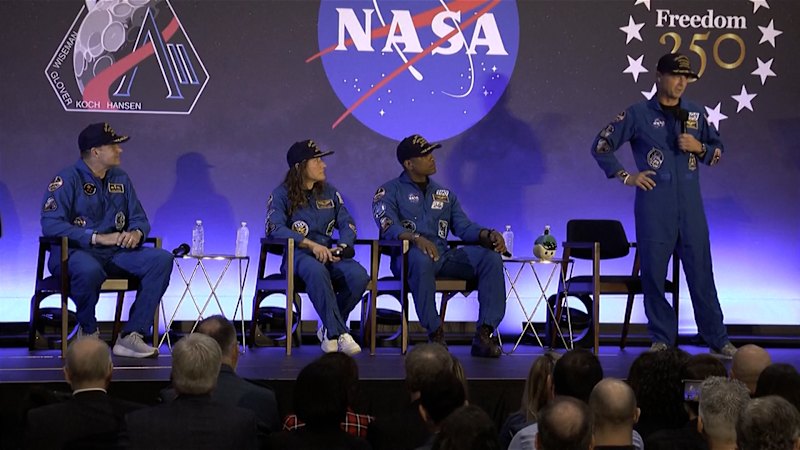
We haven’t seen a scene like this since 1972. Four astronauts standing on solid ground after swinging around the moon isn’t just a PR win for NASA—it’s a visceral reminder of what we’ve been missing for five decades. When the Orion capsule, named Integrity, hit the Pacific Ocean on April 10, 2026, it didn’t just bring back a crew. It brought back the reality that humans are deep-space explorers again.
The crew—Reid Wiseman, Victor Glover, Christina Koch, and Jeremy Hansen—stepped off the planes at Ellington Field in Houston on Saturday, April 11, looking remarkably steady for people who just pulled Mach 39. They didn't just give canned quotes about "great teamwork." They spoke about the psychological weight of being 200,000 miles away and the jarring realization of how small our world looks from the far side of the moon. Learn more on a related issue: this related article.
The distance that changes you
Commander Reid Wiseman didn’t hold back during his first public remarks. He admitted that while the mission feels like the "greatest dream on Earth" before you launch, the perspective shifts when you're out there. You aren't thinking about the glory; you're thinking about the people you left behind. He talked about a simple red light on their mission watches that they’d click just to stay focused, a tether to reality when the vastness of space became overwhelming.
It's easy to get caught up in the technical stats: 694,481 miles traveled, 10 days in space, and a re-entry heat of 5,000°F. But the real story is the "human" element Wiseman kept coming back to. He looked choked up when mentioning his family, acknowledging that being 200,000-plus miles away is a heavy burden for the ones waiting at home. Further journalism by BBC News delves into related views on this issue.
Why this mission wasn’t just a circle around the moon
This wasn't a scenic tour. Artemis II was a brutal test of the Orion systems. The crew spent their 10 days:
- Testing manual piloting of the Orion spacecraft.
- Checking life support systems in a high-radiation environment.
- Transmitting high-definition images and "almost poetic" descriptions of the lunar surface.
- Breaking the record for the farthest humans have ever traveled from Earth.
Victor Glover, the pilot, and Christina Koch, the mission specialist, looked remarkably fit upon arrival at the USS John P. Murtha recovery ship. Unlike the early Apollo astronauts who often stumbled after splashdown, this crew walked unassisted. That speaks volumes about the fitness protocols and the Orion's design for long-term lunar missions.
The bullseye landing and what happens now
The splashdown near San Diego was a "bullseye," according to NASA recovery teams. After the communications blackout—those few minutes where the world holds its breath while the capsule is a ball of fire—Wiseman’s voice came through "loud and clear." That moment of relief in Houston was infectious.
If you think this is the end of the story, you're wrong. This mission was the final green light for Artemis III. We’re no longer talking about "if" we go back to the surface; we’re talking about "when." NASA Administrator Jared Isaacman called them "ambassadors for humanity," and while that sounds like typical high-level talk, the data they brought back is the foundation for the 2028 lunar landing.
The reality check
Don't let the cheers fool you into thinking it was all perfect. There’s still a massive debate about NASA’s budget. While the crew celebrated, the agency is facing what some call "discordant" budget cuts that could threaten the timeline for future missions. The Artemis II success is a powerful shield against those cuts, but the political battle is just as intense as the physical journey they just finished.
If you want to keep up with the next steps, stop looking at the moon and start looking at the post-flight data analysis. The crew is currently undergoing intense medical evaluations in Houston to see how their bodies handled the deep-space radiation. That data will determine how long humans can actually stay on the lunar surface once we get back there in a couple of years.
Watch the mission debriefs. Read the technical reports that will leak out over the next month. We’re in the middle of a new space age, and it’s moving faster than most people realize.