The completion of the Artemis II mission signifies a shift from theoretical deep space transit to empirical performance validation. While initial reports focus on the qualitative experiences of the four-person crew, the strategic value of the mission lies in the stress-testing of the Orion Life Support Systems (LSS) and the Heat Shield’s material integrity during a high-energy ballistic reentry. The mission’s success was not defined by the lunar flyby itself, but by the successful management of the biological and mechanical delta between Low Earth Orbit (LEO) and cislunar space.
The Triad of Deep Space Mission Success
To evaluate the Artemis II return, one must analyze three distinct operational pillars that dictated the mission's outcome:
- Life Support Kinetic Equilibrium: The ability of the Orion capsule to maintain a pressurized, breathable, and thermally regulated environment while subjected to the fluctuating radiation environment of the Van Allen belts and solar particle events.
- The Reentry Thermal Gradient: The management of the approximately 2,760°C peak heating encountered during the skip-reentry maneuver.
- Human Performance Recovery: The physiological transition from microgravity to a 1-g environment after an 8-to-10-day high-stress flight profile.
Structural Vulnerabilities in Cislunar Transit
The Artemis II trajectory utilized a Free Return Trajectory, a passive safety mechanism where Earth’s gravity naturally pulls the spacecraft back if propulsion systems fail. This choice reflects a conservative risk-mitigation strategy. However, the true technical bottleneck during the mission was the performance of the Environmental Control and Life Support System (ECLSS). Unlike the International Space Station (ISS), which benefits from massive, modular redundancy, the Orion capsule must perform these functions within a significantly constrained mass and power envelope.
The carbon dioxide removal system and the oxygen generation assemblies were forced to operate at peak loads with four humans in a confined 9-cubic-meter habitable volume. Data gathered from the crew’s return suggests that the "scrubbing" efficiency of the amine-based systems met the predicted $CO_2$ partial pressure limits, yet the margin for error remains thin for longer-duration Artemis III surface missions. The bottleneck here is not the technology itself, but the mass-to-efficiency ratio of the consumables required to keep the atmosphere non-toxic during solar flares.
Thermodynamics of the Skip Reentry
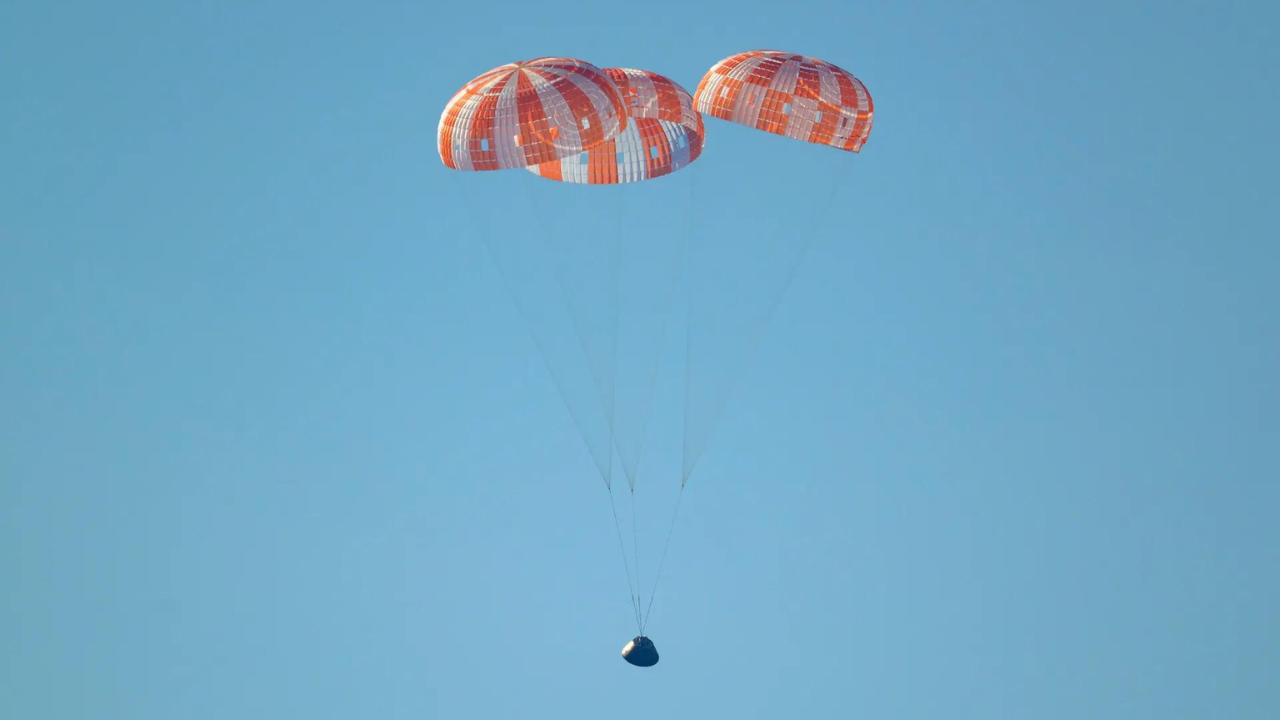
The return of the Artemis II crew validated the "skip" reentry technique, a maneuver where the capsule enters the upper atmosphere, "skips" back out to bleed off velocity, and enters a second time for final descent. This is mathematically necessary to manage the extreme velocity of a lunar return, which reaches nearly 11 kilometers per second—roughly 30% faster than a return from LEO.
The kinetic energy dissipation is governed by the equation:
$$E_k = \frac{1}{2}mv^2$$
Because velocity is squared, the thermal load on the AVCOAT ablative heat shield is exponentially higher than that of a standard reentry. The primary concern for engineers post-recovery is the "char rate"—the speed at which the shield erodes to carry heat away from the cabin. Preliminary inspections of the recovered capsule focus on whether the ablation was uniform or if "pitting" occurred, which could indicate localized structural weaknesses in the shield's honeycomb matrix.
Physiological Deceleration and Readaptation
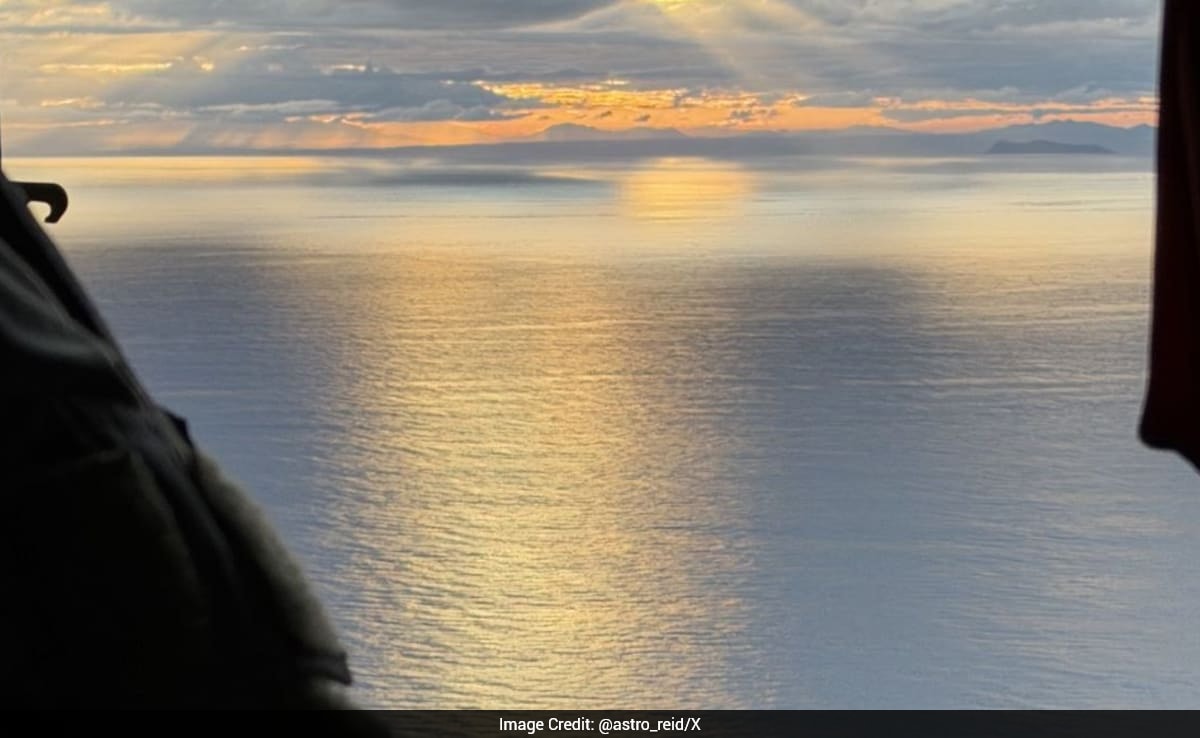
The crew’s reflection on their return highlights a critical biological reality: the "vestibular-motor reset." Upon splashdown in the Pacific, the human brain must recalibrate its internal sense of "up" and "down" after days of relying solely on visual cues.
The recovery team’s primary objective during the first 24 hours is monitoring "orthostatic intolerance"—the tendency for blood to pool in the lower extremities, leading to syncope (fainting). This is a direct result of fluid shifts that occur in microgravity. While the Artemis II mission was relatively short, the transition from the high-velocity lunar return to a bobbing capsule in the ocean represents the most significant period of physiological vulnerability for the crew.
Technical Debt in the Artemis Pipeline
The transition from Artemis II to Artemis III is not a linear progression; it is a leap in complexity. The data retrieved from the Orion’s flight recorders must now be used to solve the "Lunar Gateway" integration problem. Artemis II proved the capsule can survive the trip and the return, but it did not test the docking interfaces or the sustained power draw required for lunar orbit station-keeping.
One overlooked variable is the impact of lunar regolith (dust). While Artemis II did not land, the return of the capsule provides a "clean" baseline. Future missions will have to contend with highly abrasive, electrostatically charged dust that can compromise seal integrity and LSS filters. The absence of this dust on Artemis II allows for a pure analysis of the spacecraft's wear and tear caused solely by radiation and thermal cycling.
The Economic Reality of Recovery Operations
The recovery of the Artemis II crew involves a massive logistical footprint, including U.S. Navy assets and specialized NASA recovery teams. This "cost per recovery" is a metric that must be optimized if lunar missions are to become a sustainable cadence rather than a series of bespoke events.
The current recovery model relies on the "well-deck" method, where the capsule is winched into a flooded ship deck. This minimizes the time the crew spends in a rolling sea, reducing the risk of seasickness and secondary physiological stress. However, the reliance on such heavy naval support creates a rigid launch window schedule; if a mission is delayed or enters an off-nominal orbit, the recovery assets must be repositioned at a high daily burn rate of taxpayer capital.
Strategic Recommendation for Artemis III Integration
Based on the performance metrics of the Artemis II return, the program must prioritize the hardening of the ECLSS internal telemetry. The crew reported minor auditory stressors from the cooling pumps, which suggests that while the systems are functional, they are operating near their acoustic and mechanical limits.
For the Artemis III landing mission to succeed, the following three-step optimization must be implemented:
- Sensor Density Increase: Future Orion capsules require higher-fidelity thermal sensors within the heat shield's substructure to map the skip-reentry heat soak more precisely.
- Redundant Scrubbing Protocols: The $CO_2$ removal system should be upgraded to include a secondary mechanical backup that does not rely on the primary power bus, mitigating the risk of total atmospheric failure during a power-down scenario.
- Post-Splashdown Autonomy: To reduce reliance on expensive naval recovery fleets, NASA should invest in enhanced autonomous stabilization for the Orion capsule, allowing it to maintain a stable "Upright" position in higher sea states for longer durations without human intervention.
The success of Artemis II confirms that the Orion platform is a viable deep-space vessel. However, the data confirms that the margin for error in cislunar space is significantly smaller than in LEO. The next phase of development must focus on increasing the "robustness" of the craft's internal systems to handle the unanticipated variables of the lunar surface.