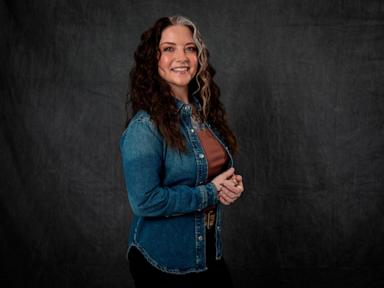
Ashley McBryde did not just fall off a horse; she fell out of the carefully constructed machinery of the Nashville star system and landed somewhere much more dangerous. The incident, which left her with a life-altering concussion and a forced hiatus, became the catalyst for The Devil I Know. While the industry likes to frame these moments as "restorative breaks," the reality is a brutal recalibration of a career that was moving too fast toward a cliff. McBryde used the trauma to strip away the glossy expectations of modern country music, delivering a record that functions less like a commercial product and more like a forensic audit of her own psyche.
The core of McBryde’s recent evolution centers on the rejection of the "polished outlaw" trope. For years, Nashville has marketed a version of rebellion that is safe for radio play and corporate sponsorships. McBryde stopped playing that game. Her latest work isn't just personal because she talks about her family or her struggles with sobriety; it is personal because it admits to the ugly, jagged edges of success that most artists hide behind a curated social media feed.
The Concussion That Broke the Script
In September 2021, McBryde was thrown from a horse. It sounds like a standard country music anecdote, the kind of thing used to build "rural street cred." But the medical reality was grim. A significant brain injury doesn't just cause headaches; it rewires how a person processes sound, light, and emotion. For a songwriter whose entire livelihood depends on cognitive sharpness and emotional nuance, this was an existential threat.
The forced silence that followed was not a choice. It was a biological mandate. During this period, McBryde found herself unable to maintain the frantic pace of the "radio tour" lifestyle. This industry demands constant presence. If you aren't on a stage, you are on a bus. If you aren't on a bus, you are in a radio station lobby at 6:00 AM shaking hands with people who will decide if your single lives or dies. The injury removed her from that cycle, and in the quiet, she realized the cycle was killing her creativity.
When she returned, she wasn't the same artist. The music became leaner. The lyrics grew sharper. She stopped trying to write "hits" and started writing truths, a distinction that sounds simple but remains the most difficult transition an artist can make in a genre obsessed with demographics and testing.
Surviving the Lindeville Experiment
Before The Devil I Know could exist, McBryde had to get weird. She released Ashley McBryde Presents: Lindeville, a concept album about a fictional small town filled with strip clubs, double-wides, and dysfunctional characters. Industry insiders viewed it as a risk. Why would a rising star release a collaborative concept record instead of a straightforward follow-up to her mainstream success?
The answer lies in the necessity of artistic camouflage. By creating a world of characters, McBryde was able to explore themes of infidelity, religion, and stagnation without the immediate pressure of "autobiography." It was a trial run for the radical honesty that would follow. Lindeville proved that her audience was smarter than the gatekeepers gave them credit for. They didn't need a catchy hook about a truck; they wanted a story that felt like their own messy lives.
This period marked the end of McBryde’s willingness to be "managed" into a specific lane. She began to lean into the rock-and-roll influences that many female country artists are told to dial back to remain "accessible." The result was a sound that felt heavy, grounded, and intensely lived-in.
The Architecture of The Devil I Know
The latest record functions as a direct confrontation with the expectations placed upon her. In the title track, she acknowledges the critics—both professional and personal—who suggest she should change her ways, lose weight, or stop drinking. Her response is a defiant shrug. She knows her demons better than she knows the people trying to "fix" her.
Writing from this perspective requires a specific kind of armor. You have to be willing to be the villain in your own story. On tracks like "Learned to Lie," McBryde traces the origins of her own deception back to the dinner table of her childhood. This isn't the nostalgic, "mama-tried" storytelling typical of the genre. This is a cold-eyed look at generational trauma and how it manifests in adult relationships.
The Myth of the Relatable Star
There is a persistent lie in the entertainment industry that stars must be "just like us." McBryde’s power comes from the fact that she clearly is not. She is a virtuoso with a blue-collar work ethic who spent years playing "biker bars where you had to carry your own PA system." That grit cannot be manufactured in a songwriting room on Music Row.
When she sings about the "Wild," she isn't talking about a forest. She is talking about the psychological space where there are no guardrails. It is the place an artist goes when they stop caring about being liked and start caring about being understood.
Managing the Modern Country Machine
The business of country music is currently in a state of flux. While the charts are dominated by a specific brand of pop-country and the occasional viral outlier, there is a growing hunger for "red dirt" authenticity. McBryde occupies a unique space between these two worlds. She has the Grammy and CMA hardware to prove she belongs in the elite tiers, but she retains the soul of a club performer.
This creates a tension that is visible in her live performances. She doesn't use the pyrotechnics or the backing tracks that have become standard for arena tours. She relies on a tight-knit band and a vocal delivery that sounds like it’s being pulled directly from her lungs. This approach is more expensive and less predictable than the "packaged" tours her peers often run. It requires more rehearsals, more equipment maintenance, and more physical toll on the performer.
For McBryde, the cost is worth the autonomy. She has seen what happens to artists who let the machine take the wheel. They become caricatures of themselves, singing songs that they didn't write about a life they no longer lead.
The Sovereignty of the Song
In an era of TikTok-driven singles and 30-second hooks, McBryde remains a devotee of the album as a complete work. She constructs narratives that require the listener to pay attention for forty minutes, not forty seconds. This is a counter-cultural act in 2026.
The industry pressure to produce "content" instead of "art" is immense. Artists are expected to be influencers first and musicians second. McBryde has largely opted out of the digital noise. Her social media presence is secondary to her output. She understands a fundamental truth that many of her contemporaries have forgotten: a great song lasts forever, but a viral video has the shelf life of milk.
Her songwriting process has become increasingly collaborative with a small, trusted circle of "misfits." They don't write for the charts. They write to see if they can make each other flinch. If a lyric is too uncomfortable, it’s usually the one they keep. This commitment to the "uncomfortable" is what separates her from the pack.
Hard Truths and Soft Landings
The "Wild" McBryde describes is not a destination; it is a permanent state of being for anyone who chooses truth over comfort. Her journey through injury, recovery, and the subsequent creative explosion reveals the cracks in the Nashville facade. It shows that the only way to survive the industry is to be willing to walk away from it.
McBryde’s career is a masterclass in controlled burn. She has burned away the parts of her public persona that didn't fit, leaving behind something much harder and more durable. She isn't interested in being the "queen" of anything. She wants to be the person who tells the truth when everyone else is whispering.
The next time a critic calls her "honest," they should recognize the price tag attached to that word. It cost her a physical collapse, a mental restructuring, and the courage to tell her family's secrets in front of thousands of strangers. That isn't just "personal" songwriting. It is a blood sacrifice.
Stop looking for the "next" Ashley McBryde. The one we have is busy enough surviving herself.