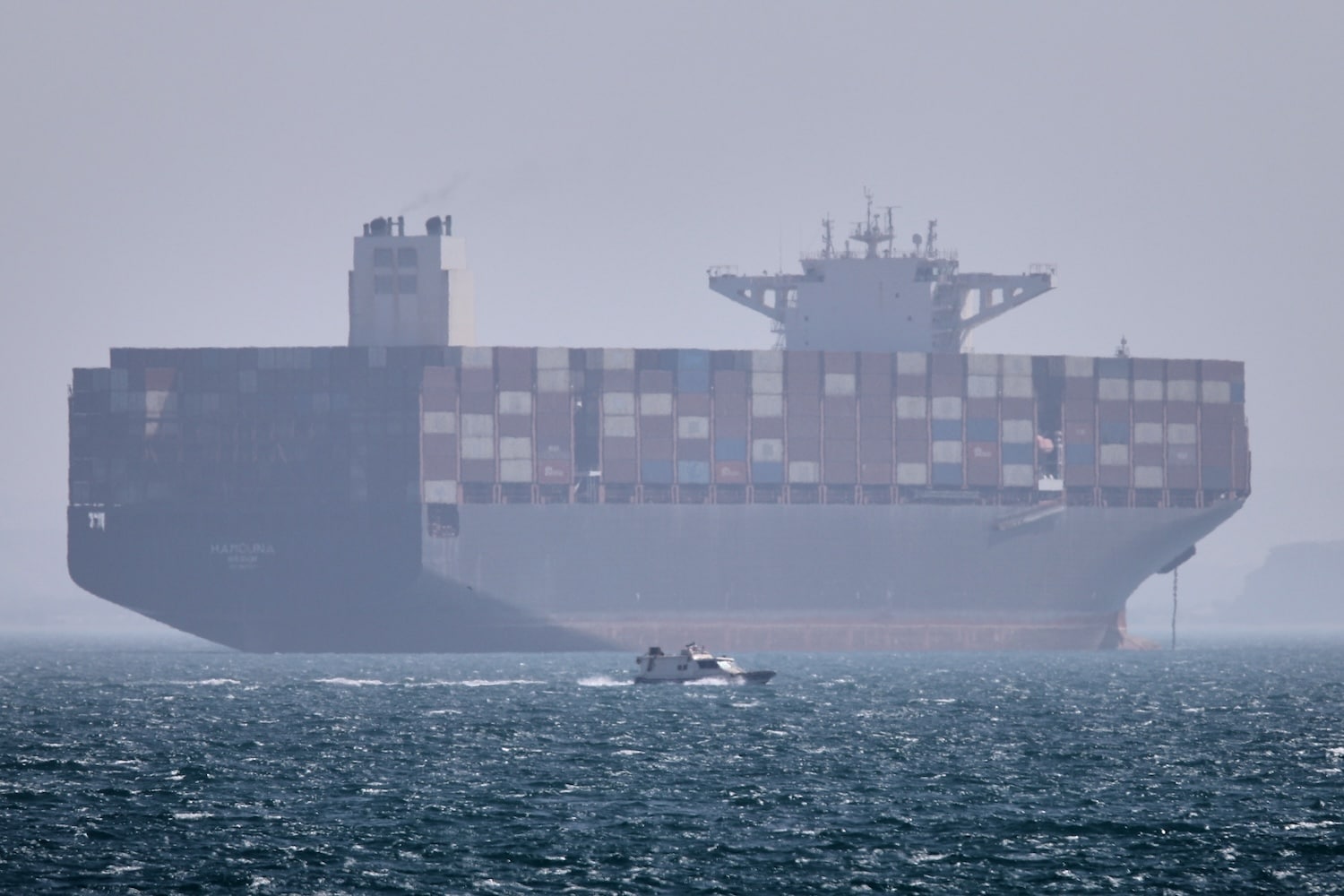
The recent interception of Iranian projectiles by U.S. Navy assets in the Strait of Hormuz reflects a fundamental shift in the cost-exchange ratio of maritime security. While tactical success is measured by the destruction of incoming threats, strategic viability is determined by the depletion rates of interceptor stockpiles against mass-produced, low-cost kinetic systems. This engagement underscores a widening gap between traditional naval power projection and the emerging reality of saturated littoral combat environments.
The Mechanics of the Kill Chain in Restricted Waters
The Strait of Hormuz serves as a geographic bottleneck where the average width of the shipping lane is approximately 21 miles. This proximity compresses the OODA loop (Observe-Orient-Decide-Act) for naval commanders. The physics of these engagements are dictated by three primary variables:
- Detection Latency: In littoral environments, land-based radar clutter and civilian maritime traffic create "noise" that masks the launch signatures of small-diameter munitions or Unmanned Aerial Vehicles (UAVs).
- Kinetic Energy Requirements: Because engagement distances are short, interceptors must achieve high Mach numbers almost instantly to neutralize threats before they reach the ship’s inner defensive layer.
- The Probability of Kill ($P_k$): Maintaining a high $P_k$ requires a layered defense strategy involving the Aegis Combat System, which coordinates long-range SM-2 or SM-6 missiles with short-range Evolved SeaSparrow Missiles (ESSM) and the Phalanx Close-In Weapon System (CIWS).
The interception of Iranian attacks on three Navy ships—likely involving a mix of one-way attack drones and anti-ship cruise missiles—demonstrates the operational readiness of the Aegis platform. However, the reliance on multi-million dollar interceptors to down drones costing less than a high-end sedan creates a structural vulnerability in long-term theater persistence.
The Economic Attrition Function
The primary challenge in the Strait of Hormuz is not a lack of technological superiority, but the "Cost-per-Engagement" (CPE) disparity. We can define the stability of naval presence through a simple attrition function:
$$S = \frac{I_q \times C_i}{A_q \times C_a}$$
Where $S$ is the Sustainability Index, $I_q$ is the quantity of interceptors, $C_i$ is the cost per interceptor, $A_q$ is the quantity of adversary munitions, and $C_a$ is the cost per adversary munition.
When $A_q$ is significantly larger than $I_q$, and $C_a$ is orders of magnitude smaller than $C_i$, the defending force faces a "magazine depth" crisis. Iran’s strategy leverages this function by utilizing swarming tactics. Even if the U.S. Navy maintains a 100% interception rate, the exhaustion of the Vertical Launch System (VLS) cells forces a ship to retreat from the station to rearm, effectively achieving the adversary’s goal of sea denial without ever scoring a kinetic hit.
Structural Constraints of Littoral Defense
Operating in the Persian Gulf and the Strait of Hormuz imposes physical constraints that negate many of the advantages of a carrier strike group.
Thermal Signatures and Electronic Warfare
The high humidity and temperature in the region affect the propagation of electromagnetic waves. Radar performance degrades due to atmospheric ducting, which can create "blind spots" where low-flying cruise missiles can approach undetected. Electronic Support Measures (ESM) must distinguish between legitimate military threats and the dense electronic environment of one of the world's busiest commercial waterways.
The Problem of Proximity
The "Reaction Window" in the Strait is exceptionally narrow. A missile traveling at Mach 0.9 launched from the Iranian coast can reach a target in the shipping lane in under 120 seconds. This necessitates autonomous or semi-autonomous engagement modes within the ship's combat system, shifting the burden of target discrimination from human operators to algorithmic logic. This transition increases the risk of miscalculation or collateral damage in a crowded maritime space.
Interdiction as a Signaling Tool
The tactical choice of weaponry by Iranian forces serves a dual purpose: testing the limits of U.S. sensor fusion and signaling political intent. By launching attacks that are sophisticated enough to require high-end interceptions but not voluminous enough to trigger a full-scale retaliatory strike, the adversary maps the "Escalation Ladder."
Each engagement provides data on:
- Radar Cross-Section (RCS) Effectiveness: How close can a specific drone model get before it is locked on by fire-control radar?
- Tactical Response Patterns: Does the U.S. Navy prioritize certain ships in a formation, and what is the standard interval between detection and kinetic response?
- Electronic Warfare Thresholds: At what point does the U.S. employ non-kinetic jamming versus hard-kill interceptors?
The Shift Toward Directed Energy and Non-Kinetic Interruption
To solve the magazine depth problem, the Navy is accelerating the deployment of Directed Energy Weapons (DEWs) and high-power microwaves. Unlike missiles, a laser system has a "deep magazine" limited only by the ship’s power generation capacity. The cost per shot drops from $2 million to roughly $1-$10.
However, DEWs face significant hurdles in the Strait of Hormuz. Atmospheric particulates—dust, salt spray, and water vapor—scatter laser beams, reducing their effective range and dwell time required to melt a target's hull or blind its sensors. Until these systems achieve all-weather reliability, the U.S. remains tethered to the traditional, and expensive, kinetic interceptor model.
Strategic Realignment of Naval Doctrine
The persistence of attacks in the Strait of Hormuz suggests that the deterrent effect of a carrier presence is diminishing in the face of asymmetric proliferation. The Navy must pivot from a "protection-at-all-costs" posture to a "resilient-network" architecture. This involves:
- Distributed Maritime Operations (DMO): Spreading assets across a wider area to complicate the adversary's targeting solution.
- Unmanned Surface Vessels (USVs): Deploying "picket" ships equipped with sensors and basic interceptors to act as a buffer for high-value manned assets.
- Off-Ramp Logistics: Developing the capability to rearm VLS cells at sea or in austere, non-traditional port environments to minimize time off-station.
The current trajectory indicates that maintaining a static presence in the Strait of Hormuz will become increasingly untenable as drone and missile technology continues to democratize. The strategic play is no longer about winning the individual engagement, but about breaking the economic cycle of the interceptor-to-target ratio. Naval commanders must prepare for a transition where the primary metric of success is not just "missiles intercepted," but "cost-parity achieved." The future of Persian Gulf security rests on the ability to neutralize threats at a price point that does not bankrupt the defender's long-term readiness.