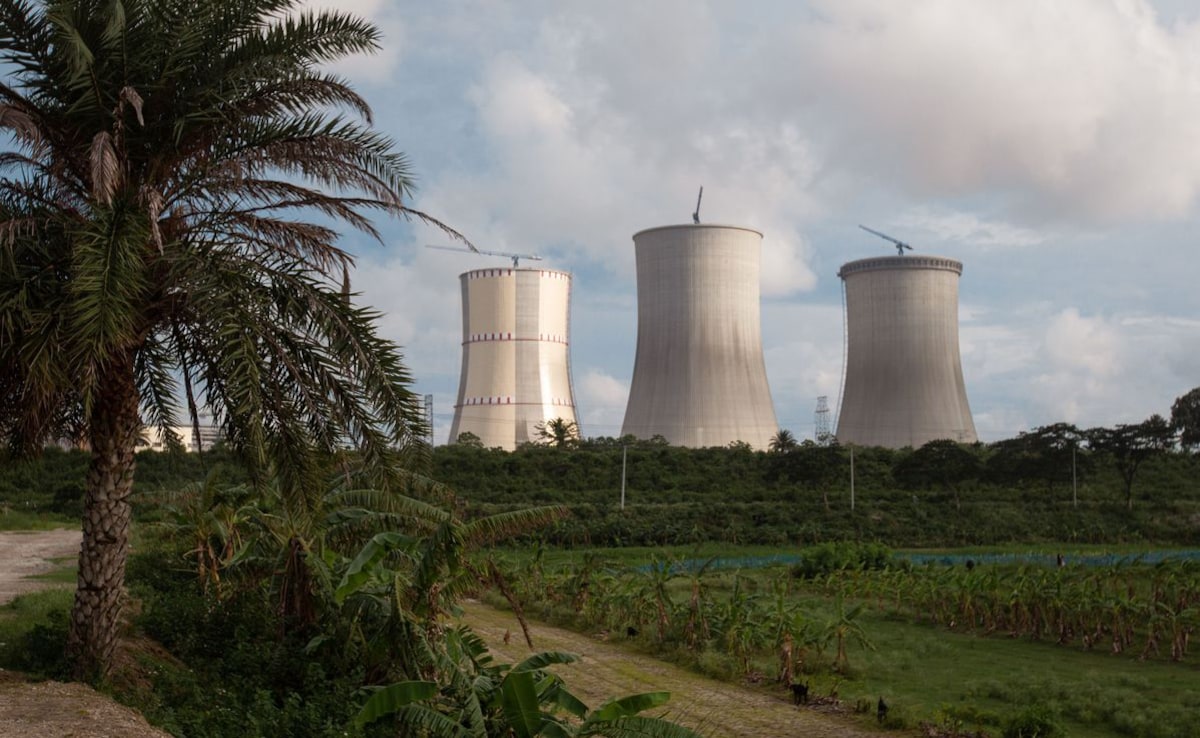
The air in the workshop smelled of ozone and cheap coffee. It was the kind of scent that clings to the back of your throat, a sharp reminder that something invisible was happening in the wires. For decades, we have been told that nuclear power is the domain of giants—massive cooling towers rising like concrete cathedrals, guarded by men in suits and backed by the infinite treasury of the state. We were told it was too big for us. Too dangerous. Too complex for anything less than a billion-dollar blueprint.
But then there are the tinkerers.
David was one of them. He wasn’t a titan of industry. He was a guy with a messy desk and a radical idea that kept him up until 3:00 AM. He looked at the massive, lumbering water-cooled reactors of the 20th century and saw a horse and buggy trying to navigate a digital highway. To him, the problem with nuclear energy wasn't the physics; it was the plumbing.
[Image of a molten salt reactor diagram]
The Problem With Water
Standard nuclear reactors are essentially high-tech kettles. They use uranium to heat water, create steam, and turn a turbine. It sounds simple until you realize that water really doesn't want to be that hot. To keep it from turning into steam instantly, you have to keep it under immense pressure. Think of it like a giant pressure cooker. If a pipe breaks, that pressure has nowhere to go but out, carrying radioactive material with it.
This is why traditional plants are so expensive. You aren't just building a reactor; you are building a fortress to contain the "what-ifs." You need backup generators, cooling pools, and miles of redundant piping. The cost isn't in the fuel. It’s in the fear.
David and a handful of rogue engineers across the globe started looking back at a forgotten chapter of history from the 1960s. They found the Molten Salt Reactor (MSR). In this version of the story, you don't use water. You use salt. Not the stuff on your dinner table, but chemically stable salts that can reach staggering temperatures without ever boiling over or needing to be pressurized.
The Garage Revolution
The "side hustle" started as a series of white papers and late-night simulations. While the big energy companies were busy lobbying for subsidies to keep their aging fleet of water-cooled giants alive, these smaller teams were working on the "laptop scale."
They realized that if you remove the pressure, you remove the danger. If a molten salt reactor loses power, the salt simply drains into a "freeze plug" tank and solidifies. It turns into a rock. No explosions. No meltdowns. Just a very hot, very safe stone sitting in a basement.
Consider the implications of a power plant that can't melt down. You don't need a ten-mile exclusion zone. You don't need a billion dollars in safety valves. You could, theoretically, build one in the back of a semi-truck and park it behind a hospital or a data center.
But the giants didn't want to hear it. To the established energy sector, these engineers were hobbyists. They were the guys building gliders while the industry was focused on making bigger, heavier steam engines.
The Invisible Stakes
Why does this matter to you? Because right now, we are playing a zero-sum game with the atmosphere. We want the lights to stay on, we want the AI to keep crunching numbers, and we want the air to be breathable. Wind and solar are beautiful, but they are fickle. They are the mood swings of the planet. We need a "baseload"—a steady, humming heartbeat of power that doesn't care if the sun is down or the wind is still.
We’ve been trapped in a false choice: the carbon-heavy reliability of coal and gas, or the terrifying scale of old-school nuclear.
The side hustle is the third way.
These startups—companies like Terrestrial Energy or Kairos Power—aren't trying to build the next Hoover Dam. They are trying to build the next PC. They are modularizing the atom. By building small, factory-made reactors, they can iterate. They can fail fast and fix things faster. If a traditional reactor is a bespoke tuxedo that takes ten years to stitch, these new designs are the high-quality t-shirts coming off a fast-moving assembly line.
The Chemistry of Hope
The magic happens when you change the fuel. Most people think of nuclear waste as a glowing green liquid that lasts forever. In reality, modern "side hustle" reactors can actually eat that waste.
Because molten salt reactors operate at much higher temperatures, they are more efficient at breaking down the long-lived isotopes that make traditional waste so tricky. We are talking about taking the "trash" from the 1970s and using it as the "treasure" for the 2030s.
It turns the entire narrative of nuclear energy on its head. Instead of a burden we leave for our grandchildren, it becomes a battery we’ve already partially charged.
The Human Cost of Waiting
There is a specific kind of frustration that comes with knowing the solution exists but watching the red tape wind around it like a python. For David and his peers, the hurdle isn't the science. The science was settled during the Johnson administration. The hurdle is a regulatory system designed for the giants.
The Nuclear Regulatory Commission is used to seeing plans for $10 billion projects. When a small team walks in with a design for a reactor that fits in a shipping container and costs a fraction of that, the gears of bureaucracy grind to a halt. They don't have a box to check for "inherently safe."
So, the side hustle continues in the shadows of the mainstream. It moves to countries with more flexible rules. It waits for the moment when the grid finally groans under the weight of our demand and the "standard" ways of doing things simply aren't enough anymore.
The Shift in the Wind
We are seeing a quiet migration of talent. The brightest minds aren't going to the big utility companies anymore. They are going to the warehouses in suburban Denver or the labs in Oak Ridge. They are the ones who realize that the future of the planet might not be saved by a grand, sweeping government mandate, but by a more elegant piece of plumbing.
It’s a gritty, unglamorous kind of heroism. It’s the heroism of the gasket, the heat exchanger, and the chemical salt.
One day, you might walk past a nondescript building in your neighborhood. There will be no smoke, no noise, and no towering chimneys. Inside, a small pool of liquid salt will be glowing with the quiet, steady intensity of a miniature star, powering every home on your block. You won't think about David. You won't think about the ozone-scented workshops or the decades of fighting against the "big water" status quo.
You’ll just flip a switch, and the light will come on, clean and constant. The tinkerers will have won, and the atom will finally be small enough to save us.
The cooling towers are crumbling, not because we gave up on the power of the sun, but because we finally learned how to bottle it without the fear.