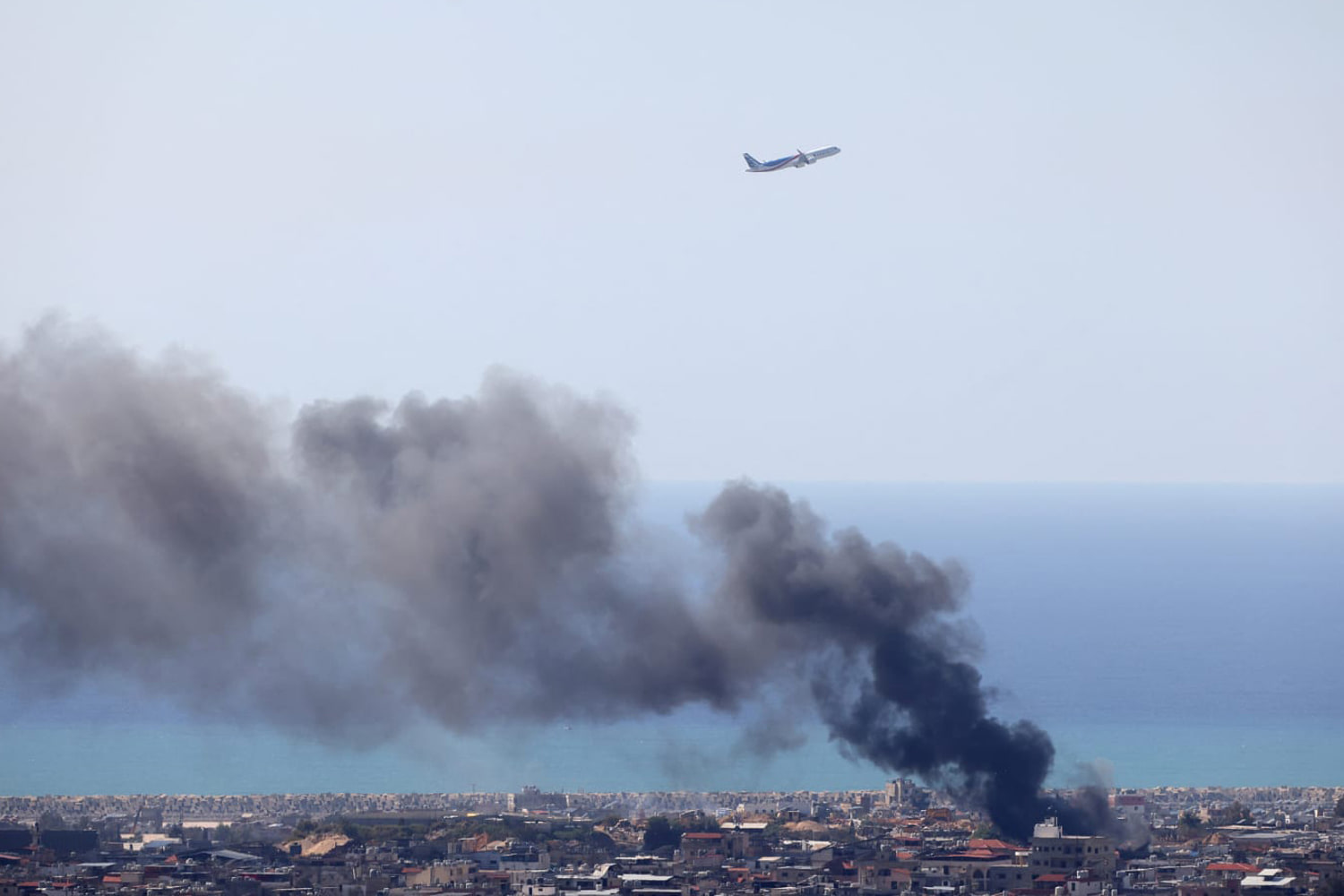
The narrative surrounding Beirut-Rafic Hariri International Airport (BEY) is currently a masterpiece of romanticized delusion. Journalists love the "phoenix rising" trope. They paint a picture of heroic air traffic controllers and resilient ground crews keeping the lights on while F-15s streak overhead. They call it a triumph of the human spirit.
They are wrong.
Keeping Beirut’s only commercial runway open during an active conflict isn't an act of defiance. It is a calculated, cold-blooded risk-management strategy played by actors who don't have to pay for the insurance premiums. If you think Middle East Airlines (MEA) flying into a literal war zone is "bravery," you don’t understand the aviation industry. You understand PR.
The truth is much uglier. BEY stays open because it is the only remaining atmospheric valve for a collapsing state, and its continued operation serves the tactical interests of the very people threatening to level it.
The Myth of the Neutral Hub
The standard industry take suggests that airports are protected by international norms or some unspoken gentleman’s agreement. That is a fantasy.
In reality, Beirut Airport functions as a high-stakes game of "chicken" where the currency is human life and hull loss. The competitor articles tell you the airport is "safe" because it hasn't been hit yet. That is a classic case of survivorship bias.
I have watched aviation departments in "frontier markets" gamble with safety for decades. When a carrier like MEA—the national flag carrier—decides to keep its fleet parked on the tarmac in Beirut, it isn’t because they believe in the sanctity of civilian infrastructure. It’s because the cost of grounding the fleet and losing the "national symbol" status is higher than the calculated risk of a kinetic strike.
Let’s talk about the math they won’t show you:
- Insurance War Risk Surcharges: These aren't just "higher" in Beirut; they are prohibitive. The only reason planes are moving is through state-backed indemnities. You aren't watching a business operate; you are watching a government-subsidized stunt.
- The "Human Shield" Infrastructure: By keeping the airport functional, the Lebanese state forces its adversaries into a PR corner. Striking the airport is a "red line" not because of international law, but because it triggers a total humanitarian blackout. The airport stays open because it’s a hostage, not a hero.
Stop Asking if the Airport is Safe
The most common question on travel forums and in news cycles is: "Is it safe to fly into Beirut?"
This is the wrong question. The real question is: "Who benefits from you thinking it's safe?"
If you land at BEY today, you aren't participating in a "resilient" travel economy. You are providing the necessary cover for a status quo that shouldn't exist. When Western outlets praise the airport's "unstoppable" nature, they ignore the terrifying technical reality of the GNSS interference currently wrecking havoc in the Eastern Mediterranean.
Since late 2023, pilots landing in Beirut have dealt with systemic GPS spoofing and jamming. We aren't talking about a slight signal lag. We are talking about cockpit displays telling a pilot they are over Jerusalem when they are actually on final approach to Runway 16.
The Technical Failure Nobody Discusses
To combat this, controllers are forced to use "legacy" procedures.
- VOR/DME Approaches: Old-school radio beacons.
- Visual Approaches: Looking out the window.
In 2026, relying on visual cues for commercial jets in a mountainous, high-traffic war zone isn't "grit." It’s an unacceptable degradation of safety margins. If a major European or American carrier attempted this level of risk under these conditions, their AOC (Air Operator Certificate) would be shredded within the hour.
We are one "technical glitch" or one misidentified radar blip away from a catastrophic event. Calling this "keeping the doors open" is like calling a house fire a "temporary heating solution."
The MEA "Miracle" is a Financial Shell Game
Middle East Airlines is often cited as the gold standard of resilience. "They never stopped flying," the pundits scream.
Look closer at the books. MEA is 99% owned by the Banque du Liban (Lebanon's Central Bank). This isn't a nimble, market-responsive airline. It is a financial instrument of a central bank that has overseen one of the worst economic collapses in modern history.
When MEA moves its planes to Cyprus or Istanbul overnight to "protect the fleet" and then flies them back for a few morning slots, they aren't "serving the people." They are protecting the only remaining liquid assets of a bankrupt state.
- The Fleet: Brand new Airbus A321neos.
- The Reality: These planes are worth more than the bank that owns them.
The "bravery" of the flight crews is real, but the "strategy" of the management is pure desperation. They cannot afford for the planes to be destroyed, but they cannot afford to stop flying because the moment the wheels stop turning, the last vestige of Lebanese connectivity to the global banking system vanishes.
The Logistics of a Siege
Common misconceptions suggest that the airport is a lifeline for aid.
Wrong. The vast majority of heavy humanitarian aid comes through the Port of Beirut (what’s left of it) or via land through Tripoli. The airport is for the elite, the diaspora with fresh dollars, and the political class.
By framing the airport’s survival as a "humanitarian necessity," the media allows the Lebanese government to avoid the hard work of securing alternative, safer supply lines. Why fix the roads or secure the ports when you can just point to a shiny Airbus landing in the middle of a dogfight and call it "resilience"?
The Cost of the "Open" Sign
Maintaining operations at BEY requires a level of coordination with paramilitary groups that most Westerners would find stomach-churning. You don't operate a national airport in a territory controlled by a non-state actor without "synergy" (to use a word I despise) that goes far beyond standard ATC protocols.
The airport is a sieve.
- Security Paradox: The more the "authorities" claim to be in control, the more they have to concede to the groups that actually hold the perimeter.
- The Intelligence Gap: Every flight that lands is a data point for intelligence services on both sides of the border.
When you fly into Beirut, you aren't just a passenger. You are a pawn in a surveillance theater. The airport stays open because it provides a controlled environment for "observational friction."
The "Business as Usual" Lie
I’ve spent twenty years in the guts of the aviation industry. I’ve seen airports in Baghdad, Kabul, and Erbil. There is a specific type of lie told about these places. It’s the lie that "life goes on."
Life doesn't go on at Beirut Airport. It stagnates.
The terminal is a ghost of its former self, filled with people who aren't traveling for "lifestyle" or "business," but out of a frantic need to escape or a desperate attempt to bring medicine to dying relatives. To categorize this under "Travel" or "Tourism" is an insult to the reality on the ground.
Let’s break the "Normalcy" facade:
| Feature | The Media Version | The Insider Reality |
|---|---|---|
| Flight Schedule | "Full and frequent" | Subject to 15-minute cancellation windows based on "security updates." |
| Safety | "International standards met" | Pilots flying with manual overrides to ignore spoofed GPS alarms. |
| Staffing | "Dedicated professionals" | Underpaid civil servants working in a high-stress environment with failing equipment. |
| Purpose | "Connecting Lebanon to the world" | A pressure valve to prevent total domestic explosion. |
Stop Applauding the Disaster
We need to stop praising the fact that the airport is open and start asking why we’ve accepted a global aviation system where civilian lives are used as a buffer against total war.
The "competitor" take—that Lebanon's airport is a symbol of hope—is a dangerous sedative. It allows the international community to look the other way. If the airport is open, things "can't be that bad," right?
Wrong. Things are so bad that the only way to maintain the illusion of a state is to keep a single strip of asphalt operational while the rest of the country’s infrastructure rots.
The airport isn't a sign of strength. It is a neon sign flashing "Distraction."
Every time an MEA jet touches down safely, the clock resets on the accountability of the people who put that jet in danger in the first place. We are celebrating the pilot’s ability to land in a crossfire instead of demanding why there is a crossfire at all.
This isn't an aviation success story. It’s a tragedy with a duty-free shop.
Stop looking at the planes. Look at the shadows they cast on a runway that shouldn't be forced to exist in a vacuum of security. The "miracle" of Beirut Airport is that we still fall for the PR.
If you want to know what the next forty-eight hours look like for Mediterranean airspace, stop reading the arrival boards and start looking at the hull-loss insurance markets in London. That’s where the truth is written.
Would you like me to analyze the specific insurance premiums and risk-rating shifts for Levantine airspace over the last quarter?