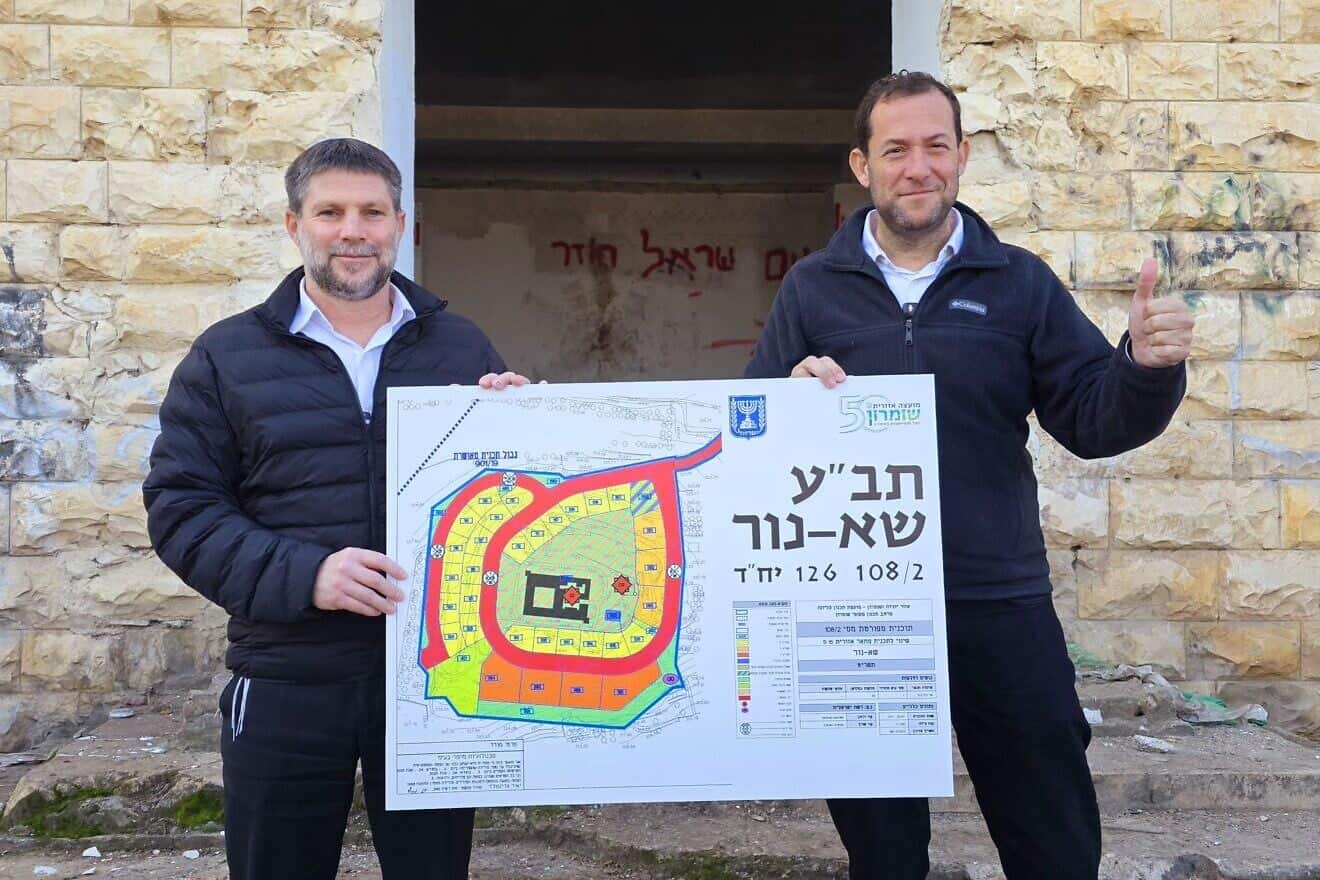
The map of the Middle East is being redrawn by a man who views borders as temporary inconveniences. Finance Minister Bezalel Smotrich’s recent demand for Israel to annex southern Lebanon—territory reaching as far north as the Litani River—is not merely the bluster of a far-right firebrand. It is a calculated political maneuver designed to shift the Israeli military’s strategic goals from temporary security to permanent territorial expansion. As the IDF intensifies its air and ground assault against Hezbollah, Smotrich is capitalizing on a vacuum of long-term planning within the Netanyahu government to push a radical vision of "Greater Israel" that was once considered a fringe fantasy.
This isn't just about rockets. For Smotrich and his Religious Zionism party, the conflict represents a historical opportunity to rectify what they perceive as the strategic errors of the 1982 Lebanon War and the 2000 withdrawal. By calling for the annexation of a "security belt," Smotrich is attempting to force a policy shift that would see the IDF remain in Lebanon indefinitely, potentially establishing civilian settlements in areas currently being cleared of Hezbollah infrastructure.
The Litani Mandate and the Death of Resolution 1701
For two decades, the international community pointed to UN Security Council Resolution 1701 as the framework for peace. It was supposed to keep Hezbollah north of the Litani River. It failed. The current reality is that Hezbollah built a "Nature Reserve" of tunnels and missile silos right under the noses of UNIFIL peacekeepers. Smotrich argues that if international law cannot enforce a buffer zone, Israel must do it through sovereign ownership.
His proposal is simple and brutal. He suggests that any territory from which a rocket can be fired into Israel should essentially lose its Lebanese sovereignty. By moving the border, Smotrich intends to create a "killing zone" where any movement is considered hostile, managed not by a fleeting military presence, but by permanent Israeli administration. This goes beyond the "security zone" of the 1980s, which was a military occupation characterized by heavy casualties and a lack of clear purpose. Smotrich wants a formal annexation that would make the Litani River the new northern frontier of the state.
The Economic Weight of a Permanent Occupation
As Finance Minister, Smotrich holds the purse strings, yet his territorial ambitions seem at odds with the current state of Israel's economy. War is expensive. Occupation is ruinous. The cost of maintaining a permanent civilian and military presence in southern Lebanon would run into the billions of shekels annually, further straining a budget already battered by the mobilization of hundreds of thousands of reservists and the displacement of northern residents.
Critics within the Ministry of Finance, speaking off the record, describe the plan as a "fiscal suicide pact." To hold southern Lebanon, Israel would need to:
- Construct permanent fortified bases and civilian infrastructure.
- Maintain a massive standing garrison to fight an inevitable insurgency.
- Fund the social services for any remaining local population, or face the international fallout of mass displacement.
Smotrich ignores these balance sheets. To him, the ideological and security "dividends" outweigh the immediate GDP hit. He views the land not as a liability, but as a strategic asset that provides "strategic depth," a concept that has dominated Israeli military thought since 1967. However, applying 1967 logic to a 2026 asymmetric conflict is a gamble that many in the defense establishment find reckless.
Internal Power Struggles and the Netanyahu Factor
Prime Minister Benjamin Netanyahu finds himself in a familiar vice. On one side, he faces pressure from the Biden administration and European allies to seek a diplomatic off-ramp. On the other, he is tethered to Smotrich and Itamar Ben-Gvir, whose support is the only thing keeping his coalition—and his immunity from prosecution—intact.
Smotrich’s call for annexation is a "check" on Netanyahu’s maneuverability. By publicly demanding the maximalist position, Smotrich makes any potential compromise look like a defeat. It’s a classic move in the playbook of Israeli coalition politics. If Netanyahu agrees to a ceasefire that leaves Hezbollah anywhere south of the Litani, Smotrich can claim betrayal. If the war continues toward annexation, Smotrich takes credit for the vision.
The IDF leadership remains wary. General Staff officers have historically been the most vocal opponents of permanent "security zones" in Lebanon, remembering the "mud of Lebanon" that claimed a generation of soldiers. They prefer a "mow the grass" strategy—intense, periodic strikes to degrade capability—rather than the "growing the grass" approach of annexation, which requires defending every inch of ground against a local population that views them as invaders.
The Regional Explosion and the End of the Abraham Accords
The geopolitical fallout of formal annexation would be catastrophic for Israel’s burgeoning regional alliances. The Abraham Accords were built on the premise of regional stability and the halting of West Bank annexation. Annexing southern Lebanon would effectively kill any hope of normalization with Saudi Arabia and could jeopardize existing treaties with Jordan and Egypt.
Arab capitals view Smotrich’s rhetoric as proof that Israel’s current government is no longer interested in the status quo, but in a wholesale restructuring of the Levant. This isn't just a headache for diplomats; it’s a security threat. A formal annexation would likely unify various "Axis of Resistance" factions, from the Houthis in Yemen to militias in Iraq, under a single banner of "liberating" occupied Arab land.
The Demographic and Legal Quagmire
International law is unambiguous about the status of occupied territory. Annexation is a violation of the UN Charter. While Smotrich often dismisses "The Hague" and "The UN" as biased entities, the practical implications are severe. Sanctions, a total loss of Western diplomatic cover, and the isolation of Israel on the world stage would be the immediate result.
Then there is the question of the people living there. Southern Lebanon is not an empty wasteland. It is home to hundreds of thousands of Shia, Christian, and Druze Lebanese.
- Does Israel grant them citizenship, potentially tilting the internal demographic balance?
- Do they live under military law, creating a formal apartheid structure that would dwarf the West Bank in its complexity?
- Or is the plan, as some fear, to drive the population north, creating a humanitarian disaster that would trigger global intervention?
Smotrich has not answered these questions because the ideology of the "Land of Israel" does not require answers; it requires presence. He is betting that the world's attention is too fragmented, and Israel's military power too dominant, for these questions to matter.
The Shift in the Israeli Public Consciousness
Perhaps the most significant factor is the shift in the Israeli public's tolerance for risk. Since the horrors of October 7, the "security through separation" philosophy has crumbled. Many Israelis who previously leaned toward the center-left now find Smotrich’s "iron wall" logic more appealing. They are tired of living under the shadow of tunnels and rockets.
Smotrich is tapping into a primal desire for a definitive end to the northern threat. He presents annexation not as a choice, but as an inevitability. He argues that as long as Lebanon exists as a failed state, Israel must act as the sovereign of its own security. It is a seductive argument for a traumatized population, but one that ignores the historical precedent of Lebanon as a graveyard for foreign ambitions.
The assault on Lebanon is intensifying, and with every kilometer the IDF advances, Smotrich’s proposal moves from the fringe of a press release to a potential reality on the ground. The question is no longer just how the war ends, but where the border will be when the smoke clears. If Smotrich gets his way, the "Blue Line" will be replaced by a permanent Israeli frontier, and the cycle of conflict will enter its most volatile chapter yet.
The Israeli cabinet must now decide if it is willing to trade its international standing and economic stability for a few dozen kilometers of scorched earth. History suggests that in Lebanon, the deeper you go, the harder it is to leave. Smotrich is betting that this time, Israel shouldn't even try to leave. He is betting that the map can be forced to fit the ideology, regardless of the cost in blood or treasure.
Watch the movement of heavy engineering equipment behind the front lines. The moment the IDF begins laying permanent asphalt and pouring concrete foundations for more than just temporary outposts, you will know that Smotrich’s vision has become official state policy.