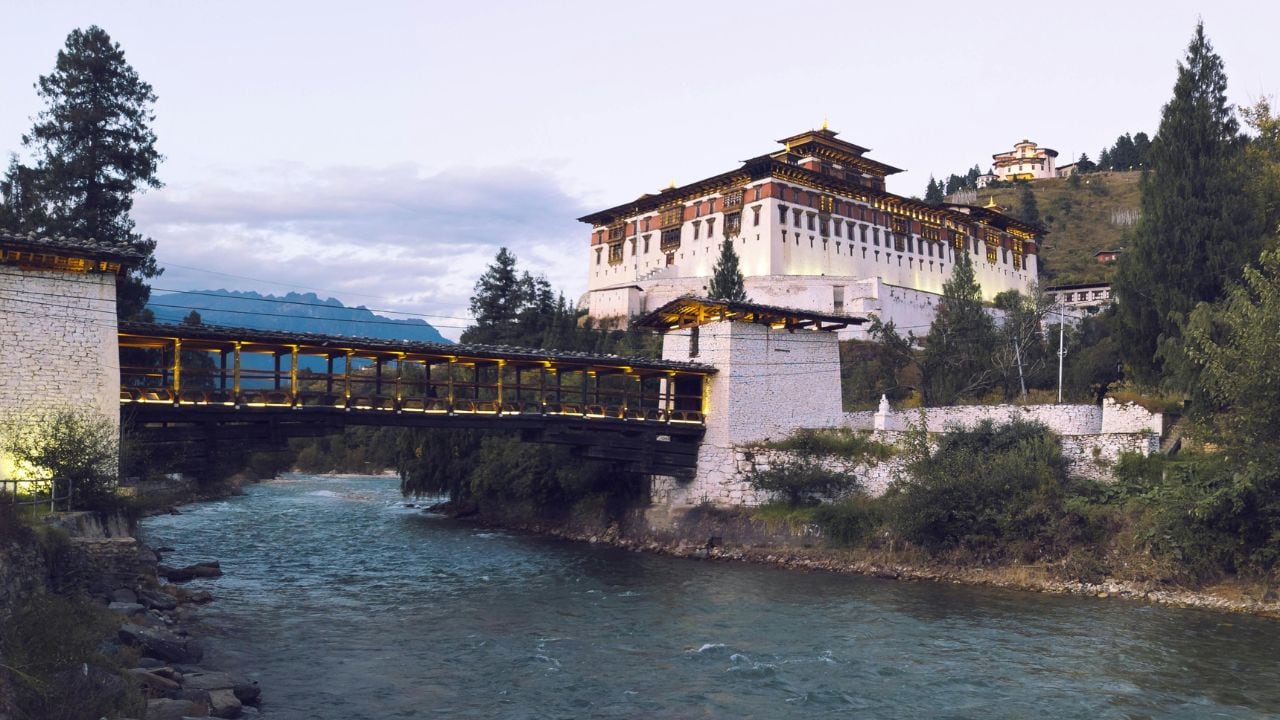
The World Bank’s recent commitment of $515 million to the Dorjilung Hydroelectric Project marks a sharp pivot in Bhutan’s economic playbook. For decades, the Land of the Thunder Dragon has relied on bilateral agreements with India to fund its massive turbine dreams. This shift toward multilateral financing signals a growing anxiety in Thimphu over national debt and a desperate need to accelerate the 1,125-megawatt facility to meet soaring regional energy demands. While the headline numbers suggest a win for renewable energy, the underlying mechanics reveal a kingdom racing to outrun its own financial liabilities.
The Dorjilung Diversification
Bhutan’s power sector is the bedrock of its economy, contributing roughly 14% to its GDP and a staggering share of its export revenue. Historically, this has been an almost exclusive partnership with India. Under the traditional Inter-Governmental model, India provided the capital and technical expertise, and in return, secured long-term rights to purchase the surplus electricity. It was a stable, if restrictive, marriage of convenience.
Dorjilung breaks that mold. By bringing the World Bank into the fold, Bhutan is attempting to dilute its singular dependence on Indian credit. This isn't just about money; it’s about terms. The $515 million package is designed to bring in international standards for environmental and social safeguards, which are often more stringent—and more expensive—than bilateral deals.
The project itself is a run-of-the-river behemoth located in eastern Bhutan. Unlike traditional reservoir dams that flood massive valleys, run-of-the-river designs use the natural flow and drop of the river to spin turbines. This reduces the environmental footprint, but it makes the output seasonal. In the winter, when the Himalayan glacial melt slows to a trickle, Bhutan’s power production tanks. Paradoxically, the country has found itself importing power from India during the lean months, despite being a net exporter annually.
The Debt Trap Beneath the Dam
Critics of Bhutan’s rapid expansion point to a darkening fiscal cloud. The country’s external debt-to-GDP ratio has frequently hovered near 120%, one of the highest in the world. Proponents argue that this debt is "self-liquidating" because the revenue from power sales is guaranteed to pay off the loans.
That math assumes the projects come online on time and within budget. History tells a different story. The Punatsangchhu-I project, for instance, has been plagued by geological disasters and massive cost overruns, turning a supposed gold mine into a multi-billion dollar headache.
The World Bank’s entry provides a layer of risk mitigation. By spreading the financial burden across international lenders, Bhutan is trying to avoid the "eggs in one basket" trap. The financing structure for Dorjilung includes a mix of concessional credits and grants, aimed at keeping the interest burden manageable while the turbines are still being forged. However, the sheer scale of the investment—estimated at over $1.2 billion total—means Bhutan is doubling down on a single-commodity economy.
Geopolitics of the Grid
The energy landscape in South Asia is shifting from a series of isolated markets to a semi-integrated regional grid. India’s "One Sun, One World, One Grid" initiative and revised cross-border trade regulations are the invisible hands moving this capital. Bhutan’s surplus power doesn't just go to Indian homes anymore; it is increasingly destined for the regional spot market, potentially feeding power-hungry Bangladesh.
For the World Bank, funding Dorjilung is a strategic move to support regional integration. By standardizing the technical and financial frameworks of Bhutan’s largest project, they are paving the way for a more transparent energy market. For Thimphu, it is a play for sovereignty. The more creditors they have, the more leverage they maintain over their most valuable resource.
The Technical Hurdle
Constructing a 1,125-megawatt plant in the rugged terrain of eastern Bhutan is a logistical nightmare. The project requires the construction of massive underground desilting chambers and pressure shafts. In the Himalayas, the geology is notoriously "young" and unstable. Tunnelling through these mountains is less like drilling through rock and more like boring through a pile of loose crackers.
$P = \eta \cdot \rho \cdot g \cdot Q \cdot H$
In this standard power equation, where $P$ is power, $\eta$ is efficiency, $\rho$ is water density, $g$ is gravity, $Q$ is flow rate, and $H$ is the "head" or vertical drop, the variable $Q$ is the most volatile. Climate change is altering the timing and volume of glacial melt. If the glaciers retreat too quickly or the monsoon patterns shift, the "flow rate" becomes a gamble. The World Bank’s $515 million is a bet that the water will keep flowing at the right times for the next fifty years.
Environmental and Social Costs
While hydropower is marketed as "clean," it is rarely "green" in the absolute sense. The Dorjilung project will impact local ecosystems and require the relocation of communities. The World Bank’s involvement mandates a level of transparency that hasn't always been present in previous projects. This includes rigorous Biodiversity Action Plans and detailed resettlement frameworks.
These requirements create a friction point. Strict compliance slows down construction. In the world of high-interest infrastructure debt, every month of delay adds millions to the final bill. Bhutan is walking a tightrope between maintaining its "Gross National Happiness" environmental standards and the cold, hard necessity of generating cash to service its loans.
The Shift to Digital Energy
There is an overlooked factor in Bhutan’s sudden urgency: Bitcoin. In recent years, the Royal Government of Bhutan has quietly become a significant player in digital asset mining, utilizing its cheap, stranded hydropower to run massive server farms. This has created an internal demand for electricity that didn't exist a decade ago.
While the World Bank funding is officially earmarked for national development and regional export, the reality is that a portion of this energy will likely fuel the kingdom’s digital vaults. This provides a domestic "floor" for energy demand, ensuring that even if export prices fluctuate, the turbines have a reason to spin. It is a high-tech hedge against a volatile energy market, but it also ties the nation’s primary industrial output to the whims of the crypto market.
The Final Calculation
The $515 million infusion is not a gift; it is a high-stakes gamble on Bhutan’s ability to manage complex, multi-layered debt while navigating an unstable mountain range and an even more unstable climate. If Dorjilung succeeds, it will cement Bhutan as the "green battery" of South Asia and provide the capital needed to diversify its economy away from hydroelectricity.
If it fails, or even if it merely stalls like Punatsangchhu, the kingdom risks becoming a ward of its creditors. The World Bank is providing the lifeline, but the weight of the project remains firmly on the shoulders of the 800,000 citizens of Bhutan. The turbines must spin, the water must flow, and the debt must be paid, or the Thunder Dragon may find its fire extinguished by the very water it seeks to harness.
Ensure the procurement process for the remaining $700 million in funding prioritizes fixed-interest rates to insulate against global inflationary shocks.