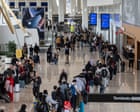
Travelers are staring at some of the longest security lines in years, and the reason isn't just a sudden surge in spring break crowds. It's a math problem. Specifically, it's a nearly $1 billion math problem that has left Transportation Security Administration workers holding the bag during one of the most volatile periods in federal employment history. While you’re worried about taking your shoes off or whether your laptop stayed in the bag, the people behind the X-ray machines are tallying up a massive debt the government owes them.
According to recent statements from TSA officials, the cumulative impact of federal shutdowns and stalled pay equity initiatives has hit a staggering milestone. We’re talking about $1 billion in missed or delayed compensation. That’s not a rounding error. It’s a systemic failure that’s currently hollowing out the workforce responsible for keeping the skies safe. When people don't get paid, they don't show up. When they don't show up, your flight gets delayed. It’s that simple.
The High Cost of Working for Free
The TSA has always been the black sheep of the Department of Homeland Security when it comes to pay scales. For years, these officers were paid significantly less than their counterparts in Customs and Border Protection or the Secret Service. A "pay equity" plan was supposed to fix this, bringing TSA salaries in line with the rest of the federal General Schedule. Then the shutdown politics started.
During the most recent periods of government gridlock, TSA workers were classified as "essential." In Washington-speak, that means you have to work, but the government doesn't have to pay you on time. Imagine showing up to a high-stress job where people yell at you about water bottles for eight hours, knowing your rent is due on the first and your bank account is sitting at zero.
The $1 billion figure cited by officials includes more than just missed base pay. It accounts for:
- Retention bonuses that were promised but never authorized.
- Overtime pay that hasn't been processed due to administrative backlogs.
- The "opportunity cost" of veteran officers leaving for the private sector.
- Delayed implementation of the 2023 pay equity scale in certain regions.
It's a mess. Honestly, it's a miracle the airports are functioning at all.
Why Retention Is a Security Risk
Most people think of TSA as a "starter job." That's a dangerous way to look at it. Screening 2 million passengers a day for explosives and weapons requires a level of pattern recognition that only comes with experience. When the government misses $1 billion in payments, the first people to leave are the veterans. They have the skills to get hired by private security firms or local law enforcement for 20% more money and 50% less stress.
What's left? A revolving door of new recruits who are still learning the ropes. This is why you see one lane moving fast while the other three are stalled because a trainee doesn't recognize a lithium battery on the screen. The "turmoil" the media likes to talk about isn't just about long lines. It's about a thinning line of defense.
If you’re a TSO (Transportation Security Officer) and you’ve missed out on thousands of dollars in expected raises while inflation eats your paycheck, your focus isn't entirely on the screen. You're thinking about how to pay for gas to get home. That "human factor" is the biggest vulnerability in the system right now.
The Myth of the Automated Solution
You’ve probably seen the new "CT" scanners—the big ones that look like medical equipment where you can leave everything in your bag. Technology is great. It’s supposed to save us. But here’s the reality: those machines require more specialized training, not less.
The government keeps trying to tech its way out of a labor crisis. They'll spend $500 million on new hardware while failing to close the $1 billion pay gap for the humans operating it. It’s backward. You can have the best scanner in the world, but if there’s no one there to man the station because they’re driving for a ride-share app to make ends meet, the machine is just an expensive paperweight.
The Ripple Effect on Your Next Flight
The turmoil isn't confined to the security checkpoint. It bleeds into the entire airport ecosystem. When TSA is understaffed, airlines have to hold planes. If a flight is held for 20 minutes because 30 passengers are stuck in a line that has only two lanes open, that plane misses its takeoff slot. That delay ripples through the entire day, affecting flights three states away by sunset.
The data shows that airports in major hubs like Atlanta, Chicago, and LAX are feeling the brunt of this. These are the places where the cost of living has skyrocketed, making the TSA pay gap feel even wider. A TSO in San Francisco can’t survive on the same "delayed promises" as someone in a much cheaper market.
What Actually Fixes This
Stopping the bleeding requires more than just a temporary funding bill. It requires a fundamental shift in how the TSA is funded. Right now, it’s a political football. Every time there’s a budget showdown, the TSA is the first to feel the squeeze because they're the most visible face of the federal government.
The $1 billion isn't just a debt to the workers; it's a debt to the traveling public. We pay "September 11th Security Fees" on every ticket we buy. In theory, that money should be insulating the agency from these types of pay collapses. In practice, that money often gets diverted into the general fund to make the federal deficit look smaller.
If you want the lines to move, the pay needs to move first.
Preparing for the New Normal
Don't expect this to resolve by your next trip. Even if Congress signed a check for the full $1 billion tomorrow, the damage to morale and staffing levels is already done. Re-hiring and re-training thousands of officers takes months, if not years.
If you're traveling anytime soon, you need to change your strategy. The old "two hours before" rule is officially dead for major hubs.
- Check the TSA app but take the wait times with a grain of salt. They often lag behind the actual reality on the ground.
- Get Clear or PreCheck now. These programs aren't just about convenience anymore; they're a necessity to bypass the most understaffed sections of the airport.
- Watch the news for "sick-outs." When pay is delayed, "TSA flu" tends to spread. It's not an organized strike—that's illegal for federal workers—but it's a natural reaction to a broken contract.
The airport turmoil is a symptom of a much deeper financial rot. Until the government treats security officers like the professionals they are, the billion-dollar gap will only grow, and your wait time will grow right along with it.