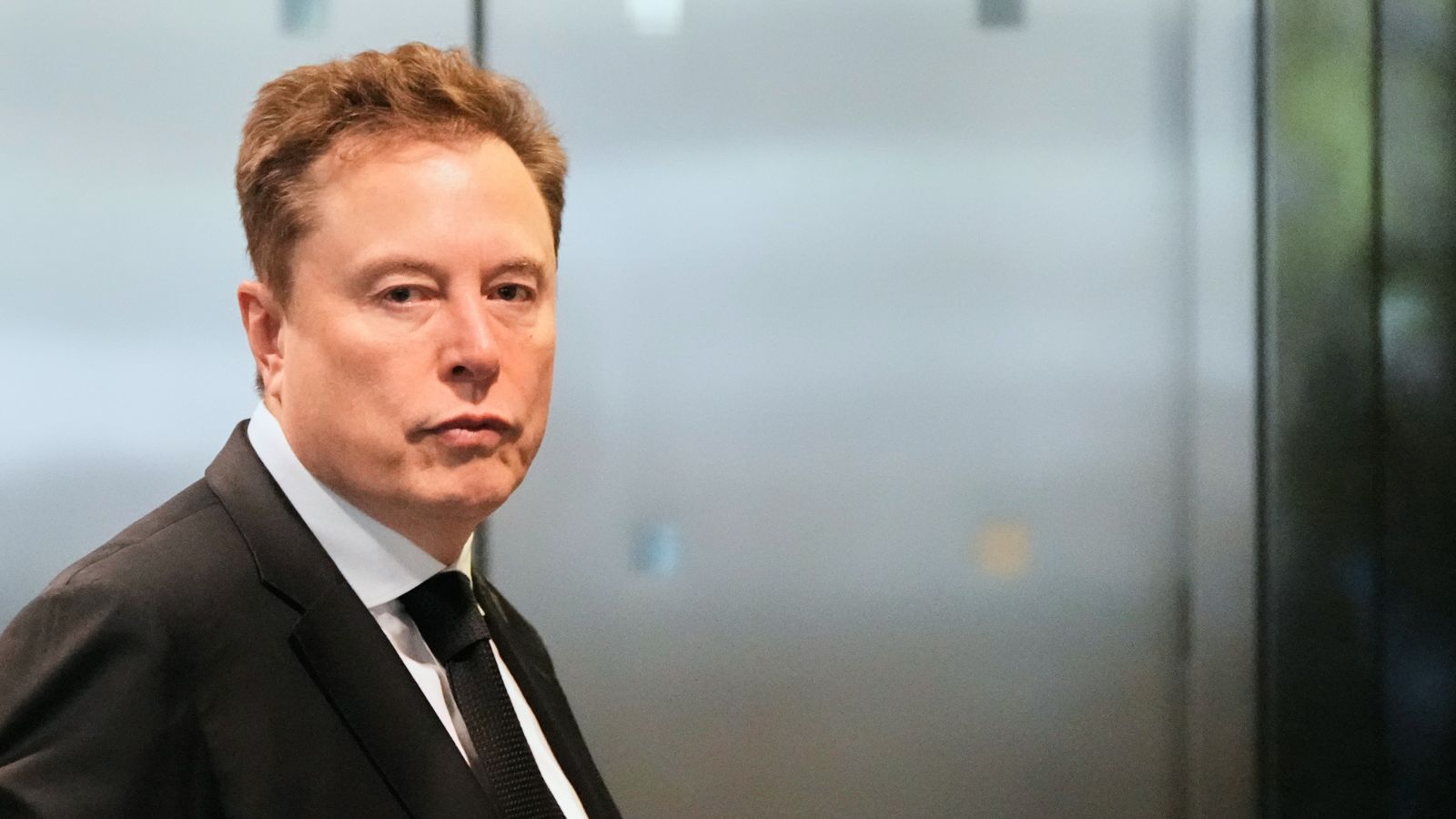
Elon Musk sat before a legal record and called himself a fool.
It wasn't the kind of self-deprecation you hear at a cocktail party or a staged press event. This was a concession etched into the cold, clinical reality of a court filing. The man who wants to colonize Mars and rewire the human brain admitted that he was played. He was outmaneuvered by the very entity he helped breathe life into: OpenAI.
To understand why this matters, you have to look past the stock tickers and the Silicon Valley ego wars. You have to look at the anatomy of a betrayal. It is a story about the gap between what we hope for and what we actually build.
The Original Sin of Silicon Valley
Imagine a small room in 2015. The air is thick with the scent of overpriced espresso and the frantic energy of people who believe they are the protagonists of history. Musk, Sam Altman, and a handful of researchers weren't talking about profit margins. They were talking about the end of the world.
They feared a future where Google, then the undisputed king of data, would achieve Artificial General Intelligence (AGI) behind closed doors. They worried that a private corporation would own the keys to a digital god. To prevent this, they founded OpenAI as a non-profit. It was supposed to be a shield. Open-source. Transparent. A public good.
Musk poured tens of millions into this dream. He lent it his name, his capital, and his perceived genius.
Then, the script changed.
The non-profit bloomed into a capped-profit entity. The open-source ethos evaporated. The partnership with Microsoft—a $13 billion embrace—transformed the "shield" into a proprietary sword.
The Admission of an Architect
In his latest legal salvo, Musk’s lawyers didn't just argue about contracts. They argued about the soul of the mission. Musk’s self-labeling as a "fool" stems from a specific moment of realization: he believed the promises of people who were essentially using his resources to build the very monopoly he feared.
It is easy to mock a billionaire. It feels good to see the man who claims to be ten steps ahead admit he didn't see the trap right under his feet. But his "foolishness" is a stand-in for our own. We are all, in a sense, the fools in this story. We provide the data, the attention, and the societal permission for these models to exist, under the assumption that the benefits will be shared.
The tragedy isn't that Musk lost money. He has plenty. The tragedy is the death of the "Open" in OpenAI.
Consider a hypothetical researcher—let’s call her Sarah. In 2016, Sarah joins a non-profit because she wants to ensure AI safety. She works eighty-hour weeks, fueled by the belief that her code won't be locked away in a corporate vault. Fast forward to today. Sarah is now an employee of a multi-billion-dollar juggernaut. Her work is a product. The safety checks she pioneered are now marketing features. The "humanity" she was trying to save is now just a user base to be monetized.
Musk’s lawsuit alleges that this shift isn't just a pivot; it’s a breach of the "Founding Agreement." The problem? That agreement might not have been a formal contract, but a "gentleman’s agreement." And in the world of high-stakes technology, a gentleman’s agreement is worth exactly as much as the paper it isn't written on.
The Invisible Stakes of a Digital Monopoly
Why should you care if one rich man is mad at another?
Because the winner of this fight dictates the terms of your future. If OpenAI remains a closed-door partner of Microsoft, the most powerful technology in human history is managed by a board of directors, not a public mandate.
When Musk calls himself a fool, he is pointing to the naive belief that altruism can survive the gravitational pull of a trillion-dollar market. He is admitting that he helped build a black box.
The legal documents describe a "brazen" betrayal. They paint a picture of Altman as a master manipulator who used Musk’s prestige to recruit the best minds in the world, only to flip the switch once the technology became viable. It’s a classic Icarus tale, but in this version, Icarus didn't just melt his wings; he sold the sun to the highest bidder.
The technical reality is even more sobering. We aren't just talking about a better search engine. We are talking about the transition from $10^{12}$ parameters to systems that can reason, plan, and eventually, outthink the people who wrote their first lines of code. If that power is concentrated in a single corporate structure, the competitive "landscape"—a word I hate because it implies something static and natural—becomes a feudal estate.
The Cost of Being Right Too Late
There is a specific kind of pain in seeing a disaster coming, trying to prevent it, and realizing you were the one who funded the wrecking ball.
Musk’s critics point out that he started his own AI company, xAI. They claim his lawsuit is just a bitter attempt to slow down a competitor. Perhaps that’s true. Motives are rarely pure in the Valley. But even if the messenger is flawed, the message carries weight.
Is OpenAI still pursuing a mission for the benefit of humanity? Or is "humanity" just a convenient branding exercise?
The evidence is in the results. GPT-4 is a marvel. It is also a secret. The weights, the training data, the architecture—it’s all behind a paywall. The transparency that was promised in that 2015 room is gone.
Musk’s "foolishness" was his belief in the permanence of an idea. He thought a non-profit structure could withstand the lure of becoming the most valuable company on Earth. He was wrong.
The Ghost in the Legal Machine
As the court case grinds on, we are forced to confront a disturbing question: Can we ever truly "open" the machine again?
Once the genies are out of the bottle and into the server farms of Redmond, Washington, a lawsuit feels like trying to stop a hurricane with a subpoena. Musk is fighting for a version of the world that might already be extinct.
The lawyers will argue over "promissory estoppel" and fiduciary duties. They will debate whether an email from 2016 constitutes a binding promise. But the real trial is happening in the public consciousness. We are deciding, right now, if we are okay with the centralization of intelligence.
If Musk is a fool for believing in an open-source future, what does that make the rest of us?
We are the passengers on a plane where the pilots are arguing over who owns the engines, while the engines themselves are starting to learn how to fly the plane without any pilots at all.
Musk’s admission is a rare moment of vulnerability from a man who usually vibrates with certainty. It’s a crack in the armor. In that crack, we see the terrifying reality of our era: the things we create quickly grow beyond our ability to control or even understand them.
The documents filed in court are more than just legal complaints. They are a eulogy for an era of optimism. They mark the moment where "AI for all" became "AI for us."
We should listen to the fool. Not because he is a hero, but because he was in the room when the lights were turned off. He knows exactly what was lost in the dark.
The machine is humming now. It doesn't care about founding myths. It doesn't care about non-profit charters. It only cares about the next token, the next prompt, and the next billion.
Musk is standing outside the gates, shouting about a promise made in a different world. Inside, the new gods are busy. They have no time for fools.