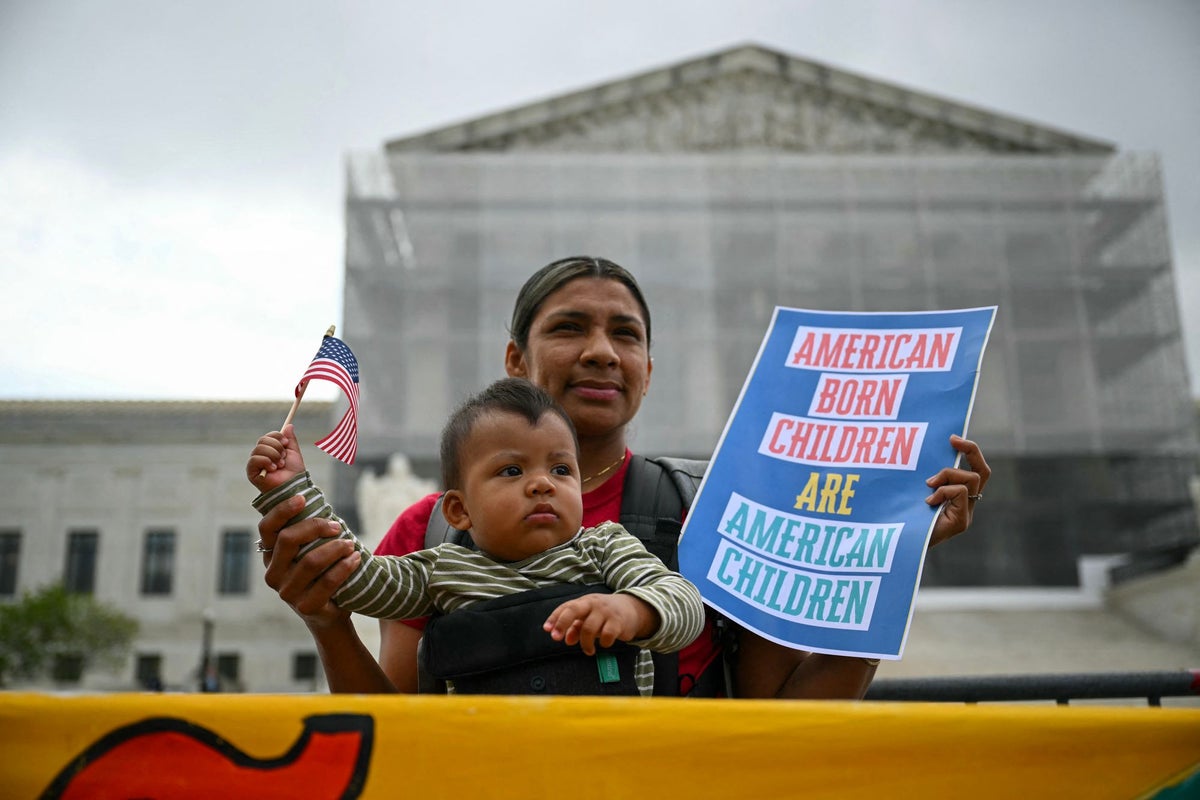
Most legal analysts are lazy. They treat the 14th Amendment like a magical, static artifact that grants a permanent right to anyone born on American soil, regardless of the circumstances. They point to United States v. Wong Kim Ark (1898) as if it’s an unshakeable mountain. It isn’t. It’s a hill of sand, and the tide is coming in.
The mainstream debate is obsessed with "when" the Supreme Court will rule on birthright citizenship. That is the wrong question. The real question is why we’ve allowed a 19th-century interpretation of "jurisdiction" to dictate 21st-century national identity in a world of high-speed global migration that the Reconstruction-era congressmen couldn't have fathomed in their wildest fever dreams.
The Jurisdiction Trap
The 14th Amendment states: "All persons born or naturalized in the United States, and subject to the jurisdiction thereof, are citizens."
The "lazy consensus" hinges on a total misunderstanding of that middle clause. Most pundits argue that if you are physically present in the U.S., you are subject to its laws, and therefore "subject to its jurisdiction." If you speed, you get a ticket. If you steal, you go to jail. Ergo, jurisdiction.
That logic is a mile wide and an inch deep. In 1866, Senator Jacob Howard, the author of the Citizenship Clause, explicitly stated that jurisdiction meant more than just being "subject to the laws." He meant it in the same sense as a diplomat’s child—who is physically present but owes no political allegiance to the United States.
The original intent wasn't "geography equals citizenship." It was "allegiance equals citizenship."
When we talk about birthright citizenship today, we are ignoring the concept of mutual consent. A contract requires two parties. Citizenship is the ultimate social contract. If a person enters a country without the host's consent, can they unilaterally force that host into a binding, permanent legal contract through the biological act of childbirth?
In any other area of law, that would be laughed out of court. Yet, in constitutional law, we’ve treated it as an absolute for decades because it’s politically convenient to avoid the mess.
The Wong Kim Ark Fallacy
Everyone loves to cite Wong Kim Ark. It’s the gold standard for birthright proponents. But here’s what the "experts" won't tell you: Wong Kim Ark’s parents were legal residents. They were in the country with the express permission of the U.S. government.
The Supreme Court has never—not once—squarely ruled that the children of people in the country illegally are automatically citizens. We are operating on a decades-long administrative assumption, not a definitive judicial mandate.
We have built a massive, multi-generational legal architecture on a foundation of "we think this is what they meant."
The current court is originalist. They don’t care about "tradition" if that tradition is based on a misreading of the text. If a case reaches the current bench that specifically challenges the status of children born to non-consensual entrants, the "settled law" argument is going to evaporate.
I’ve watched legal teams bet the farm on stare decisis (the idea that courts should stick to precedent) only to see it shredded when the precedent was found to be logically incoherent. Look at Dobbs. Look at Bruen. This court is in the business of dismantling shaky precedents, and birthright citizenship for those without a legal nexus to the country is the shakiest one left.
The Economic Delusion of Automatic Belonging
The corporate class loves birthright citizenship because it guarantees a growing labor pool. The activist class loves it because it fits a narrative of radical inclusion. Both are ignoring the long-term structural cost to the state.
Citizenship isn't just a badge; it’s an insurance policy. It carries with it a claim to the nation’s social safety net, its infrastructure, and its voting booths. When you decouple citizenship from the consent of the existing citizenry, you devalue the "stock" held by everyone else.
Think of a country like a private club. If the club rules say "anyone who walks through the door is a member," the club will eventually cease to exist as a functional entity. It becomes a lobby.
We’ve turned the U.S. into a lobby.
The Global Outlier Problem
If birthright citizenship were a universal human right or a proven "best practice" for modern nations, you’d see it everywhere. You don't.
- France requires children born to foreign parents to reside in the country for years and meet specific criteria before claiming citizenship.
- The UK abolished unrestricted birthright citizenship in 1983.
- New Zealand killed it in 2006.
- Ireland was the last holdout in Europe; they ended it by a massive popular referendum in 2004.
Are these "un-democratic" nations? Are they "backwards"? No. They simply realized that in an era of global mobility, a "dirt-based" citizenship model is an invitation to exploitation.
The U.S. and Canada are the only two major developed nations still clinging to this 19th-century relic. We aren't leading the world; we are the world's largest outlier, clinging to a policy that was designed to integrate former slaves—a specific, noble, and necessary goal—but which has been hijacked to serve a completely different demographic phenomenon.
The "People Also Ask" Reality Check
You’ll see these questions on every search engine. Here is the truth that doesn't get filtered through a PR firm:
Can the President end birthright citizenship with an Executive Order?
The "consensus" says no. The consensus is likely wrong. A President could issue an order directing agencies to stop issuing Social Security numbers or passports to children of those in the country illegally, arguing they aren't "subject to the jurisdiction" under the original meaning. This would immediately trigger a Supreme Court case. The Executive Order wouldn't "end" it; it would force the Court to finally do its job and define "jurisdiction."
Does the 14th Amendment protect "anchor babies"?
The term is derogatory, but the legal reality is fascinating. If the parents have no legal right to be here, their child’s citizenship creates a "checkerboard" household. The law currently allows this, but it creates a perverse incentive structure. We are effectively subsidizing the violation of our own borders.
Will the Supreme Court rule on this in 2026?
The timeline depends on the courage of a state solicitor general or a bold administration. The cases are being built now in lower courts. It’s not a matter of "if," but a matter of when a litigant presents the Court with the specific distinction between legal and illegal presence that Wong Kim Ark never addressed.
The Moral Hazard of "Soil" Citizenship
We are told that questioning birthright citizenship is "un-American."
I argue the opposite. Cheapening citizenship—making it a matter of where your mother happened to be standing on a specific Tuesday—is what's truly un-American. It turns a sacred political covenant into a geographic lottery.
If you want to join a community, you ask. You apply. You wait. You are vetted. And the community agrees to take you. That is a relationship of mutual respect. The current system replaces that respect with a loophole.
It creates a "moral hazard" where the law rewards those who bypass the system and penalizes those who wait in line for years. We are teaching the next generation of citizens that the law is something to be "gamed," not a set of rules to be followed.
The Coming Collision
The legal community is currently in a state of cognitive dissonance. They see the makeup of the Supreme Court, and they know the "original public meaning" of the 14th Amendment is a loser for the pro-birthright side. So, they hide behind "tradition."
But tradition isn't a constitutional argument.
Imagine a scenario where the Court rules that "jurisdiction" requires a "consensual political allegiance." Overnight, the status of millions would be thrown into question. It would be chaos. And that is exactly why the Court has avoided it for so long.
However, "it's too hard to fix" is not a legal defense. The pressure on the border and the strain on state resources in places like Texas, Arizona, and even New York are reaching a breaking point. When the political cost of maintaining the status quo exceeds the political cost of a legal revolution, the status quo dies.
We are approaching that inflection point.
The pundits will keep talking about "precedent" and "human rights." But the heavy hitters—the constitutional scholars who actually read the Federalist Papers and the 1866 congressional debates—know the floor is rotting.
Stop asking when the Court will issue a decision. Start asking what you will do when the "consensus" finally collapses and the American citizenship model is forced to join the 21st century.
Citizenship is a choice made by a nation, not an accident of geography. It’s time we started acting like it.
Identify the lie. Admit the cost. Fix the law.