The heavy oak doors of the Bank of England usually signal a certain kind of permanence. They are the physical manifestation of "keep calm and carry on," designed to suggest that while the world outside might be frantic, the vaults inside remain cool, calculated, and predictable. But this morning, the air in Threadneedle Street felt thin.
Inside, nine people sat around a table, staring at a number that refused to move: 3.75 percent. Recently making headlines recently: The Price of a Flicker.
To a trader in a glass tower, that number is a data point on a Bloomberg terminal. To a family in a terrace house in Birmingham, it is the difference between a summer holiday and a new set of school shoes. To the Monetary Policy Committee, however, that 3.75 percent has become a fragile dam holding back a flood of uncertainty that stretches far beyond the borders of the United Kingdom.
The decision to keep interest rates exactly where they are wasn't an act of confidence. It was a tactical pause. It was the sound of a roomful of experts holding their breath because the ground beneath them had started to shake. Further information into this topic are detailed by Investopedia.
The Shadow of the Strait
The math of central banking is usually a domestic affair. You look at how much people are spending on coffee, how fast wages are rising, and whether the local shops are raising prices too quickly. But today, the most important variable isn't found in a London supermarket. It is found in the tactical maps of a conflict thousands of miles away.
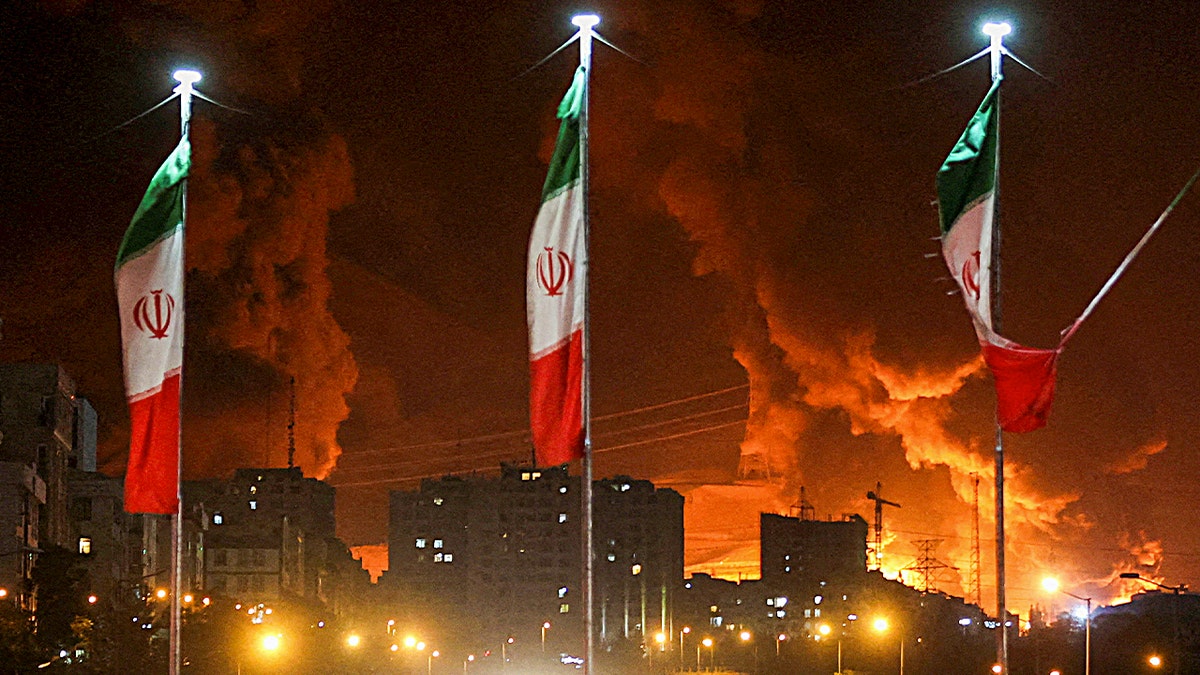
The war in the Middle East has moved from a localized tragedy to a global economic weight. When Iran entered the fray, the calculus for the British economy shifted overnight.
Consider a hypothetical logistics manager named Sarah. She oversees the shipment of electronics and components that eventually become the smartphones and car parts we buy. Normally, her biggest headache is a late truck. Now, she spends her nights watching oil prices. She knows that if the conflict escalates, the cost of the fuel used to move her goods will spike. If fuel goes up, her shipping costs go up. To keep her company's lights on, she has to raise prices for the retailers. The retailers then raise prices for you.
This is the "cost-push" ghost that haunts the Bank of England.
If the Bank lowers interest rates to help people with their mortgages, they risk pouring gasoline on an inflationary fire that is already being stoked by high energy costs. If they raise rates to fight that inflation, they might crush a domestic economy that is already brittle from years of pressure. So, they wait. They stay at 3.75 percent. They watch the horizon.
The Invisible Tax of Uncertainty
Inflation is often described as a thief, but that is too simple. It is more like a fog. When the outlook is clear, businesses hire people, families sign tenancies, and entrepreneurs take risks. When the fog of war and fluctuating energy prices rolls in, everyone stops moving.
The decision to hold rates is an attempt to provide a lighthouse in that fog, but the light is dim. The Bank’s own forecasts acknowledge that the "war shakes the outlook." That is central-bank-speak for "we are flying into a storm without a working radar."
For the average person, this pause at 3.75 percent is a bittersweet reprieve. It means your monthly mortgage payment isn't going up this morning, but it also means the relief of a rate cut—the extra fifty or a hundred pounds a month that could have gone into a savings account—is still just a dream.
We are living in a period of suspended animation.
Economists like to talk about "anchoring expectations." It sounds academic. In reality, it’s about psychology. If you believe prices will be higher tomorrow, you buy today. If everyone does that, prices actually go up. The Bank is trying to convince us all that they have the situation under control, even as the global energy market dances on a knife's edge.
The High Cost of Doing Nothing
There is a specific kind of tension in a stalemate.
Imagine two people standing on a frozen lake. They want to get to the shore, but every step makes the ice groan. The safest thing to do is to stand perfectly still. That is what the Bank of England did today. They stood still.
But standing still isn't free.
The British economy is currently sitting in a state of high-interest hibernation. Small businesses that need to borrow money to expand are looking at that 3.75 percent and deciding it’s too expensive to grow. They are putting off hiring that extra apprentice. They are cancelling the upgrade to their equipment. This is the hidden cost of the hold: the growth that never happens, the jobs that aren't created, and the innovations that stay on the drawing board.
The Bank is effectively saying that the risk of the "Iran effect" is greater than the risk of a stagnating domestic economy. They are prioritizing stability over growth because, in their eyes, a slow economy is a problem, but an inflationary spiral triggered by a regional war is a catastrophe.
The Human Scale of 3.75
We often forget that these percentages are actually stories about people’s lives.
Take a hypothetical couple, Mark and Elena. They’ve spent the last decade saving for a home. They finally have a deposit, but the 3.75 percent base rate means their potential mortgage interest rate is closer to 5 or 6 percent once the high-street banks add their margin. They sit at their kitchen table every Tuesday night with a calculator, trying to find a version of the future where the numbers work.
They were hoping for a signal today. They were looking for a sign that the peak had passed and the descent had begun. Instead, they got a "hold."
They are the collateral damage of a geopolitical conflict they have nothing to do with. Their ability to start a family or move closer to work is currently being dictated by the price of Brent Crude and the diplomatic back-and-forth between world powers they will never meet.
The Bank's report mentions "volatile energy prices" and "geopolitical risk premia." Mark and Elena just see a dream that is being deferred for another few months.
The Pendulum and the Pit
The central bank is essentially trying to swing a pendulum with a thousand strings attached to it. If they pull one string too hard—domestic wages—they might snap another—the housing market.
Right now, the most tension is coming from the string labeled "Global Energy."
As long as the conflict in the Middle East remains a live wire, the Bank cannot afford to be bold. They are forced into a defensive crouch. This is the reality of modern economics: no nation is an island, even an island nation. The price of bread in a London suburb is inextricably linked to the security of a shipping lane in the Middle East.
Some critics argue the Bank is being too timid. They suggest that by not cutting rates now, the Bank is ensuring a recession later this year. Others argue they should have raised rates further to build a "buffer" against the coming energy shock.
Both sides are probably right, and both are probably wrong.
Central banking is less like science and more like trying to steer a massive ship through a narrow channel in the dark. You can't see the rocks; you can only listen for the sound of the water hitting them. Today, the Bank decided the smartest move was to drop the anchor and wait for the sun to come up.
The Long Wait for Clarity
There is no "In Conclusion" here, because the story isn't over.
The decision to stay at 3.75 percent is a comma, not a period. The Committee will meet again. They will look at the same charts, check the same news feeds, and weigh the same impossible choices.
The world feels heavy right now. It is a weight composed of mortgage statements, gas bills, and the terrifying news cycles of a world at war. We look to institutions like the Bank of England to take that weight off our shoulders, but today they told us we have to carry it a little longer.
The doors on Threadneedle Street remain closed. The numbers on the screen remain unchanged. And outside, on the wind-swept streets of a country waiting for a break, the people continue to do what they have always done.
They adjust. They tighten their belts. They wait for the fog to lift, hoping that when it finally does, the ground beneath them is still solid.
The lights in the Bank stay on late into the evening. The experts go home to their own families, their own bills, and their own worries. Even for those who set the rates, the world feels like a place where the only certainty is that nothing is certain.
The ice groans. The pendulum swings. The world waits for the next move.