Iran is pushing for a total overhaul of the global financial order through the BRICS alliance to strip the United States of its ability to use the dollar as a geopolitical hammer. By integrating the Iranian banking system with Russian and Chinese infrastructure, Tehran aims to create a closed-loop economy that functions entirely outside the reach of the U.S. Treasury. This is not just a diplomatic grievance. It is a calculated, multi-national effort to build a shadow financial system that makes Western sanctions irrelevant.
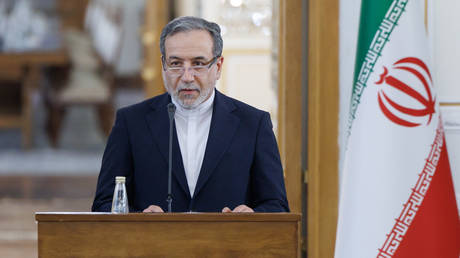
The recent calls from the Iranian Foreign Ministry for BRICS to end the American "sense of impunity" represent a shift from defensive posturing to offensive economic planning. For decades, the U.S. has relied on the dominance of the dollar to enforce its foreign policy. If a nation steps out of line, Washington cuts off its access to SWIFT, freezes its central bank assets, and threatens any third party that dares to trade with it. Tehran has lived under this pressure longer than most, and its strategy is now centered on convincing the rest of the BRICS+ members that they are equally vulnerable as long as they rely on the greenback.
The Mechanics of the Financial Alternative
To understand how this functions, one must look past the speeches and into the server rooms. Iran has recently linked its national payment system, Shetab, with Russia’s Mir payment network. This allows an Iranian traveler to withdraw rubles from an ATM in Moscow using an Iranian card, and vice versa. It seems small. However, it is the first stage of a cross-border financial plumbing system that bypasses the New York clearinghouses entirely.
The BRICS goal is to scale this model across all member states, including heavyweights like China, India, and Brazil. They are developing the BRICS Pay system, a decentralized and multimodal platform designed to facilitate trade in local currencies. By using blockchain technology or distributed ledgers, these nations can settle accounts without needing a central intermediary that answers to the U.S. government.
When Russia and China trade oil for manufactured goods, they no longer need to convert their currencies into dollars. They use a direct exchange rate. This removes the "toll" paid to American banks and, more importantly, keeps the transaction invisible to the Office of Foreign Assets Control (OFAC). This is the "impunity" the Iranian leadership is targeting—the idea that every trade on earth eventually passes through a lens held by Washington.
Why the BRICS Expansion Changes the Math
The addition of Iran, Saudi Arabia, the UAE, Egypt, and Ethiopia to the bloc has turned a disparate group of emerging markets into a massive energy and commodities powerhouse. BRICS+ now controls a significant portion of the world's oil production and nearly half of its population.
When the original BRICS formed, they were seen as a secondary economic club. That view is now dangerously outdated. If the world’s largest oil exporters (Saudi Arabia and Iran) and the world’s largest oil importer (China) agree to settle their energy debts in something other than the dollar, the fundamental demand for the U.S. currency drops.
This creates a self-reinforcing cycle. As demand for the dollar falls, its value fluctuates, making it a less reliable "safe haven" for other nations. Seeing this, more countries diversify their reserves into gold or local currencies, further weakening the American grip. Iran is betting that by accelerating this process, it can force a reality where the U.S. can no longer afford to police the world through financial exclusion.
The Friction Within the Alliance
It would be a mistake to assume this path is easy or guaranteed. The BRICS nations are not a monolith. India and China have deep-seated border disputes and economic rivalries. Brazil and South Africa maintain complex trade relationships with the West that they are not eager to incinerate.
India, in particular, occupies a precarious middle ground. While New Delhi wants to increase the global standing of the rupee and reduce its dependence on the dollar, it also views itself as a strategic partner to the U.S. and a democratic counterweight to China. India is unlikely to sign on to a "hard" anti-Western agenda. They prefer a multi-polar world where they can play both sides to their own advantage.
Tehran’s rhetoric is designed to flatten these nuances. By framing the issue as a fight against "impunity" and "colonial" financial structures, Iran appeals to the shared history of the "Global South." They are using a common grievance to paper over the very real geopolitical divisions that exist between Moscow, Beijing, and New Delhi.
Weaponizing the Supply Chain
The strategy extends beyond banking. The BRICS bloc is looking at the physical routes of trade. The International North-South Transport Corridor (INSTC) is a prime example. This 7,200-kilometer multi-mode network connects India to Russia via Iran. It bypasses the Suez Canal and the traditional maritime routes patrolled by the U.S. Navy.
By controlling the physical infrastructure, these nations reduce their tactical vulnerability. If the U.S. and its allies control the seas, the BRICS nations will build across the land. This "Eurasian integration" is the physical manifestation of the financial de-dollarization effort. You cannot sanction a train that never enters your jurisdiction and carries goods paid for in a currency you do not control.
The Risks of a Fragmented Global Economy
We are witnessing the end of the era of "One World, One Market." The result of the BRICS push is likely a bifurcated global economy. On one side, you will have the Western-led system, centered on the dollar, the Euro, and the rule of law as defined by the G7. On the other, a more fragmented but increasingly integrated system of "sovereign" economies that prioritize political autonomy over market efficiency.
This transition will be messy. Transaction costs will rise. Supply chains will become more redundant and less efficient. For the average consumer, this means higher prices and less stability. However, for a country like Iran, these are costs worth paying. From their perspective, the current system is not a neutral marketplace; it is a weapon.
The Iranian leadership is not just complaining about American power. They are providing the blueprint for how to ignore it. By linking their banks to Russia and their oil to China, they are building a fortress. The message to Washington is clear: the more the dollar is used as a weapon, the more the world will find ways to live without it.
Western analysts often dismiss this as a "talk shop" for autocrats. They point to the volatility of the ruble or the lack of transparency in the Chinese yuan. But this misses the point. The BRICS nations aren't trying to create a better version of the dollar. They are trying to create a world where they don't have to ask for permission to exist. This isn't about market dominance. It's about survival.
The U.S. response has largely been to double down on existing tools. More sanctions, more export controls, more pressure on allies to pick a side. This strategy assumes that the dollar's dominance is an unshakeable fact of nature. History suggests otherwise. Every reserve currency eventually meets its limit when the cost of using it outweighs the benefits of the stability it provides.
Iran is betting that we have reached that limit. They are counting on the fact that if they provide the alternative, the rest of the world will eventually follow, if only to ensure that they are never the next target on a Treasury Department blacklist. The era of financial impunity is being challenged not by a single rival power, but by a collective of nations that have decided the risk of staying in the current system is finally greater than the risk of leaving it.
Move your assets accordingly. The walls are going up, and the global map is being redrawn by those who were tired of being left off it.