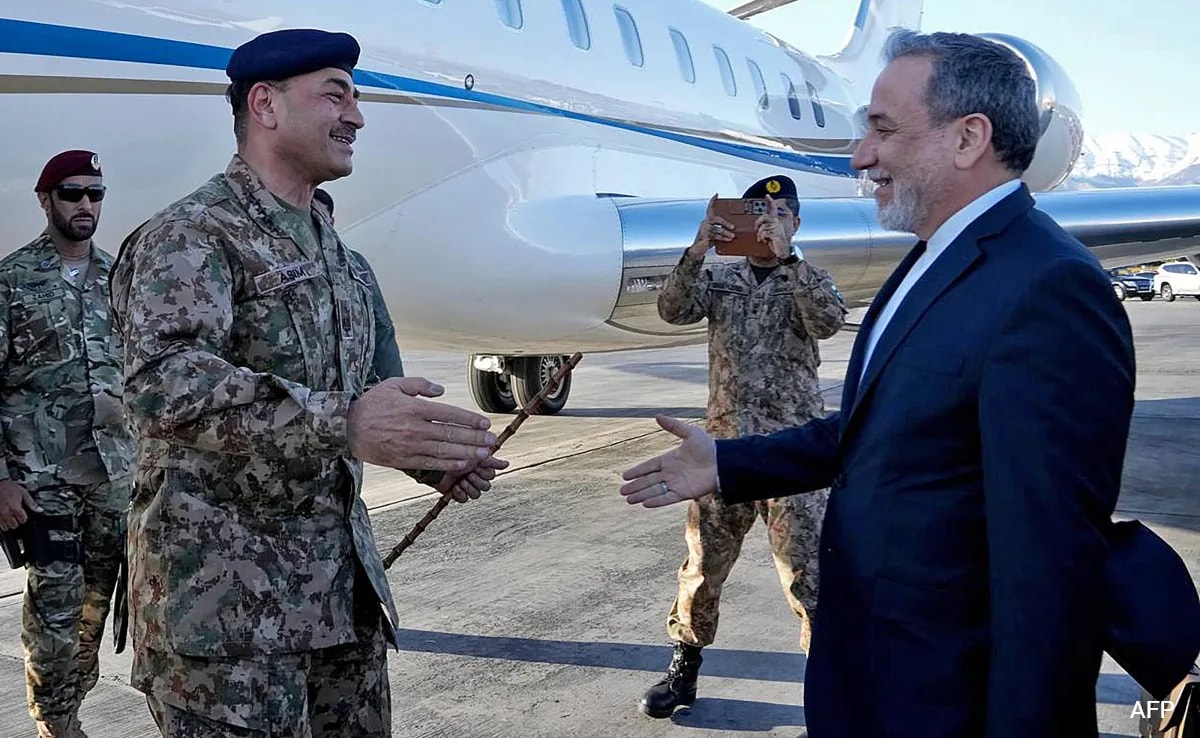
The war is six weeks old, and the math of the Middle East is changing by the hour. On Wednesday, a high-level Pakistani delegation led by Army Chief General Asim Munir touched down in Tehran, carrying what sources describe as a "make-or-break" ultimatum from the White House. While the public narrative from Washington pulses with a carefully calibrated optimism, the reality on the ground is a choked global economy and a military standoff that threatens to shatter a fragile two-week ceasefire.
The U.S. is signaling a willingness to return to the negotiating table in Islamabad, but this is not a softening of resolve. It is a tactical pivot. The "grand bargain" proposed by Vice President JD Vance aims to settle the Iranian nuclear question once and for all, yet the distance between a 20-year enrichment moratorium demanded by the U.S. and the five-year pause offered by Tehran remains a chasm that diplomacy alone may not bridge.
The Blockade and the Red Sea Threat
Washington has effectively placed a noose around Iran’s maritime economy. Through a naval blockade that U.S. Central Command claims has halted nearly all trade, the administration is betting that economic strangulation will succeed where decades of sanctions fell short. This is the "Trumpian grand bargain" in its rawest form: total compliance in exchange for the promise to "make Iran thrive."
Tehran is not blinking. Iranian military commanders, specifically Ali Abdollahi of the central command center, have countered with a threat that has sent tremors through global markets. If the blockade is not lifted, Iran intends to shut down trade not just in the Persian Gulf, but across the Sea of Oman and the Red Sea. This is no idle boast. With one-fifth of the world’s crude oil transiting the Strait of Hormuz, the Iranian strategy is to ensure that if they cannot export, no one can.
The "open for all, or open for none" doctrine is a direct challenge to the U.S. Navy's ability to police international waters. While the White House expresses "good feelings" about a deal, the Iranian Revolutionary Guard is briefing state media on its readiness for a "long war." This disconnect suggests that the optimism coming out of the West may be a psychological operation designed to soothe jittery markets while the actual terms of surrender are being hammered out behind closed doors.
Pakistan as the Indispensable Intermediary
Islamabad has emerged as the only capital capable of talking to both sides without a translator—literally and figuratively. General Munir’s arrival in Tehran follows a four-day diplomatic blitz by Prime Minister Shehbaz Sharif, who secured at least a quiet nod from Saudi Arabia’s Crown Prince Mohammed bin Salman. Pakistan’s unique position stems from its massive Shi'ite population and its own desperate need for regional stability. A failed state on its western border is a nightmare Islamabad cannot afford.
However, Pakistan is walking a razor-thin wire. To the U.S., it is a delivery mechanism for demands. To Iran, it is a shield against total isolation. The message Munir delivered reportedly contains specific "red lines" regarding the 1,000 pounds of enriched uranium currently held by Tehran. The U.S. wants it gone. Iran views it as the only insurance policy they have left after the initial strikes of late February.
The Economic Fever Dream
The global economy is currently a hostage to these negotiations. In New York, the Dow and S&P 500 hit records on the mere whiff of a deal. In Tokyo, the Nikkei surged past 59,000. But this growth is built on a foundation of glass. IMF chief Kristalina Georgieva has already warned that if oil prices remain at these heights due to the blockade, inflation will migrate from fuel pumps to dinner tables worldwide.
The U.S. is counting on this pain to break Tehran's resolve before it breaks the West’s political will. It is a race against time. The current ceasefire expires Tuesday, and there has been no formal request for an extension. If the Pakistani delegation returns from Tehran with anything less than a concession on enrichment levels, the "optimism" of April 16 will be remembered as the quiet moment before the storm returned.
The Nuclear Sticking Point
The core of the disagreement remains the definition of "peaceful" energy. Iran’s Foreign Ministry continues to insist that its right to enrich uranium is "indisputable," even if the percentages are "negotiable." The U.S. position, backed by Israel, is that any enrichment capability is a latent weapon.
The proposal for a 20-year suspension is a generational demand. It seeks to outlast the current leadership in Tehran and fundamentally reset the regional balance of power. By rejecting the five-year counter-offer, Washington has signaled that it is no longer interested in temporary fixes or "kick the can" diplomacy. They are playing for the endgame.
The success of the upcoming Islamabad talks hinges on whether the Iranian leadership believes the U.S. is prepared to maintain the blockade indefinitely. If they do, a deal is possible. If they believe the global economic fallout will eventually force Washington to blink, the Red Sea is about to become a graveyard for international shipping.
The Pakistani delegation's departure from Tehran will be the first real indicator of which path the world is on. There are no minor concessions left to make. Every move from here is a high-stakes gamble with the global energy supply as the pot.