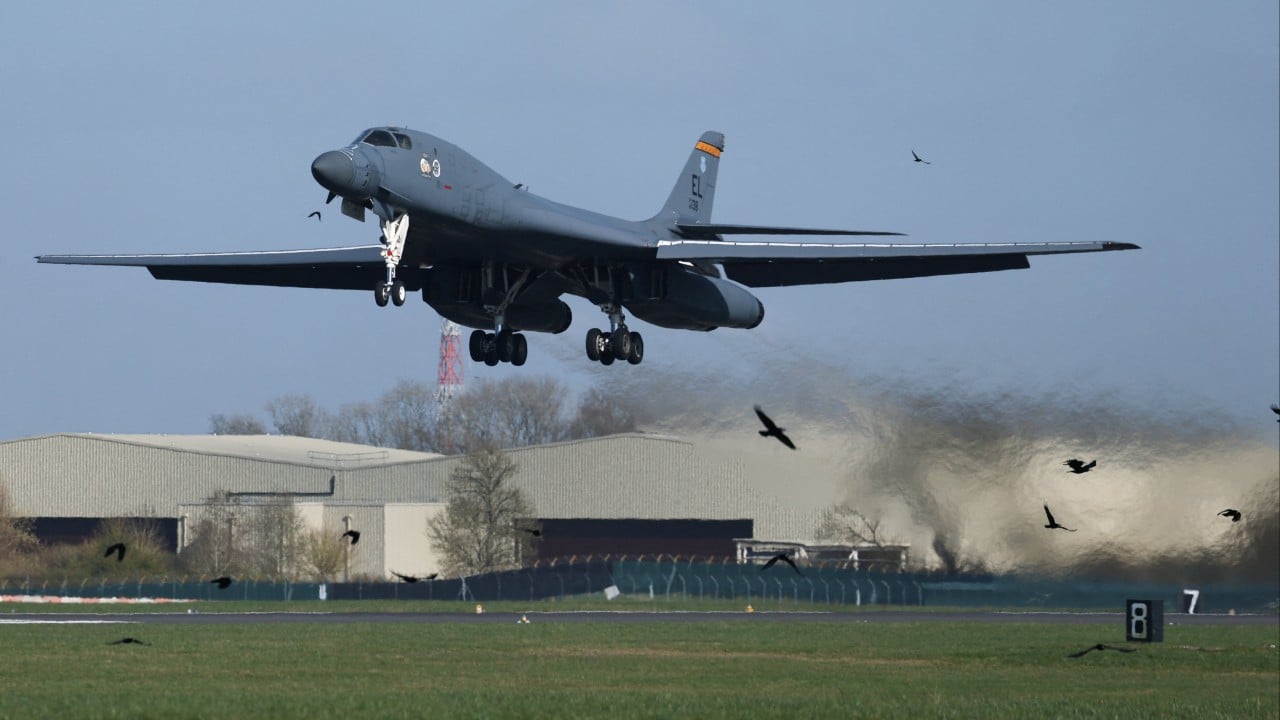
The decision was made behind the thick, soundproofed doors of Downing Street, but the ripples are already tearing through the global energy market and the fragile architecture of British diplomacy. On Friday, the British government formally authorized the United States to use its military bases—specifically the sprawling RAF Fairford in Gloucestershire and the strategically vital Diego Garcia in the Indian Ocean—to launch strikes against Iranian missile sites. These are not broad, offensive maneuvers aimed at regime change, or so the official line goes. Instead, they are "defensive operations" designed to dismantle the batteries currently strangling the Strait of Hormuz.
By allowing American bombers to rotate through British soil for these missions, Prime Minister Keir Starmer has effectively ended weeks of agonizing neutrality. The primary objective is to break the Iranian blockade of the world’s most important maritime chokepoint, where Tehran’s anti-ship cruise missiles have turned a $100-a-barrel oil reality into a looming global depression. But while the mission is framed as a technical necessity for "collective self-defence," the reality is a desperate pivot. Britain, initially hesitant to be dragged into a hot war with Iran, found its hand forced by two unrelenting pressures: a collapsing domestic economy and a scorched-earth critique from Washington.
The End of the "Rolls-Royce" Era
For weeks, the relationship between London and Washington was strained to a degree not seen since the Suez Crisis. President Donald Trump had publicly skewered the UK, once the "Rolls-Royce of allies," for its refusal to grant basing rights at the onset of the conflict on February 28. Starmer’s government had insisted on legal clarity, wary of the ghosts of the Iraq War and a skeptical British public.
That caution vanished as Iranian drones began finding targets closer to home. The calculus shifted permanently after a drone strike hit a hangar at RAF Akrotiri in Cyprus—sovereign British territory. When Iran’s reach extended to striking British interests and regional allies directly, the "legal justification" Starmer sought was suddenly written in the smoke of burning hangars. The UK could no longer claim to be a bystander when its own assets were in the crosshairs.
Why the Strait Matters More Than the Law
The Strait of Hormuz is a narrow vein through which 20% of the world’s oil and 25% of its liquefied natural gas (LNG) flows. Since the outbreak of war, Brent crude has surged past $107, and the UK’s energy-dependent economy is reeling. For the British cabinet, the legal "blurring" of defensive versus offensive action became a secondary concern to the prospect of a winter without affordable heating or fuel.
The agreement specifies that the US can only target missile facilities that have been used to attack shipping or regional allies. This is a delicate, perhaps impossible, distinction to maintain in a theater of war. If a B-2 Spirit lifts off from RAF Fairford, crosses into Iranian airspace, and drops a 5,000-pound "Bunker Buster" on a hardened missile silo, the Iranian response will not distinguish between the pilot’s intent and the base’s location. Tehran has already warned that British "participation in aggression" makes every UK facility a legitimate military objective.
The Internal Fracture
While the government projects a front of "calm, cool heads," the internal reality is fractured. Reports of sharp cabinet splits have leaked, suggesting that senior ministers were deeply concerned that this move effectively makes the UK a co-belligerent in a war it did not start and cannot control.
Public opinion is equally divided. Recent polling suggests that nearly 60% of the British public opposes involvement in the US-Israeli strikes on Iran. This sentiment is even more pronounced among specific demographics; a significant portion of the UK's Muslim population views the conflict not as a defense of shipping, but as an imperialist move to control oil supplies. Starmer is walking a tightrope, trying to satisfy a demanding White House while preventing a domestic firestorm.
A Mission Without an Exit
The strikes launched from British bases are aimed at "degrading" capabilities, but history suggests that air power alone rarely secures a waterway for long. Iran’s missile batteries are mobile, often hidden in "missile cities" carved deep into the Zagros Mountains. Each strike from a British-hosted aircraft invites a counter-strike, likely delivered via asymmetric means—cyberattacks on UK infrastructure, or proxy strikes against British assets in the Gulf.
The UK has entered a cycle of escalation where the definition of "defensive" expands with every new threat. By opening its bases, London has signaled that the security of global trade outweighs the risk of direct conflict with Tehran. It is a gamble of historic proportions. If the strikes clear the Strait, Starmer may be hailed as the pragmatist who saved the economy. If they fail, or if they draw a retaliatory strike onto British soil, the "Rolls-Royce" alliance will have led the UK into a specialized kind of wreckage.
Would you like me to analyze the specific types of long-range munitions being deployed from RAF Fairford for these missions?