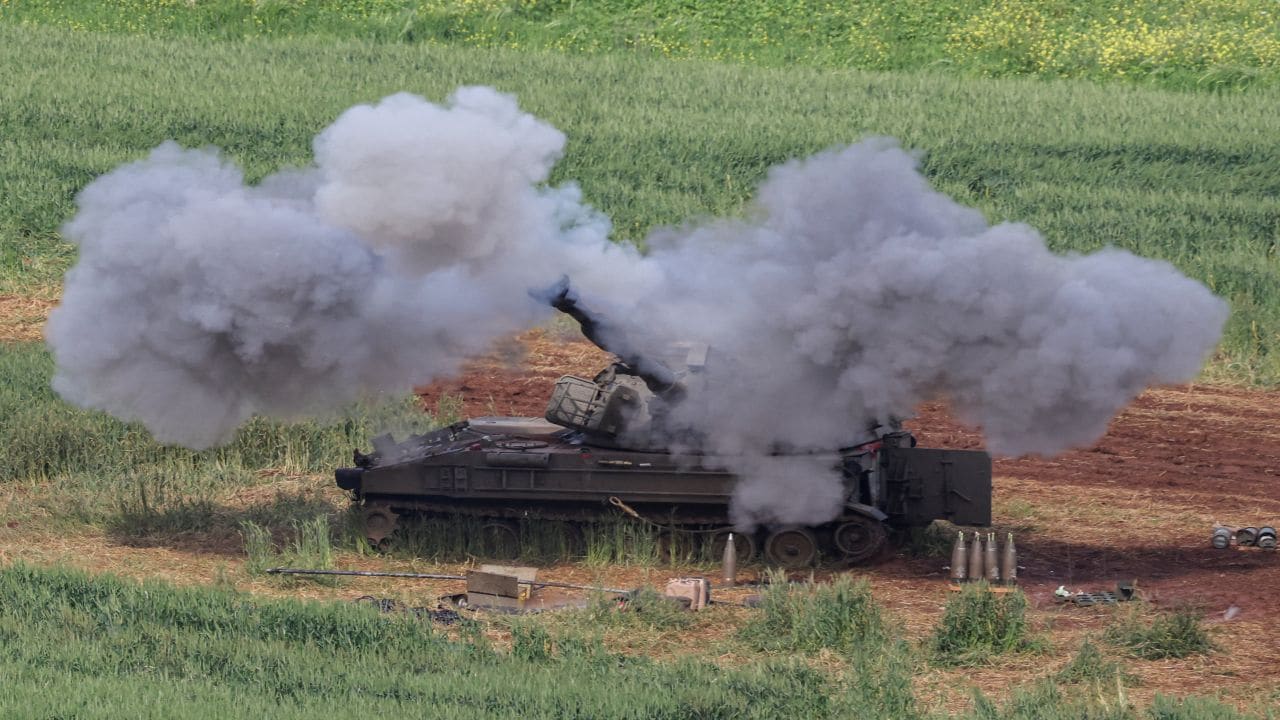
The fragments of a shot-down missile do not care about the sophistication of the battery that intercepted them. On Day 27 of a conflict that has now definitively jumped the fence of the Levant, two civilians in Abu Dhabi paid the ultimate price for a technical success. While official reports focus on the high interception rate of Emirati and U.S. defense systems, the reality on the ground is far grimmer. Kinetic energy is a cold calculator. Even when a terminal-phase interceptor hits its mark, hundreds of kilograms of twisted alloy and unspent fuel must land somewhere. This time, they landed on a residential perimeter, shattering the illusion that the United Arab Emirates could remain a high-end spectator in the escalating shadow war between Israel and Iran.
This isn't just another exchange of fire. It is the collapse of the "safe harbor" status that the UAE has spent decades and billions of dollars cultivating. By dragging the Emirates directly into the line of fire, regional proxies have effectively neutralized the country’s greatest economic asset: the perception of absolute stability.
The Mathematical Failure of Perfect Defense
Military analysts often talk about "leakage" in missile defense, but they rarely discuss the "debris footprint." When a Terminal High Altitude Area Defense (THAAD) or a Patriot PAC-3 missile hits an incoming projectile, the explosion occurs at high altitudes, but the laws of gravity remain undefeated.
The incident in Abu Dhabi highlights a structural flaw in urban missile defense. If you intercept a missile directly over a city, you are effectively turning one large, predictable threat into thousands of unpredictable, high-velocity fragments. In a densely populated hub like Abu Dhabi, there is no "empty space" for this junk to fall.
The hardware worked. The policy failed.
The interceptors did exactly what Raytheon and Lockheed Martin promised they would do. They tracked, locked, and neutralized the incoming threats. However, the tactical success of the interception is overshadowed by the strategic failure of deterrence. If the goal of a multi-billion dollar defense net is to protect civilian life and maintain business continuity, the sight of smoke rising from a residential district suggests the current strategy has reached its limit. We are seeing a shift where the cost of defense is beginning to outweigh the cost of the threat itself, not just in terms of the $3 million interceptors used to down $50,000 drones, but in the human and psychological toll on the population.
Behind the Proxy Curtain
The strikes are being claimed by groups that serve as convenient layers of deniability for Tehran, but the sophistication of the flight paths suggests a level of telemetry and satellite guidance that these groups simply do not possess independently. This is a calibrated pressure campaign.
The objective isn't to level a building or sink a ship. The objective is to trigger the insurance premiums.
When a missile—or even the debris from a neutralized missile—hits a global financial hub, the ripples move through Lloyd’s of London faster than they move through the local emergency services. Shipping lanes in the Persian Gulf are already seeing "war risk" surcharges spike. Airlines are rerouting flights, adding hours of fuel costs and logistical headaches to a region that serves as the world’s transit lounge.
Iran and its affiliates are playing a game of economic attrition. They know they cannot win a conventional kinetic war against the combined weight of the U.S. Fifth Fleet and the Emirati Air Force. They don't have to. They only need to make the UAE look like a "war zone" for fifteen minutes on a news cycle to scare off the FDI (Foreign Direct Investment) that fuels the region’s post-oil ambitions.
The US Response and the Credibility Gap
Washington’s reaction has followed a predictable script: condemnation, a promise of "ironclad" support, and the deployment of additional assets. But there is a growing sense of exhaustion in the Gulf capitals. The Biden administration’s attempts to balance a return to nuclear diplomacy with the need to defend its partners have created a vacuum of certainty.
The UAE is realizing that American hardware can stop a missile, but American policy can’t seem to stop the launch.
This has led to a quiet but frantic diversification of security partners. We are seeing increased intelligence sharing between the UAE and Israel—a direct result of the Abraham Accords being put to the ultimate stress test. Israel’s "Green Pine" radar systems and "Iron Dome" logic are being integrated into Gulf networks at a pace that would have been unthinkable five years ago.
The Integration Challenge
- Radar Handshakes: Making American, Israeli, and indigenous Emirati systems "talk" to each other in real-time is a nightmare of software engineering.
- Latency Issues: In a theater where a missile flight time is measured in low single-digit minutes, a half-second delay in data transmission is the difference between an intercept over the desert and an intercept over a skyscraper.
- Saturation Tactics: The attackers are using "swarm" logic—mixing low-slow drones with high-fast ballistic missiles to confuse the automated logic of defense batteries.
The Hidden Logistics of Day 27
While the world watches the explosions, the real story is in the supply chain. A single night of heavy intercepts can deplete a significant portion of a nation’s "ready-to-fire" interceptor stock. These are not items you can order on short notice. The lead time for a Patriot interceptor can be years.
If the strikes continue at this frequency, the UAE and its neighbors face a "magazine depth" problem. They might literally run out of the silver bullets needed to keep the sky clear. The attackers know this. They are using cheap, mass-produced "suicide drones" to force the expenditure of hyper-expensive interceptors. It is a lopsided economic war where the defender spends millions to save thousands, and eventually, the math breaks.
This is why the "fresh strikes" mentioned in recent reports are so significant. They aren't meant to be a knockout blow. They are a "drain the tank" strategy. Each siren that goes off in Abu Dhabi or Dubai is a withdrawal from the national bank of public confidence.
The Displacement of the "Safe Zone"
For decades, the Gulf monarchies operated under an unwritten rule: keep the mess in the Levant or the mountains of Yemen, and keep the cities as neutral ground for global capital. That rule is dead. The "Day 27" tag is misleading because it implies this is a temporary flare-up.
It is actually the beginning of a permanent state of high-tension friction.
The residents of Abu Dhabi are now experiencing the reality that the residents of Ashkelon or Riyadh have known for years. The sound of an explosion overhead is no longer a distant news item; it is a household event. For an economy built on luxury tourism and international corporate headquarters, this shift is catastrophic. You cannot sell a "luxury lifestyle" in a city where you have to know where the nearest hardened shelter is.
A New Doctrine of Preemption
As the debris is cleared and the families of the victims mourn, the Emirati leadership is facing a choice that will redefine the next decade of Middle Eastern politics. They can continue to rely on a purely defensive "shield" that is proving to be both expensive and porous, or they can move toward a doctrine of active preemption.
This would mean taking the fight to the launch sites, regardless of whose borders they sit behind. It would mean a massive escalation and the end of any remaining diplomatic backchannels with Tehran.
The debris in Abu Dhabi didn't just kill two people; it killed the middle ground.
The UAE is now forced to decide if it will remain a defensive fortress or become an offensive player. Every hour that passes without a clear, decisive shift in the security architecture of the Gulf makes the next "successful" interception—and the inevitable falling debris—more likely.
Stop looking at the hit-to-kill ratios and start looking at the insurance maps. The war has moved, and there are no more safe harbors in the desert.
Investigate the satellite imagery of the launch sites in the coming 48 hours. If the retaliatory strikes don't hit the command and control nodes, we are just waiting for the next piece of metal to fall from a clear blue sky.