Modern globalization functions on the assumption of safe passage through narrow strips of water. If a full-scale conflict with Iran erupts, that assumption evaporates, and the United Kingdom sits at the sharp end of the fallout. While the world focuses on the immediate horror of missile exchanges, the true threat to Britain is a systemic collapse of the "just-in-time" supply chains that keep the lights on and the supermarket shelves full. Britain is not merely a witness to this instability; it is a uniquely exposed casualty due to its reliance on liquefied natural gas (LNG) imports and its position as a global financial hub that cannot tolerate a sudden spike in maritime insurance premiums.
The Chokepoint Trap
The Strait of Hormuz is the world's most sensitive carotid artery. It is roughly 21 miles wide at its narrowest point, yet it carries nearly a fifth of the world’s daily oil consumption and a massive portion of the LNG that fuels British homes. If Iran decides to mine the Strait or deploy its swarm of fast-attack boats, the global energy market does not just "correct." It breaks.
For Britain, this is a crisis of dependency. After moving away from coal and reducing North Sea production through aggressive environmental regulation, the UK has leaned heavily into gas-fired power. Qatar remains a primary source of this gas. When those tankers cannot leave the Persian Gulf, the British grid faces a deficit that domestic production cannot bridge. The result is a price shock that penetrates every layer of the economy, from the cost of a pint of milk to the operational costs of heavy manufacturing.
Why Britain Bleeds First
The United Kingdom occupies a precarious position in the global trade hierarchy. Unlike the United States, which has achieved a degree of energy independence through shale fracking, Britain remains an island nation with thinning stockpiles. Our storage capacity for natural gas is notoriously low compared to European neighbors like Germany or France. This leaves the UK market hyper-sensitive to the slightest tremor in global shipping.
If a tanker is diverted because Lloyd’s of London—the heart of the world's maritime insurance market—suddenly deems the Persian Gulf a "war zone," the premiums skyrocket. This creates a feedback loop. The cost of insuring a vessel becomes so high that the price of the cargo must rise to compensate. Because the UK is at the end of many of these long-haul shipping routes, we pay the "tail-end premium." We are the last to receive the goods and the first to feel the inflationary burn.
The Myth of Diversified Supply
Policymakers often talk about "diversifying" our energy sources to mitigate risk. This is a comforting fiction. The global gas market is interconnected; if Qatari LNG is blocked, every other source—from American tankers to Norwegian pipelines—becomes the subject of a global bidding war. Britain, with its devalued pound and struggling GDP, finds itself outbid by the massive industrial engines of Asia and the European Union.
The Stealth Tax of Maritime Warfare
War in the Middle East is a tax on the British consumer that never passes through Parliament. It manifests in the "war risk" surcharges added to every shipping container arriving at Felixstowe or Southampton.
Modern logistics are built on the principle of minimal friction. Every time a drone strike hits a commercial vessel or a naval blockade is declared, friction increases. This friction is not just a delay; it is a financial drain. For a country like the UK, which imports nearly 50% of its food, a disruption in the Middle East doesn't just mean higher petrol prices. It means food insecurity. The logistical nightmare of rerouting ships around the Cape of Good Hope adds weeks to transit times and millions of dollars to operational costs per voyage.
The Breakdown of Interconnectedness
Globalization was sold as a way to make war impossible by making everyone dependent on everyone else. The reality is that it has merely made everyone vulnerable to a single point of failure. The Persian Gulf is that point.
The British economy is built on service sectors—finance, insurance, and legal services. These sectors thrive on stability and the rule of law. When a regional power like Iran decides to challenge the "freedom of navigation" that the Royal Navy once guaranteed, the entire architecture of British wealth is called into question. If the UK cannot protect the lanes that carry its lifeblood, its status as a top-tier economic power is a vanity project.
The Royal Navy’s Hollow Shield
For decades, the United Kingdom has relied on its "Special Relationship" with the United States to keep the trade routes open. But the U.S. focus is shifting toward the Pacific. The Royal Navy, once a globe-spanning force, has shrunk to a fraction of its former self. We have carriers but often lack the full complement of aircraft or the escort ships required to protect them in a high-intensity conflict zone.
This military overstretch has direct economic consequences. If the UK cannot contribute meaningfully to a maritime task force in the Gulf, it has no leverage when it comes to prioritizing its own energy shipments. We are effectively at the mercy of others' strategic priorities. If Washington decides that protecting Taiwanese semiconductor shipments is more important than Qatari gas tankers, Britain simply has to wait in line.
The Manufacturing Death Spiral
High energy costs act as a corrosive acid on the British industrial base. When gas prices spiked following the invasion of Ukraine, several UK fertilizer plants and glass manufacturers were forced to suspend operations. A war in the Gulf would be significantly worse.
If electricity prices remain permanently elevated due to Middle Eastern instability, the "re-industrialization" of Britain becomes a fantasy. No company will invest in a factory in the UK if they can get cheaper, more reliable power in the U.S. or even parts of Eastern Europe. We are facing a permanent loss of industrial capacity that cannot be regained once the skilled workforce disperses and the machinery is sold for scrap.
The Financial Hub’s Vulnerability
London’s position as a premier financial center depends on its ability to price risk. But a conflict involving Iran introduces "un-priceable" variables.
What happens to the derivatives market when a sovereign state begins seizing commercial vessels as a matter of policy? What happens to the bond market when the UK government has to borrow billions more to subsidize home heating bills during a winter blockade? The shockwaves from the Gulf would hit the City of London with the force of a tsunami. The volatility alone is enough to send capital fleeing to the perceived safety of the U.S. Dollar, further weakening the Pound and making our imports even more expensive.
The Inflationary Ghost
We are told that inflation is under control. That is a lie based on the assumption that the world will remain peaceful. A Persian Gulf war would re-ignite the inflationary fire with a ferocity we haven't seen since the 1970s.
It is not just about the price at the pump. It is about the cost of everything that moves by sea or requires heat to produce. The Bank of England would be forced to choose between raising interest rates to save the currency—thereby crushing homeowners—or letting the currency collapse to protect the economy, which would make the cost of living unbearable. It is a zero-sum game where Britain is the guaranteed loser.
The Failure of Strategic Reserves
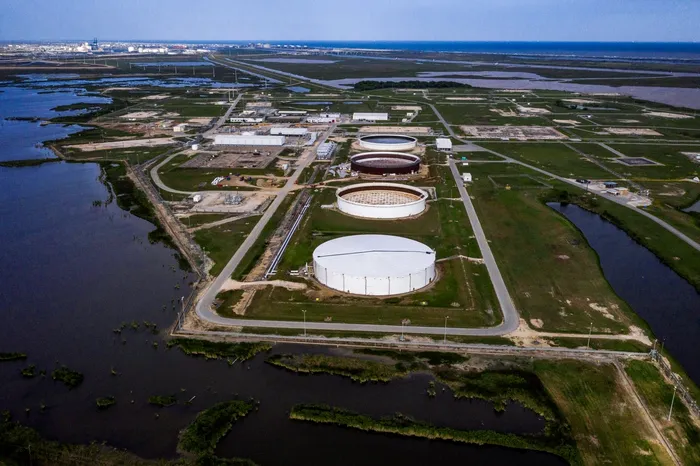
The UK’s lack of a strategic petroleum reserve on the scale of the American SPR is a glaring oversight that borders on negligence. We have private industry stocks, but no massive, state-controlled buffer to weather a long-term disruption in the Gulf. This means the British government has almost no tools to intervene in the market. They can offer "energy price caps," but those are merely accounting tricks that shift the debt from the consumer to the taxpayer. Eventually, someone has to pay the bill.
If the Strait of Hormuz is closed for more than thirty days, the "just-in-time" economy stops. Hospitals will struggle with medical supplies, many of which are manufactured in Asia and transit through the region. The automotive sector will grind to a halt as components fail to arrive. This is the reality of a globalized system that has optimized for efficiency while completely ignoring resilience.
A New Era of Scarcity
The British public has grown accustomed to the idea that anything they want can be delivered to their door within 48 hours. That era is ending.
The looming threat of a Persian Gulf war should be the final wake-up call that the current model of globalization is broken beyond repair for an island nation. We have traded our security for cheap goods, and now the bill is coming due. The vulnerability of the UK is not an accident; it is the logical conclusion of thirty years of policy that prioritized short-term market gains over long-term national survival.
If the missiles start flying in the Gulf, the first thing to die won't be a soldier or a sailor; it will be the British standard of living. We have built our house on a foundation of cheap energy and open seas, and both are now under direct threat from a regime that has nothing to lose by burning the whole system down.
Prepare for a world where the sea is no longer a highway, but a barrier.