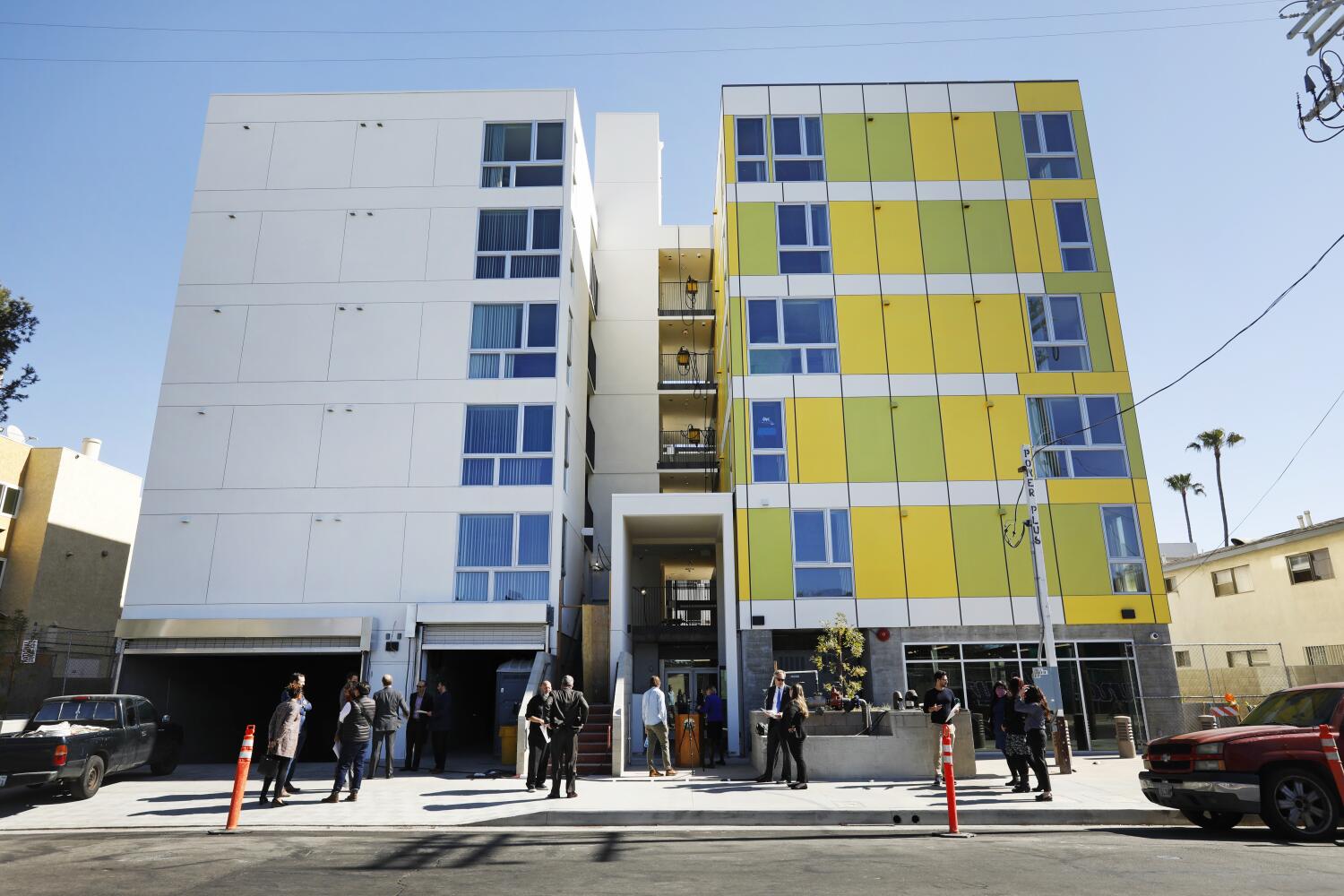
Los Angeles County is finally putting money where its mouth is. Through the newly formed Los Angeles County Affordable Housing Solutions Agency (LACAHSA), the region has greenlit hundreds of millions of dollars to fund over 800 units of affordable housing. This isn't just another layer of bureaucracy; it is a desperate attempt to fix a broken pipeline that has left thousands on the streets while luxury high-rises sit half-empty. By pooling resources across 88 different cities, the agency aims to bypass the "not in my backyard" (NIMBY) roadblocks that historically killed projects before the first shovel hit the dirt.
The scale is massive. The problem is bigger.
For decades, affordable housing in Southern California was a fragmented mess. A developer might have a viable project in Glendale but face a completely different set of zoning nightmares and funding gaps than they would in Long Beach. LACAHSA was designed to be the "one-stop shop" for regional housing finance. It has the power to raise its own revenue through taxes and bonds, a move that theoretically insulates housing production from the whims of annual city budgets.
The Infrastructure of a Crisis
Building an apartment building in Los Angeles is an exercise in financial masochism. Between land costs, environmental reviews, and the spiraling price of labor, a single "affordable" unit can cost upwards of $600,000 to produce. If you are a developer, the math rarely pencils out without massive public subsidies.
The new agency is targeting the "gap" in this equation. Most projects stall because they are short a few million dollars after exhausting state and federal tax credits. LACAHSA’s initial funding rounds are designed to be the "last money in," the final push that moves a project from a blueprint to a construction site.
However, funding units is the easy part. Sustaining them is where the blueprint often fades.
Money is Not a Magic Wand
We have seen this movie before. In 2016, voters approved Proposition HHH, a $1.2 billion bond intended to triple the city’s output of supportive housing. Ten years later, the results are a mixed bag of soaring costs and sluggish timelines. The skeptics are already circling LACAHSA, wondering if this new agency is simply another vessel for administrative bloat.
The difference this time lies in the Regional Focus.
Historically, the City of Los Angeles carried the heavy lifting while smaller, wealthier enclaves like Beverly Hills or San Marino largely opted out of the housing crisis. LACAHSA operates on a county-wide mandate. It forces the entire region to acknowledge that a person priced out of an apartment in Santa Monica eventually ends up on a sidewalk in Hollywood. The crisis does not respect city limits, and for the first time, the funding mechanism won’t either.
Why Projects Die in the Cradle
To understand why this agency matters, you have to look at the "Death by a Thousand Papercuts" that defines California real estate.
- Zoning Restrictions: Many areas are still locked into single-family residential codes that make density illegal.
- CEQA Abuse: The California Environmental Quality Act is frequently weaponized by neighbors to stall low-income projects for years.
- Interest Rates: As federal rates climbed, the cost of private construction loans skyrocketed, making public subsidies more vital than ever.
LACAHSA is attempting to mitigate these factors by providing low-interest, long-term financing that private banks won't touch. By acting as a public lender, the agency can prioritize social return over immediate profit margins.
The Preservation Trap
While the headlines focus on "new" units, the real battle is being fought over the units we already have. Los Angeles loses affordable housing faster than it can build it. When a "naturally occurring" affordable building is sold to a private equity firm, the first move is almost always to renovate and hike the rent.
A significant portion of the new funding is earmarked for Preservation.
This means the agency isn't just building new glass and steel boxes; it's cuting checks to non-profits to buy existing rent-stabilized buildings. This keeps current tenants in place and prevents them from entering the homeless services system. It is a defensive strategy. It is cheaper to keep a person in an existing $1,200 apartment than it is to build them a new one for $600,000.
The Political Minefield
The agency’s power to tax is its greatest strength and its most vulnerable flank. Currently, LACAHSA is looking at various revenue streams, including potential "mansion taxes" or business payroll taxes. These are politically radioactive.
The business community argues that piling more taxes onto an already expensive region will drive employers to Texas or Arizona. Meanwhile, housing advocates point to the tens of thousands of people living in encampments as proof that the cost of doing nothing is far higher than any payroll tax.
A Systemic Overhaul or a Band-Aid
The 800+ units recently announced are a drop in the bucket. Los Angeles County needs hundreds of thousands of units to meet demand and stabilize prices. If the agency stays at its current pace, it will take centuries to house the current population of unhoused residents.
The goal isn't just to fund 800 units. The goal is to prove the model works so that voters and legislators feel comfortable scaling it to 8,000 or 80,000 units.
This requires a level of transparency that LA agencies have historically lacked. Every dollar must be tracked. Every delay must be explained. If LACAHSA becomes another "black hole" of consultant fees and delayed permits, it will be the last time the public trusts a regional housing authority with their tax dollars.
The Labor Problem
Construction costs aren't high just because of material prices. There is a chronic shortage of skilled tradespeople in Southern California. Every affordable housing project is competing for the same plumbers, electricians, and carpenters as the luxury developers and the massive infrastructure projects like the LAX expansion or the upcoming Olympics prep.
The agency has to navigate Project Labor Agreements (PLAs) which ensure fair wages but also add to the bottom-line cost of each unit. It is a tension between two progressive goals: providing housing for the poor and providing high-paying union jobs for the middle class. You cannot have one without the other, but you also cannot ignore that this makes the "per-unit" cost look astronomical to the average taxpayer.
The Middle-Class Squeeze
One of the most overlooked aspects of the LACAHSA mandate is Workforce Housing.
Most housing subsidies are targeted at those making less than 30% or 50% of the Area Median Income (AMI). But in Los Angeles, even people making 80% or 100% of the AMI—teachers, nurses, firefighters—are struggling to find a place to live. If the agency only focuses on the "deeply low income," it ignores the massive chunk of the population that makes too much for help but too little for a mortgage.
The new funding cycles are starting to look at "Missing Middle" housing. This involves creating units for the people who keep the city running but can no longer afford to live in it. It’s a shift from "social services" to "urban stability."
The Scalability Question
If you want to know if this agency will succeed, don't look at the ribbon-cutting ceremonies for the first 800 units. Look at the time it takes to get from "Awarded" to "Occupied."
In the private sector, time is money. In the public sector, time is often an afterthought. LACAHSA claims it will streamline the process, but it is still operating within a web of state laws and local ordinances. They are trying to build a fast car while driving on a road full of potholes.
The real test comes when the agency attempts to float its first major bond. That is when the market—and the voters—will decide if this is a legitimate solution or just another expensive layer of the status quo.
The money is on the table. The projects are identified. The people are waiting. Now, the agency has to prove it can actually build something besides a bigger bureaucracy.