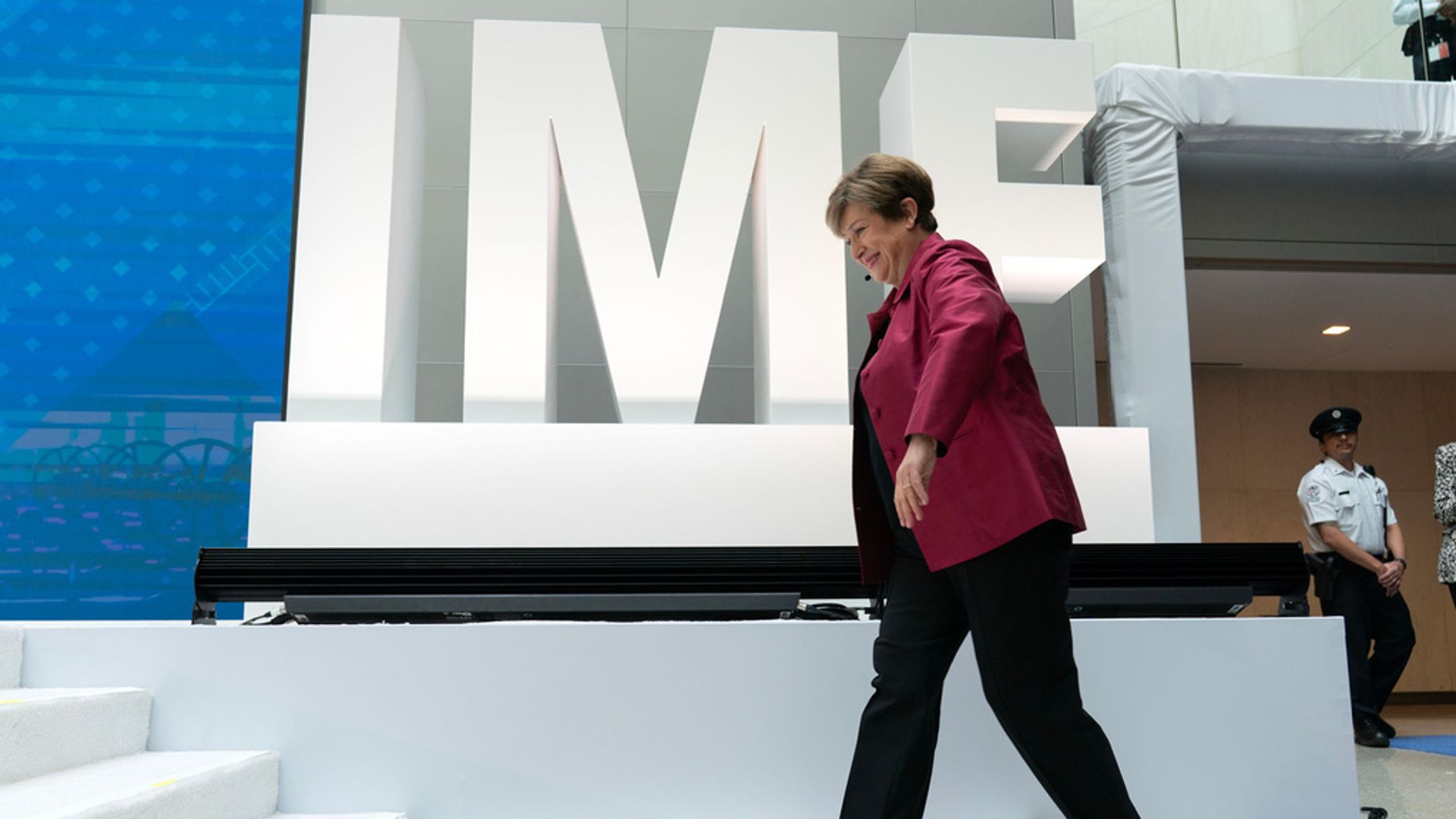
The International Monetary Fund has just confirmed what every worker in the British Isles already suspected while looking at their energy bills. The UK economy is not just slowing; it is being aggressively outpaced by every other major advanced nation. In its latest World Economic Outlook, the IMF slashed Britain’s 2026 growth forecast from a modest 1.3% to a dismal 0.8%. This 0.5 percentage point drop represents the steepest downgrade among the G7. While nations like the United States and even the sluggish Eurozone are finding ways to weather the current geopolitical storm, Britain remains uniquely exposed to a cocktail of high energy costs, stagnant investment, and a fiscal straitjacket that leaves no room for error.
This is not a temporary blip. It is the result of a structural fragility decades in the making. The UK remains dangerously reliant on imported gas for both heating and electricity pricing, ensuring that any flare-up in the Middle East translates directly into a domestic cost-of-living crisis. When energy prices spike, the British economy does not just bend; it breaks. Unlike its peers, the UK lacks the domestic energy security of the US or the diversified industrial resilience of Germany. For an alternative view, see: this related article.
The Energy Trap and the Cost of Inaction
The primary driver for this latest downgrade is the eruption of conflict in the Middle East, which has sent shockwaves through energy markets. For the UK, this is a recurring nightmare. The IMF notes that the central role of gas in the British energy mix makes the country a massive outlier. When wholesale prices rise, they filter through to households and businesses faster and more aggressively than in almost any other developed economy.
This vulnerability is compounded by a labor market that is beginning to crack. Unemployment is now projected to climb to 5.6% by the end of 2026. For a decade, the UK avoided total stagnation through high employment levels, even if the jobs were low-productivity and low-wage. That shield is gone. Companies, squeezed by the highest borrowing costs in fifteen years and surging energy overheads, are finally pulling back on hiring. The result is a vicious cycle where falling real incomes lead to reduced consumer spending, further depressing the growth that the government desperately needs to fix the public finances. Similar coverage on this trend has been shared by Reuters Business.
A Crisis of Investment and Productivity
The real scandal isn't just the 0.8% growth figure. It is the underlying collapse of business investment. The EY ITEM Club recently revised its business investment outlook for 2026 from growth to a contraction of 0.2%. This is a catastrophic signal. In a modern economy, investment is the only way to drive the productivity gains that lead to higher wages. Without it, the UK is effectively trying to run a marathon with its shoelaces tied together.
British productivity has been a ghost story for fifteen years. The gap between the UK and countries like France or the US has doubled since 2008. We are currently 18% less productive than our closest peers. This translates to roughly £3,400 in lost output for every single person in the country. To put it bluntly, the British worker is not less talented or less hardworking; they are simply working with older equipment, worse infrastructure, and more expensive energy than their counterparts across the English Channel.
Fiscal Paralysis at Number 11
Chancellor Rachel Reeves is facing a mathematical impossibility. The IMF and OECD have both pointed out that the UK's high level of government debt—now hovering at a post-war high—leaves zero "fiscal space." In plain English, the government cannot spend its way out of this hole. Tax thresholds remain frozen, dragging more people into higher brackets and further dampening the consumer spending that accounts for roughly 60% of UK GDP.
While the Bank of England has begun a slow cycle of rate cuts, the "monetary impulse" is not reaching the street fast enough. Most homeowners are still transitioning from ultra-low fixed-rate mortgages to significantly higher ones, a delayed-action bomb that is still exploding in household budgets. Even with inflation expected to hover around 3% in 2026, the cost of servicing both public and private debt is eating the seed corn of future growth.
The Trade Malaise
Brexit continues to exert a quiet, grinding pressure on the economy that many in Westminster prefer to ignore. Trade intensity in the UK remains significantly below pre-pandemic levels, while it has rebounded in the rest of the G7. Goods exports have collapsed, reaching their lowest share of GDP since the early 1990s. While services exports—driven by London’s financial and professional sectors—have remained resilient, they cannot carry the entire weight of a national economy.
The loss of frictionless trade with Europe has created a permanent overhead for British manufacturers. Small businesses that once exported easily to the continent have simply given up, citing the paperwork and cost. This "de-growth" in the trade sector is a primary reason why the IMF sees Britain as the most vulnerable major economy. We have traded a large, stable trading bloc for a seat at the table of global volatility, and the price of that seat is proving to be ruinously high.
Breaking the Stagnation Cycle
Fixing this requires more than just optimistic rhetoric about "industrial strategy." It requires a brutal reckoning with the UK’s energy dependency. Until the country de-links electricity prices from the marginal cost of gas, it will remain at the mercy of every pipeline disruption and regional conflict. The government’s plan to build 1.5 million new homes is a start, but without a massive injection of private capital into infrastructure and technology, it will merely be a housing boom in a hollowed-out economy.
The UK is currently a "stagnation nation" where low growth and high inequality have become the default setting. The latest downgrades are a final warning. Without a fundamental shift toward incentivizing long-term business investment and securing cheap, domestic energy, the 2026 figures will not be the floor. They will be the new ceiling. Britain is running out of time to prove it is still a top-tier global economy.
Stop waiting for a "return to normal" that is never coming and start protecting your own capital.