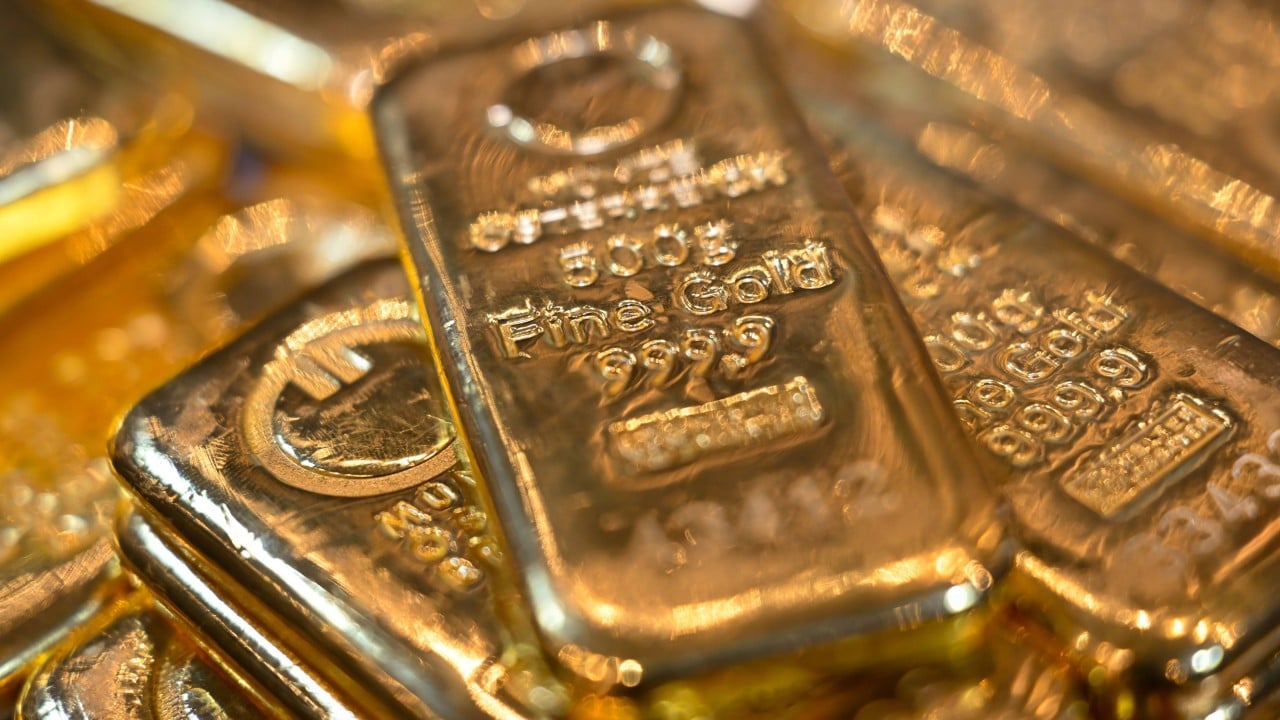
The traditional playbook for gold bugs just went up in flames. For decades, the narrative was simple: when war breaks out in the Middle East and inflation begins to heat up, you buy gold. It is the ultimate insurance policy, a non-correlated asset that thrives on chaos. Yet, in March 2026, as the conflict between the United States, Israel, and Iran escalates into a hot war, the exact opposite is happening. Gold is not just slipping; it is enduring a violent liquidation, crashing nearly 9% in a single week to trade near $4,500 per ounce.
The core reason for this breakdown is a brutal recalculation of opportunity cost by the world's largest institutional players. While geopolitical fear is high, the Federal Reserve has effectively weaponized the U.S. dollar, turning it into a high-yield haven that currently offers more "safety" than a bar of yellow metal. On March 18, the Federal Open Market Committee (FOMC) held interest rates steady at 3.5% to 3.75%, but the real damage came from the "dot plot" and Jerome Powell’s rhetoric. By signaling that only one rate cut remains on the table for the entirety of 2026, the Fed has signaled that the era of "higher for longer" is far from over.
When you can earn a guaranteed 4% or 5% on dollar-denominated paper, the appeal of a metal that pays zero yield and costs money to store evaporates. This is no longer a market driven by retail fear; it is a mechanical flush-out driven by yields and currency differentials.
The Oil Shock Paradox
Market participants expected the surge in crude oil—now screaming past $119 per barrel—to be the catalyst for a gold moonshot. Historically, energy-led inflation is a gold-buying signal. However, in the current macro environment, expensive oil is being viewed as a tax on growth and a fuel for the Fed’s hawkishness.
Higher oil prices mean stickier inflation. Stickier inflation means the Fed cannot pivot to the rate cuts that gold bulls have been salivating over since late 2025. Instead of acting as a hedge, gold is being treated as a source of liquidity. When margin calls hit in other sectors—like the underperforming tech stocks or the volatile energy futures—traders sell what they have a profit in. Having rallied from $2,600 to over $5,500 in the previous twelve months, gold was the largest "piggy bank" available for institutional cash grabs.
Why the Safe Haven Label is Failing
The most striking development of early 2026 is the total dominance of the U.S. Dollar Index (DXY). Normally, in a crisis, both gold and the dollar might rise. But the US-Iran conflict has placed the United States in the role of a primary actor, driving a massive rotation into the greenback.
- Yield Superiority: European and Japanese central banks are lagging behind the Fed's hawkish curve, making the dollar the most attractive yield-bearing safe haven.
- ETF Outflows: Institutional investors are dumping gold-backed ETFs at the fastest rate in 40 years. This isn't a panic; it's a cold, calculated reallocation toward fixed income.
- CTA Liquidation: Commodity Trading Advisors (CTAs)—the massive trend-following funds—have seen their technical "sell" triggers hit as gold breached the $4,800 and $5,000 support levels.
The De-Dollarization Counter-Argument
While the short-term tape looks disastrous, it is vital to distinguish between a liquidity event and a structural collapse. The "veterans" in the room—the sovereign wealth funds and central banks in Asia and the BRICS nations—are not selling. In fact, data suggests that while Western paper gold (ETFs and COMEX futures) is being liquidated, physical premiums in Singapore and Shanghai remain stubbornly high.
These buyers are playing a decade-long game. They see a U.S. fiscal deficit that is unsustainable and a global debt load that can only be resolved through currency debasement. To them, this 15% to 18% correction from the January highs isn't a "collapse"; it is a gift. They are watching the Fed try to fight a supply-side oil shock with demand-side interest rate hikes—a strategy that historically leads to a "hard landing" or stagflation.
The Support Line in the Sand
For the average investor, the noise is deafening. However, technical reality dictates the next move. The $4,470 to $4,500 range is the definitive battleground. If gold closes below this level on a weekly basis, the "freefall" scenario toward $4,200 becomes a statistical probability as the remaining leveraged longs are forced to close their positions.
We are currently witnessing a "regime shift" where the old rules of thumb—war equals gold—are being overridden by the sheer gravity of real interest rates. Until the Federal Reserve actually begins to cut, or the U.S. economy breaks under the weight of $120 oil, the dollar will remain the apex predator of the financial markets. Gold hasn't lost its luster; it has simply lost its lead to a currency that now pays you to wait.
Would you like me to analyze the specific central bank gold purchase data from the last quarter to see which nations are currently buying this dip?