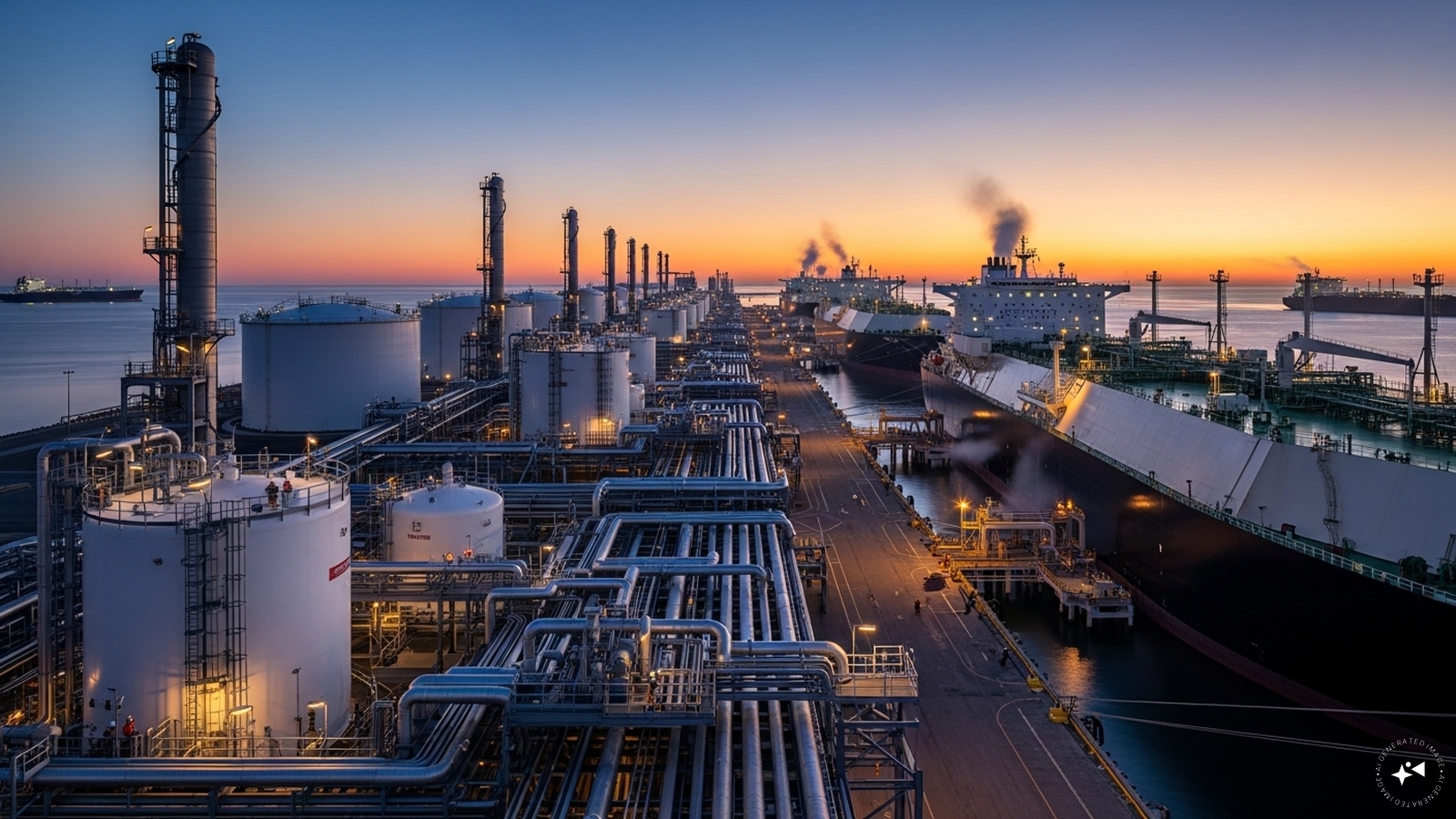
The global energy map was redrawn this week in the narrow, turquoise waters of the Strait of Hormuz. When the Iranian Revolutionary Guard Corps (IRGC) Navy intercepted the Pakistan-bound vessel SELEN and forced it to reverse course, it wasn't just a localized maritime dispute. It was a cold assertion of sovereignty over a chokepoint that carries 20% of the world’s oil. For Pakistan, the optics are devastating: a ship carrying food for Karachi was turned back even as Islamabad attempted to position itself as a neutral mediator in the burgeoning West Asia conflict. For India, the message was received loud and clear, sparking an unprecedented domestic mandate that will change how millions of citizens cook their daily meals.
The Ministry of Petroleum and Natural Gas has dropped a policy hammer that signals the end of an era for the iconic red LPG cylinder. Under the newly notified Natural Gas and Petroleum Products Distribution Order 2026, the Indian government is making the transition from Liquefied Petroleum Gas (LPG) to Piped Natural Gas (PNG) mandatory. In any area where pipeline infrastructure exists, households have exactly three months to switch. If they don't, the LPG trucks simply stop coming. This is not a gentle nudge toward "green energy"; it is a survival tactic for a nation watching its primary energy corridor turn into a combat zone.
The Hormuz Trap and the Mediation Myth
The interception of the SELEN serves as a grim reality check for regional diplomacy. Rear Admiral Alireza Tangsiri’s statement was clinical, noting that "non-hostile" vessels must now secure explicit Iranian clearance or face interception. By blocking a vessel destined for Pakistan—a country that has spent the last 48 hours offering to host peace talks between Tehran and Washington—Iran has signaled that "friendship" does not grant an exemption from its new maritime tax.
This blockade is significantly more sophisticated than the "tanker wars" of the 1980s. Iran is now utilizing a tiered access system. Vessels linked to the United States or Israel are barred outright, while others are subjected to a bureaucratic gauntlet that can involve "transit fees" or indefinite delays under the guise of protocol violations. The SELEN, flying the flag of St. Kitts and Nevis but carrying essential supplies for a regional neighbor, became the latest victim of this gatekeeping.
The impact on global shipping is already quantifiable. Tanker traffic through the strait has plummeted by nearly 70% in March alone. While oil prices briefly dipped below $100 on rumors of a five-day "pause" in hostilities, the underlying physical reality remains bleak. Insurance premiums for "war risk" have been retracted by major underwriters, making it economically suicidal for most commercial ship owners to attempt the passage without state-backed guarantees.
Indias Infrastructure Ultimatum
New Delhi’s response has been to accelerate a domestic energy overhaul that was originally planned to take a decade. The 2026 Order, issued under the Essential Commodities Act, removes the element of choice for six million initial consumers. The logic is rooted in a brutal comparison of import dependencies. India imports over 60% of the LPG it consumes, with nearly half of that coming from Qatar. In contrast, the nation produces roughly 50% of its natural gas requirements domestically.
By forcing a shift to PNG, the government is effectively attempting to "insulate" the urban kitchen from the volatility of the Persian Gulf. The order includes several aggressive provisions:
- Deemed Approvals: If local authorities or housing societies don't grant "Right of Way" for pipelines within specified windows, permission is automatically treated as granted.
- The Three-Month Clock: Once a local distributor notifies a household that a pipeline is available, the countdown begins. Failure to apply for a connection results in a total cessation of LPG supply.
- Technical Infeasibility: Only a formal No-Objection Certificate (NOC) from the gas company, certifying that a connection is physically impossible, can save a household’s LPG connection.
This isn't just about consumer behavior; it's a massive deregulation of the pipeline industry. Authorized entities are now mandated to begin laying pipes within four months of approval or risk losing their exclusivity. To resolve the inevitable "not in my backyard" disputes, the government has empowered designated officers with the authority of a civil court to settle land access issues.
The Russian Pivot and the Premium Price of Stability
While the government squeezes the domestic consumer to shift to gas, Indian refiners are playing a high-stakes game of "catch it while you can" on the global market. In the last month, refiners have ramped up purchases of Russian crude to a staggering 60 million barrels. This isn't just a search for discounts; it's a search for volume that doesn't have to pass through the Hormuz gauntlet.
However, the "cheap Russian oil" narrative is dead. Indian companies are reportedly paying premiums of $5 to $15 over the Brent benchmark to secure these cargoes and cover the astronomical freight and insurance costs associated with circumventing the conflict zones. The result is a paradox: global oil prices might look stable on a screen, but the actual cost of landing that oil in Mumbai or Jamnagar is climbing.
The Logistics of a Piped Nation
The logistical challenge of the PNG mandate cannot be overstated. India currently has roughly 16 million PNG connections compared to over 330 million LPG users. To bridge this gap, the government is betting on the "One Nation, One Grid" framework. The goal is to hit 40,000 kilometers of pipeline by 2030, a feat that requires tripling the historical rate of construction.
The shift also targets the "Ujjwala" dilemma. For years, the government subsidized LPG to move poor households away from toxic biomass. Now, the priority is to move those with the infrastructure—the urban middle class—onto the grid to free up the remaining LPG stocks for rural areas that pipelines will never reach. It is a redistribution of energy risk.
Critics argue that the three-month window is too short for a country where housing society approvals can take years and where the "dig and restore" quality remains abysmal. Yet, the Ministry of Petroleum seems convinced that only a shock to the system will break the inertia. The message to the Indian consumer is clear: the era of the portable fuel tank is a luxury the state can no longer afford to support in an age of maritime blockades.
The SELEN turning back at Hormuz was the starter's pistol for an energy race that India is now running at a sprint. The strategy is to stop being a hostage to the geography of the Middle East by turning the nation’s own soil into a vast, interconnected fuel tank. Whether the infrastructure can keep pace with the geopolitics is a question that will be answered in the kitchens of New Delhi and Mumbai over the next ninety days.
Would you like me to analyze the specific financial implications of the PNG transition for a typical Indian urban household?