A speeding driver slammed into a crowd at 85th Avenue and International Boulevard in East Oakland on Saturday night, killing three people and injuring five others. The catastrophic collision occurred just after 11:00 p.m. when a primary two-vehicle wreck escalated into a mass-casualty event on the sidewalk. Emergency responders transported multiple victims to local trauma centers, where two remain in critical condition. The driver of the black SUV responsible for the carnage attempted to flee the scene on foot but was physically detained by neighborhood bystanders until police arrived.
This is not an isolated traffic accident. It is the predictable consequence of a long-standing failure to secure one of Northern California's most dangerous transit corridors. If you found value in this post, you might want to check out: this related article.
The Anatomy of an Avoidable Catastrophe
Witness accounts and preliminary reports from the Oakland Fire Department paint a chaotic picture of the moments leading up to the crash. A collision between two vehicles outside a local liquor store served as the catalyst. Following the initial impact, the driver of a black SUV allegedly accelerated heavily, losing control and mounting the curb where a crowd had gathered.
Three pedestrians died on the pavement. The impact was violent enough to leave wreckage strewn across multiple lanes, forcing a prolonged closure of International Boulevard as traffic investigators documented the scene. The driver sustained only minor injuries and was taken into custody after community members intervened to prevent an escape. For another angle on this story, refer to the recent coverage from NPR.
The intersection of 85th Avenue and International Boulevard has long been recognized by urban planners and residents as a hotspot for high-speed reckless driving. For years, the city has attempted to balance rapid transit needs with pedestrian safety, yet the body count continues to rise. This latest incident highlights a glaring disconnect between city infrastructure design and the reality of the behavior on the street.
Failed Infrastructure and the Illusion of Safety
International Boulevard underwent a massive redesign in recent years, specifically engineered to accommodate a Bus Rapid Transit (BRT) system. The project added dedicated transit lanes, pedestrian bulbs, and modified signaling meant to calm traffic.
It did the opposite.
Instead of slowing down vehicles, the wide, straight configuration of the corridor frequently turns into a drag strip after dark. Drivers regularly utilize the dedicated bus lanes to bypass standard traffic, accelerating to lethal speeds in areas heavily populated by foot traffic.
Urban planning experts argue that paint and plastic bollards are insufficient deterrents for drivers operating with total disregard for traffic laws. Physical barriers, raised crosswalks, and automated enforcement mechanisms are often discussed in city council chambers, but implementation lags far behind the necessity. The neighborhood is left with an infrastructure that creates an illusion of safety while doing little to protect the vulnerable.
The Civilian Response to a Policing Vacuum
One of the most telling details of Saturday night's tragedy is the civilian intervention. The fact that ordinary citizens had to physically restrain a fleeing suspect before law enforcement arrived speaks directly to the current state of public safety in East Oakland.
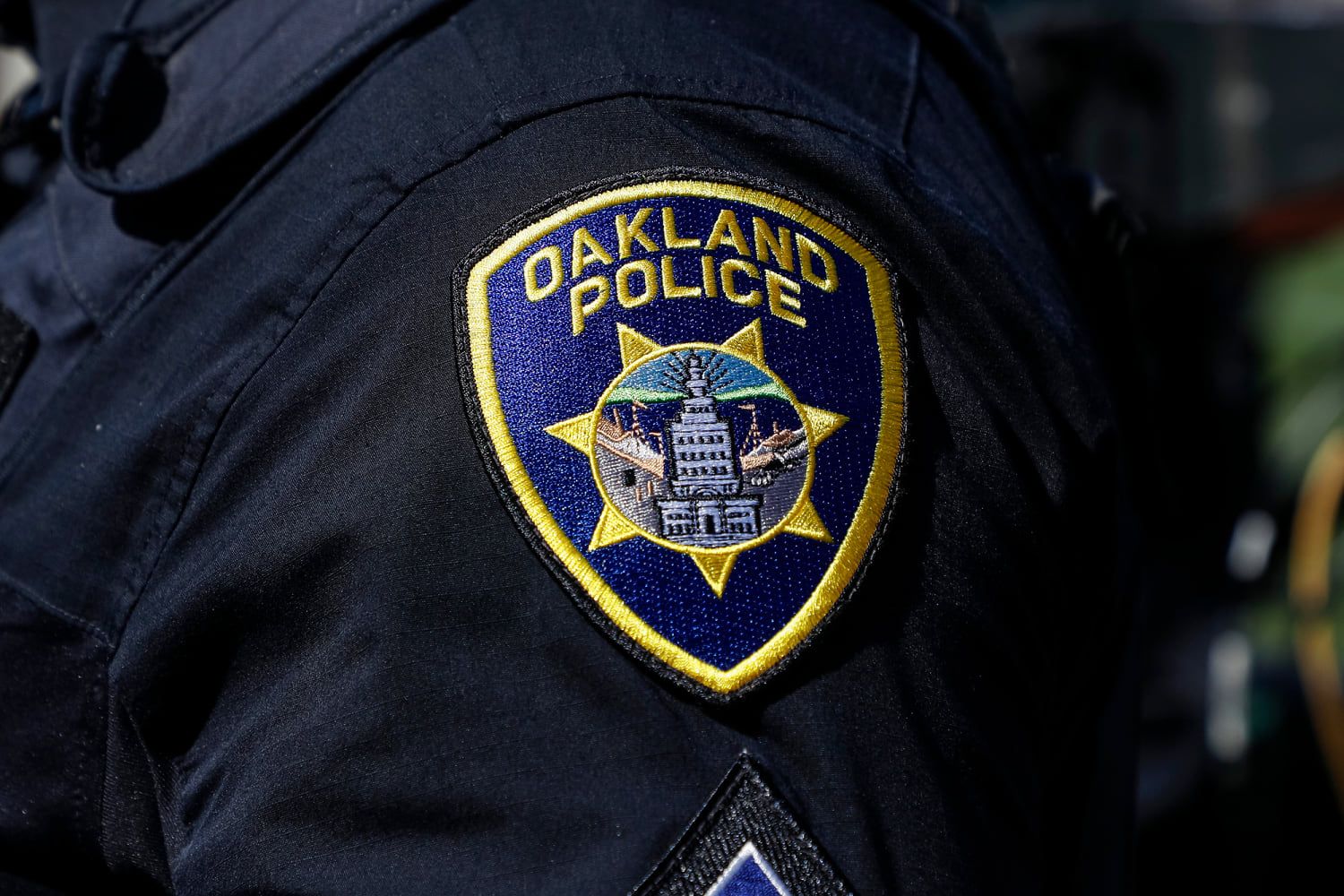
The Oakland Police Department has struggled with staffing shortages, slow response times, and shifting enforcement priorities for over a decade. In high-crime or high-traffic areas, residents frequently report a feeling of abandonment, realizing that when chaos erupts, they are their own first line of defense.
"We can't just wait for the flashing lights anymore," said one local resident who witnessed the aftermath. "If the people on the block didn't grab him, that driver would be gone."
While law enforcement officials routinely caution against civilians intervening in dangerous situations, the reality on the ground dictates otherwise. Mutual aid and community intervention have become a necessity in neighborhoods where municipal services feel distant.
The Long Road to Systemic Accountability
Investigating a crash of this magnitude requires looking beyond the immediate actions of a single reckless driver. It demands a hard look at systemic failures.
- Enforcement gaps: Traffic stops in Oakland have plummeted over the last five years, creating an environment where drivers feel immune to consequences.
- Delayed infrastructure upgrades: High-injury corridors are identified in city reports year after year, yet budget reallocations consistently delay physical safety modifications.
- Socioeconomic disparities: Mass-casualty traffic incidents in the Bay Area disproportionately occur in lower-income neighborhoods, where pedestrian infrastructure is historically underfunded compared to more affluent districts.
The Oakland Police Department Traffic Investigation Unit faces the task of reconstructing the exact physics of the crash and determining whether drugs, alcohol, or street racing played a role. Criminal charges are pending, but a conviction will not fix the underlying vulnerability of International Boulevard.
True accountability requires municipal leaders to acknowledge that their current approach to pedestrian safety is failing. Until concrete, unyielding physical barriers replace empty promises and traffic cones, the sidewalks of East Oakland will remain a hazard.