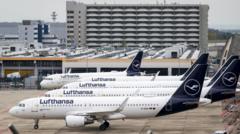
Lufthansa is stripping 20,000 flights from its summer schedule, a move that looks like a tactical retreat in the face of a doubling of jet fuel prices since the outbreak of the Iran conflict. While the headline figure of 20,000 cancellations sounds catastrophic for travelers, the reality is a calculated surgical strike. The airline is removing approximately 1% of its total capacity to save 40,000 metric tonnes of fuel, essentially sacrificing its least profitable short-haul routes to keep its long-haul money makers in the air.
This is not a sudden panic. It is a desperate acceleration of a strategy the German flag carrier has been trying to execute for years: the death of its expensive legacy regional operations.
The Hormuz Chokepoint and the 20 Percent Exposure
The primary catalyst is the chaos in the Middle East. With the Strait of Hormuz effectively compromised, the price of kerosene has surged beyond the point of sustainability for many European carriers. Lufthansa, like most major groups, employs a sophisticated hedging strategy to protect itself from price volatility. It has currently hedged about 80% of its fuel requirements at lower, pre-conflict rates.
However, that remaining 20% of unhedged fuel must be purchased at current market prices, which have spiked violently. By cutting 20,000 flights, Lufthansa is specifically targeting that unhedged 20%. The mathematics of the move are simple: if you cannot buy the fuel at a price that allows for a profit on a flight from Frankfurt to Stavanger, you ground the plane and save the cash. Chief Financial Officer Till Streichert admitted as much, calling the move "unavoidable" to protect margins that were already being squeezed by labor unrest and operational inefficiencies.
The Quiet Death of CityLine
While fuel is the convenient villain in the public narrative, the internal reality at Lufthansa involves a much older struggle. A significant portion of these cuts will be achieved by effectively shutting down Lufthansa CityLine, the regional subsidiary that has long been a thorn in the side of management due to its complex labor agreements.
Lufthansa is moving to replace these legacy operations with newer, lower-cost units like City Airlines and Discover. These entities operate with crew costs up to 40% lower than the flagship brand. By using the fuel crisis as a justification to accelerate the retirement of 27 older, "fuel-guzzling" aircraft—including several Boeing 747s and Airbus A340s scheduled for early exit—the airline is permanently shifting its structural DNA.
Labor as a Friction Point
The timing of this "optimization" is not coincidental. Throughout April 2026, Lufthansa has been battered by strikes from the Vereinigung Cockpit (VC) pilot union and the UFO cabin crew union. These walkouts already grounded over 1,400 flights in a single two-day period earlier this month, affecting 100,000 passengers.
Management is facing a pincer movement. On one side, pilots are demanding higher pensions and job security in the face of the shift to lower-cost subsidiaries. On the other, the International Energy Agency (IEA) has warned that Europe may only have weeks of jet fuel reserves remaining. By cutting the summer schedule now, Lufthansa reduces its reliance on a workforce that is currently at war with the executive suite. It is easier to cancel a flight today than to have it cancelled by a strike tomorrow.
The Hub Rebalancing Act
Travelers should look closely at where the cuts are happening. The "consolidation" is centered on the primary hubs:
- Frankfurt and Munich are bearing the brunt of the cancellations.
- Regional routes to cities like Bydgoszcz, Rzeszow, and Stavanger have been scrubbed entirely.
- Secondary hubs like Zurich (SWISS), Vienna (Austrian), and Brussels are seeing selective expansions to pick up the slack.
This rebalancing suggests that Lufthansa is moving toward a "fortress hub" strategy. It is consolidating its European network into fewer, higher-frequency corridors that can be serviced by its most efficient aircraft. For the passenger, this means fewer direct options and more connections through major terminals.
The Inventory Problem
The airline’s inability to modernize its fleet fast enough has compounded the crisis. Delays in aircraft deliveries from Boeing and Airbus have forced Lufthansa to keep older, thirstier planes in rotation. Furthermore, certification issues with the new Allegris premium seating have limited the utility of the Boeing 787 fleet.
In a world where fuel was cheap, an old Airbus A340-600 was a manageable liability. In 2026, with kerosene prices at historic highs, that same plane is a financial black hole. The summer cuts are the first step in a broader purging of these assets.
Lufthansa is betting that it can shrink its way to stability. By cutting 1% of capacity, it protects the other 99% from the escalating costs of the 20% of fuel it failed to hedge. It is a brutal, pragmatic calculation that prioritizes the balance sheet over the route map.
If you are holding a ticket for a short-haul Lufthansa flight this summer, check your app now. Your flight hasn't just been cancelled due to "fuel prices"—it has been sacrificed to ensure the airline survives its own 100th anniversary.