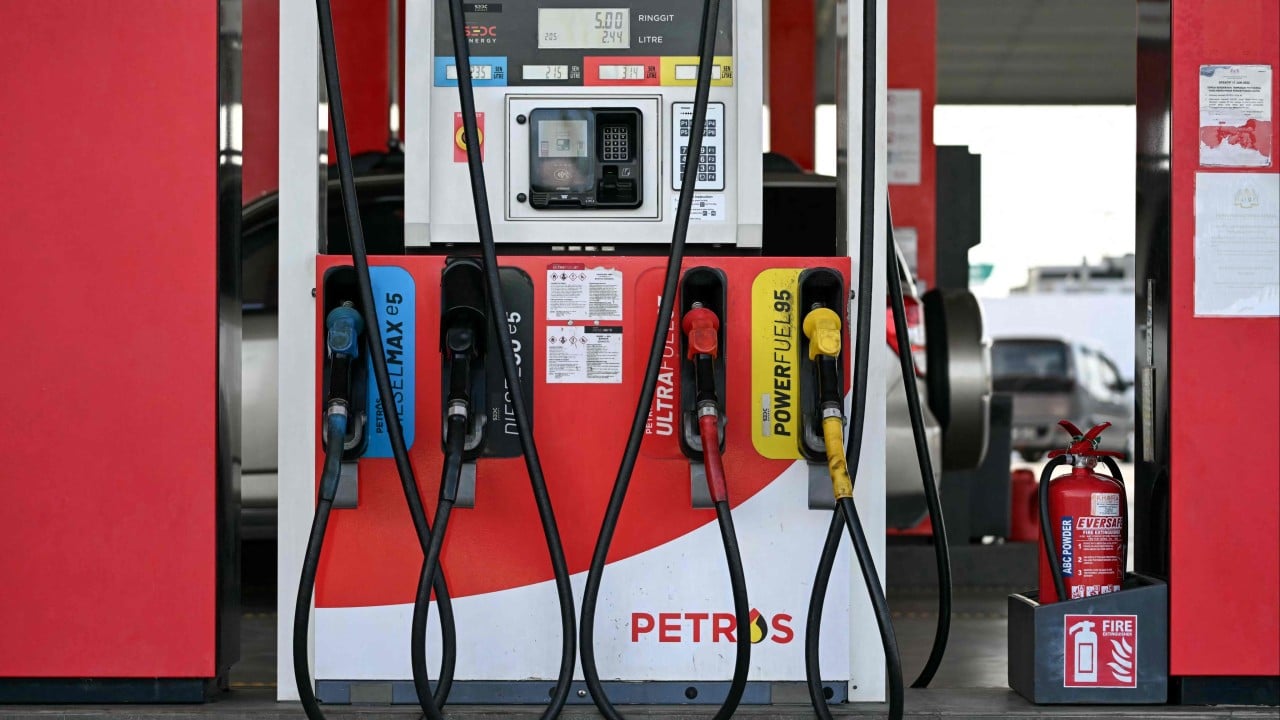
The liquid gold flowing across the Golok River isn't coming from a new oil strike. It is being siphoned directly from the pockets of Malaysian taxpayers. As global energy markets reel from the latest Middle East escalation, the price gap between Malaysia’s subsidized fuel and the market rates of its neighbors has reached a breaking point. While Prime Minister Anwar Ibrahim holds the line on the RM1.99 per liter price for RON95 petrol, the sheer desperation of the surrounding region has turned the country's porous borders into a sieve.
The math is simple and devastating. In Thailand, diesel prices have surged past the equivalent of RM4.50. In Singapore, they hover near RM9.00. For a syndicate operating out of Kelantan or Perlis, a single modified pickup truck with a hidden 500-liter tank can net a profit of RM1,500 in a single three-hour round trip. This is no longer just "petty" smuggling by border residents. It has evolved into a sophisticated, multi-billion ringgit shadow economy that threatens the very fiscal stability of the Madani government’s reform agenda.
The Mirage of Border Control
Despite the high-profile launch of Ops Tiris 3.0, the reality on the ground is a game of cat and mouse where the mice have faster boats and better intelligence. Since January 2026, enforcement officers have seized over RM5.73 million in controlled goods, yet this is widely considered a mere "tax" on the syndicates' operations. The problem isn't a lack of will; it is a lack of infrastructure.
In Kelantan, the police have been begging for a security wall and maritime radar for years. Currently, patrol boats used by Malaysian enforcement are often outmatched by the C2-class fishing vessels used by smugglers. While a government boat might struggle to monitor 20 nautical miles, smugglers are operating up to 100 miles offshore, conducting ship-to-ship transfers of diesel in the dead of night. Without a comprehensive maritime surveillance system—similar to the one protecting the west coast—the eastern seaboard remains an open buffet for energy thieves.
Why Subsidies are the Smugglers Best Friend
The government’s decision to maintain the RON95 price at RM1.99 is a political necessity but an economic nightmare. To understand the gravity, one must look at the BUDI95 initiative. By shifting from blanket subsidies to a targeted MyKad-based system, the Ministry of Finance managed to slash the subsidy bill from RM3 billion in late 2024 to RM1.8 billion by the end of 2025.
However, the "leakage" remains a structural flaw. As long as the price at the pump is lower than the price at the border, the incentive to cheat the system will exist. Syndicates are now hiring "runners"—legitimate MyKad holders who are eligible for the subsidy—to visit multiple stations, fill up small amounts, and then aggregate the fuel at clandestine warehouses. This decentralized "ant-style" smuggling is nearly impossible to track through standard retail monitoring.
The Economic Distortion
The cost of this criminal enterprise isn't just measured in lost revenue. It creates an artificial scarcity in border towns. In districts like Pasir Mas and Tumpat, petrol stations have reported sales figures that far exceed the local vehicle population. When enforcement officers are physically stationed at these pumps, sales miraculously drop by 50%.
This suggests that half of the fuel consumed in these areas was never intended for a Malaysian engine. The government estimates that prior to the 2024 diesel rationalization, the country was losing RM10 billion annually to these activities. While the 2026 figures show a downward trend in domestic "loss," the rising global Brent crude prices—which spiked to US$119 per barrel in early March—have made the black market even more lucrative.
The Technological Overhaul
The silver bullet was supposed to be the National Integrated Immigration System (NIISe). Set to be the backbone of border security by 2026, the project has been plagued by delays and contractor changes. The newly formed Malaysia Border Control and Protection Agency (AKPS) is currently in a race against time to integrate AI-driven facial recognition and automated gate systems to track vehicle movements more effectively.
But technology alone cannot fix a corrupted incentive structure. The "ghost fleet" of aging tankers in the Malacca Strait continues to blend and rebrand fuel, often using Malaysia as a transit point to move sanctioned or smuggled oil into the broader Asian market. This isn't just a border issue; it's a transparency crisis within the regional supply chain.
The Hard Truth of Energy Security
Prime Minister Anwar Ibrahim recently assured the nation that fuel supplies are secure until May 2026. This is a short-term relief for a long-term wound. As the Thirteenth Malaysia Plan (2026-2030) begins to take shape, the administration faces a brutal choice:
- Fully float fuel prices to match regional markets, effectively killing the smuggling trade overnight but risking a massive inflationary shock and political suicide.
- Continue the "cat and mouse" game, pouring billions into enforcement and technology while accepting that a significant percentage of the national budget will continue to fuel the economies of neighboring countries.
The current "hybrid" approach—maintaining a low price while tightening the MyKad verification—is a middle ground that satisfies no one. It keeps the smugglers in business while keeping the enforcement agencies perpetually exhausted.
True border security in the energy sector requires more than just more boots on the ground or a few more drones in the air. It requires a fundamental rethinking of how a nation values its most precious resource in an era of global instability. Until the price of fuel in Rantau Panjang matches the price in Sungai Golok, the river will continue to run with the wealth of the Malaysian people.
Would you like me to analyze the specific technological specifications of the NIISe system being implemented for the 2026 rollout?


