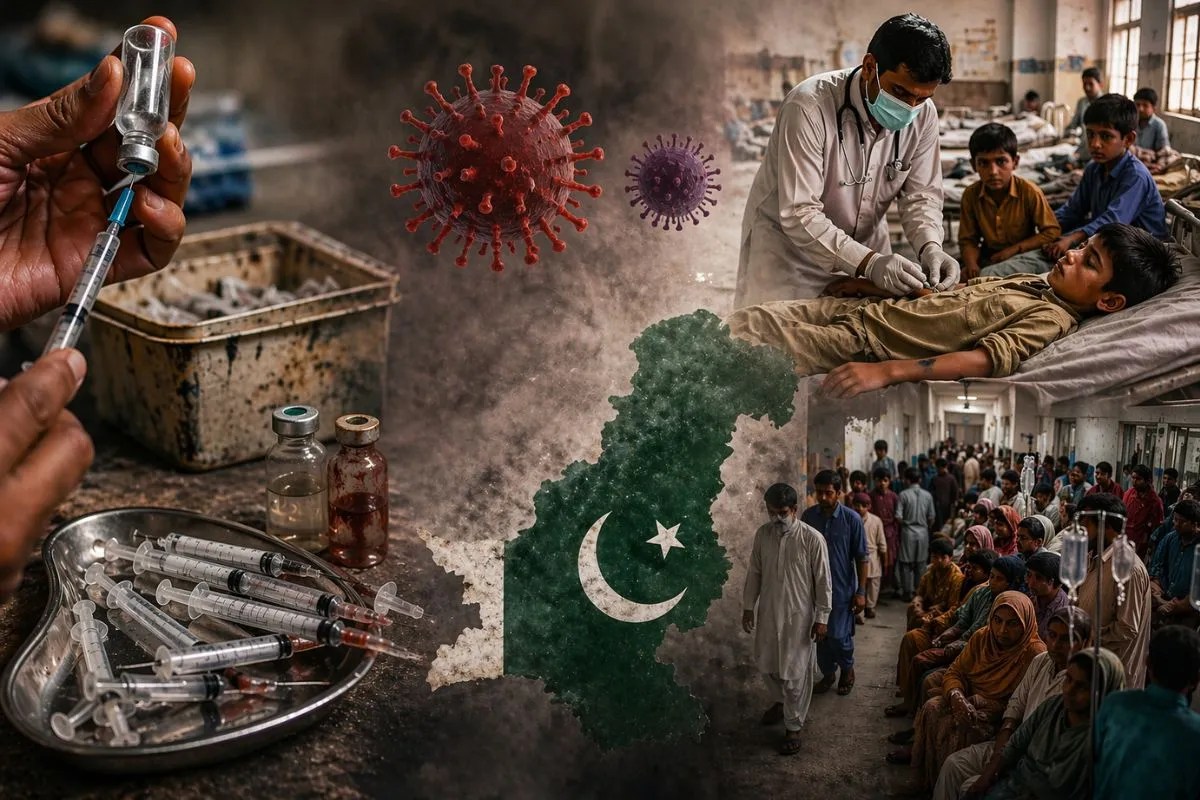
Pakistan now holds the grim distinction of having the world's highest prevalence of Hepatitis C, a viral time bomb that claims tens of thousands of lives annually. While government press releases often blame a lack of public awareness or insufficient funding, the ground reality is far more sinister. The crisis is not merely a medical failure; it is a systemic collapse fueled by a massive, unregulated network of "quack" doctors—locally known as jhola-chaap—and a healthcare infrastructure that frequently reuses contaminated equipment. This is a manufactured epidemic where the very act of seeking a cure often results in a death sentence.
The Quackery Engine Powering an Epidemic
The backbone of this crisis is an estimated 600,000 unlicensed practitioners operating in every corner of the country. In rural provinces like Sindh and Punjab, these individuals are often the first and only point of contact for the sick. They do not possess medical degrees, yet they perform minor surgeries, administer intravenous drips, and, most dangerously, deliver millions of injections every year.
The math of the infection is simple and devastating. A single contaminated needle, reused to "save costs" or out of pure negligence, can infect dozens of patients in a single afternoon. In many of these roadside clinics, the concept of sterilization is non-existent. Glass syringes are occasionally dipped in lukewarm water, a gesture that does nothing to kill the resilient Hepatitis C virus. This isn't just a lack of education. It is a business model built on high-volume, low-cost procedures where patient safety is a discarded luxury.
The Fatal Injection Culture
Pakistan has one of the highest rates of injection per capita in the world. There is a deep-seated cultural belief that a "bottle" (IV drip) or a "shot" is significantly more effective than oral medication. Quacks exploit this psychological craving. They over-prescribe injections for even the most minor ailments, such as a common cold or fatigue.
Why the Demand Persists
- Perceived Efficacy: Patients feel they are getting their money's worth when a needle is involved.
- Immediate Gratification: The placebo effect of an IV drip provides a temporary sense of recovery.
- Accessibility: Licensed hospitals are often miles away, overcrowded, and bogged down by bureaucracy. A local quack is available 24/7.
Every unnecessary injection is a spin of the Russian Roulette wheel. Data suggests that a staggering percentage of Hepatitis C transmissions in Pakistan occur within these informal "healthcare" settings. We are seeing a cycle where a patient visits a clinic for a fever and returns home with a chronic, life-threatening liver infection.
Blood Safety and the Black Market
Beyond the needle, the blood transfusion system in Pakistan is a porous mess. While major cities have reputable blood banks, a significant portion of the blood supply in smaller towns is unregulated. Private laboratories often skip expensive screening processes for Hepatitis B and C to maximize profit margins.
Family members, desperate to save a loved one during an emergency, often purchase blood from professional donors—individuals who sell their blood repeatedly. These donors are frequently part of the most marginalized populations, often struggling with drug addiction and sharing needles themselves, making them high-risk carriers of blood-borne pathogens. When this unscreened blood enters the system, the virus finds a direct highway into a new host.
The Failure of Regulation
It would be easy to blame the quacks alone, but the state's regulatory bodies have been effectively toothless. The various Healthcare Commissions have the power to seal clinics, yet for every storefront they shut down, three more open in the next alley.
Corruption plays a central role. Local health inspectors are often incentivized to look the other way, or they tip off unlicensed clinics before a raid occurs. Even when a quack is caught, the legal penalties are often nothing more than a minor fine—a small "tax" on a highly profitable illegal enterprise. There is no real deterrent. Without a centralized, digital tracking system for medical practitioners and a total ban on the over-the-counter sale of syringes, the "crackdowns" remain nothing more than political theater for the evening news.
The Economic Aftershock
The financial burden of this epidemic is catastrophic. Hepatitis C treatment, while more affordable than it used to be thanks to generic direct-acting antivirals (DAAs), still represents a massive hit to a family's income. When the primary breadwinner develops cirrhosis or liver cancer, the entire household is pushed below the poverty line. The state then bears the cost of end-stage liver care, which is exponentially more expensive than the preventative measures that were ignored.
Broken Waste Management Systems
If you walk behind a mid-sized hospital in many Pakistani cities, you won't find high-tech incinerators. Instead, you will see piles of medical waste—used bandages, bloody gauze, and thousands of plastic syringes—dumped in open bins or vacant lots.
This waste is a goldmine for scavengers. "Recycling" syndicates collect these used syringes, wash them in bulk, repackage them in counterfeit plastic sleeves, and sell them back into the market. A doctor might think they are opening a fresh, sterile needle, but they are actually using a discarded tool that has already seen three different bodies. This circular economy of contaminated plastic ensures that even "clean" clinics can inadvertently become hubs of infection.
The Silent Progression
Hepatitis C is often called the "silent killer" because it can reside in the body for decades without showing symptoms. By the time a patient in rural Pakistan feels the jaundice or the abdominal swelling of fluid buildup (ascites), the liver is already scarred beyond repair.
The tragedy is that the medical community has the tools to eliminate this disease. The cure is now a simple course of pills taken over three months. Yet, in Pakistan, the rate of new infections is outpacing the rate of treatment. We are trying to empty a flooding room with a teaspoon while the front door is wide open.
Necessary Structural Shifts
- Mandatory Auto-Disable Syringes: Moving the entire country to syringes that break after one use is the only way to kill the reuse market.
- Criminalization of Quackery: Shifting from civil fines to mandatory prison sentences for practicing medicine without a license.
- Integrated Screening: Every person entering a hospital for any reason should be screened for Hepatitis C as a standard protocol.
The current trajectory is unsustainable. If the state continues to prioritize optics over the aggressive dismantling of the quackery network and the enforcement of medical waste protocols, the "World Leader" title in Hepatitis C will remain a permanent, bloody fixture of the national identity. The solution isn't more awareness posters; it is the physical removal of the needles from the hands of the unqualified.
Stop focusing on the patients who are already sick and start targeting the places where they are being infected. Until the government treats every unlicensed clinic as a crime scene rather than a minor nuisance, the death toll will continue to rise.