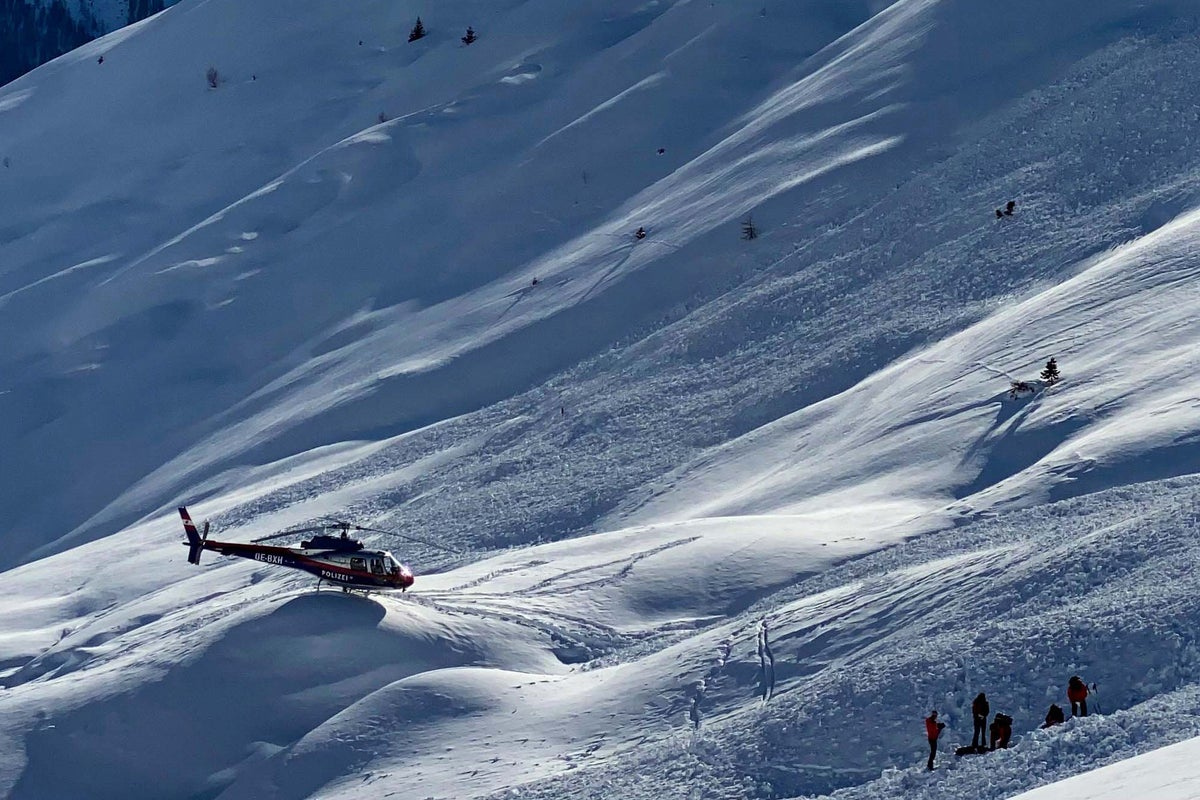
The recent avalanche at Sweden's premier ski destination, Åre, has stripped away the illusion of total control that modern mountain resorts project. While initial reports focused on the frantic search for trapped skiers, the deeper story lies in the increasingly volatile intersection of climate shifts and high-volume alpine tourism. When a massive slab of snow broke loose near the Tegefjäll area, it wasn't just a freak act of nature. It was a failure to account for the thinning margin of error in the Scandinavian mountains.
Rescue crews moved with practiced precision to clear the debris. They found no fatalities this time. We got lucky. But relying on luck is a losing strategy for an industry that markets "safe" family adventures while the terrain beneath the skis is becoming fundamentally less predictable. The avalanche risk in the Swedish fells is changing, and the old playbooks are starting to look dangerously outdated.
The Mechanics of a Modern Mountain Crisis
Understanding why the snow gives way requires looking past the white surface. Most people think avalanches happen because there is simply "too much snow." That is a simplification. The danger usually hides in the layers. In the Swedish Jämtland region, the culprit is often a persistent weak layer created by fluctuating temperatures.
Rain-on-snow events are becoming more common in the sub-arctic. When rain falls on a cold snowpack, it seeps down and then freezes into a slick ice crust. New snow falling on top of that crust doesn't bond. It sits there, unstable, waiting for a trigger. That trigger can be a sudden temperature spike, a gust of wind, or the weight of a single skier cutting across a slope that looked perfectly fine ten minutes earlier.
The Åre event occurred in terrain that many regulars consider "mellow." This is the core of the problem. Expert skiers often respect the jagged, steep faces of the Alps, but the rolling, rounded peaks of Sweden can lull tourists into a false sense of security. A 30-degree slope is the sweet spot for a slab avalanche. It is steep enough to slide but flat enough to hold a massive amount of weight before it finally snaps.
The Myth of the Controlled Environment
Ski resorts spend millions on "avalanche mitigation." They use Gazex exploders and hand-tossed charges to trigger small slides before the lifts open. This creates a perception that once the "Open" sign is flipped, the mountain is a sanitized playground. It isn't.
No patrol team can 100% guarantee the stability of every square inch of a mountain. The "controlled" area is a moving target. In the Tegefjäll incident, the slide happened in proximity to established runs, raising questions about where the boundary of responsibility ends. For the casual tourist, the distinction between "on-piste" and "side-country" is often invisible. They see tracks, they follow them, and they assume the risk has been managed by someone in a red jacket.
Industry analysts have noted a growing "off-piste" culture fueled by social media. Skiers are pushed further into the trees and onto unmonitored faces to get the perfect shot. This behavior puts immense pressure on mountain safety teams. They are now tasked with managing not just the groomed trails, but the entire peripheral ecosystem of the resort.
The Equipment Gap and the False Security of Tech
We are seeing a massive surge in the sales of avalanche transceivers, shovels, and probes. On the surface, this looks like a win for safety. However, there is a dark side to this tech-heavy approach. It's called risk compensation.
When a skier straps on an avalanche airbag, they often feel a boost in confidence that leads them to take risks they would have avoided otherwise. They think the gear will save them. It might, but a transceiver only helps people find your body, and an airbag doesn't protect you from being slammed into a pine tree at fifty miles per hour. The "investigative" reality is that human factors—ego, peer pressure, and the "powder stress" of wanting to get the best snow before it's gone—are the primary drivers of mountain accidents.
The Economic Pressure to Stay Open
There is an inherent conflict of interest at the heart of every major ski resort. Closing a lift or a specific sector due to high wind or avalanche risk costs money. It leads to disgruntled customers and refund demands. While safety teams in Sweden are some of the most professional in the world, the overarching corporate pressure to maximize "up-time" is a constant background noise.
The Swedish mountain weather is notoriously fickle. A bluebird morning can turn into a howling whiteout in twenty minutes. When the weather turns, the snowpack changes. To stay ahead of the curve, resorts need to invest more in automated weather stations and AI-driven snowpack modeling, but even that is just a tool. The real solution is a cultural shift in how we view the mountains. We need to stop treating them like theme parks and start treating them like the wild, indifferent environments they are.
Survival is a Choice Made Before You Leave the Lodge
The Åre avalanche should serve as a wake-up call for anyone heading to the Scandinavian mountains this season. Safety isn't something the resort provides for you; it's something you participate in.
Check the local avalanche forecasts. The Swedish Environmental Protection Agency (Naturvårdsverket) provides detailed daily reports via Lavinprognoser.se. If the rating is a "3" or higher, stay on the groomed trails. No "secret stash" of powder is worth a trip in a helicopter—or worse.
Immediate Actions for Your Next Trip
- Trust the signs, not the tracks. Just because there are ski tracks on a slope doesn't mean it is safe. It just means someone else hasn't triggered it yet.
- Take a rescue course. If you are going to buy the gear, learn how to use it. Searching for a buried beacon in a parking lot is very different from doing it under the stress of a real slide.
- Watch the temperature. Rapid warming is one of the biggest red flags in snow science. If the sun comes out and the temperature jumps five degrees in an hour, the mountain is talking to you. Listen.
The mountains don't care about your lift pass or your expensive gear. They operate on the laws of physics and gravity. When the snowpack reaches its breaking point, it doesn't matter who you are or how well you can carve a turn. The only way to win the game is to know when not to play.
Stop assuming the mountain has been tamed just because there is a cafeteria at the bottom.