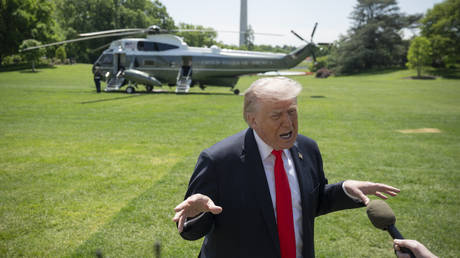
Donald Trump just pulled the pin on a trade grenade. On Friday, the president announced that the United States will hike tariffs on European Union cars and trucks to 25 percent starting next week, a move that effectively shreds the fragile Turnberry Agreement signed less than a year ago. The justification coming out of the White House is familiar: non-compliance. Trump claims the EU has failed to live up to its end of the bargain, though his administration has yet to provide a granular list of exactly which agricultural quotas or industrial standards Brussels allegedly ignored.
This isn’t just a minor policy adjustment. It is a full-scale assault on the "status quo" of transatlantic trade. By jumping from a 15 percent ceiling to a 25 percent hammer, the administration is betting that the pain of the levy will force German, French, and Italian automakers to stop shipping cars across the Atlantic and start building them in South Carolina, Alabama, and Tennessee. If you enjoyed this post, you might want to read: this related article.
The Death of the Turnberry Accord
To understand why this is happening now, you have to look at the wreckage of the 2025 Turnberry Agreement. Named after the president's golf resort in Scotland, that deal was supposed to be the "peace for our time" in the trade wars. It capped duties on most EU goods at 15 percent in exchange for the EU opening its markets to American soy, beef, and industrial machinery.
The agreement was already on life support after the Supreme Court ruled earlier this year that the president couldn't use emergency economic powers to bypass Congress on certain trade levies. That ruling briefly dropped the effective tariff rate to 10 percent, much to the delight of the European Commission. But the White House didn't take the loss sitting down. Instead, they pivot to Section 232 investigations, citing national security as the new legal hook for the 25 percent rate. For another look on this development, refer to the recent update from Forbes.
The Geography of the Tax
The math here is punishing for any brand that hasn't already localized its entire lineup. A 25 percent tariff means a $60,000 Audi or BMW imported from Germany suddenly carries a $15,000 tax burden at the port of entry. Automakers are then faced with two equally ugly choices: eat the cost and see their margins vanish, or pass the cost to the consumer and watch their sales charts fall off a cliff.
- Volkswagen and Mercedes-Benz: Both have massive footprints in the U.S. (Chattanooga and Vance, respectively), but they still import high-margin SUVs and luxury sedans from Europe.
- BMW: The Spartanburg plant is a global export hub, but the "M" performance models and 7-Series sedans still largely come from Germany.
- Porsche and Ferrari: These niche players are the most exposed. With zero U.S. manufacturing, every single vehicle they sell will be hit with the full 25 percent surcharge.
The president’s rhetoric is clear: "If they produce Cars and Trucks in U.S.A. Plants, there will be NO TARIFF." It is a blunt instrument designed to turn the U.S. into a manufacturing island.
The European Counter-Strike
Brussels isn't going to sit quietly while its most important industry is gutted. Bernd Lange, the chair of the European Parliament’s trade committee, has already labeled the move "unacceptable." The EU has a history of retaliating with surgical precision, targeting goods produced in politically sensitive American districts.
In previous rounds, we saw tariffs on Harley-Davidson motorcycles, Kentucky bourbon, and Florida orange juice. This time, the list is expected to be much longer and more aggressive. There is already talk in the European Commission of targeting American tech giants or imposing "carbon border adjustments" that could make U.S. industrial exports prohibitively expensive in Europe.
Why the Supply Chain is Shuddering
The real damage isn't just in the sticker price of a new car. Modern vehicles are assembled from thousands of components that cross borders multiple times. A German car made in Alabama might still rely on an engine from Stuttgart or specialized sensors from a supplier in Lyon.
If the 25 percent tariff is applied to parts as well as finished vehicles—a detail the administration has left dangerously vague—the cost of domestic production will also rise. You can’t just flip a switch and recreate a century-old European supply chain in the American Midwest. It takes years, billions in capital, and a workforce that doesn't yet exist in the required numbers.
The Real Cost for the American Buyer
Despite the talk of "billions of dollars coming into the United States," tariffs are not paid by the exporting country. They are paid by the domestic companies that import the goods. The U.S. government is essentially taxing its own businesses and consumers to create a competitive advantage for domestic manufacturers.
For the average American, this means the used car market—already inflated over the last few years—is likely to see another price spike as new cars become unaffordable for the middle class. When the price of a Mercedes goes up, the price of a domestic Cadillac or Lincoln usually follows suit because the competition has vanished.
The administration points to $100 billion in new manufacturing investment as proof the strategy is working. It’s a staggering figure. But those plants won't be online tomorrow. In the gap between today’s announcement and the first car rolling off a new American assembly line, the consumer is the one left holding the bill.
The trade war isn't coming; it's here. And this time, there is no "Turnberry" to soften the blow.