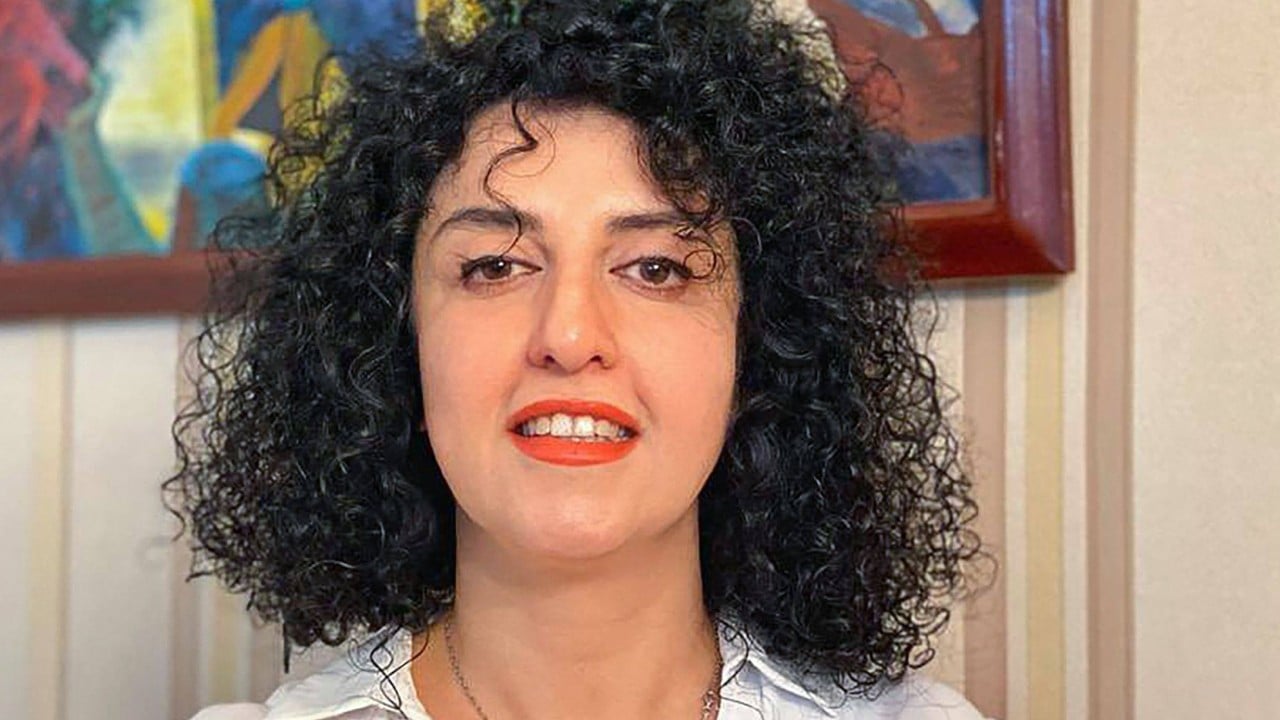
The walls of Evin Prison do not just hold bodies; they are designed to break spirits through a slow, methodical degradation of health. Narges Mohammadi, the Nobel Peace Prize laureate and the most prominent face of Iranian female defiance, is currently the target of this specific, lethal bureaucracy. Reports from within the facility and from her legal representation indicate that Mohammadi has suffered a heart attack while in state custody, and the subsequent "medical care" provided by the Islamic Republic has been little more than a performance of negligence. This is not a case of a system failing to keep up with a prisoner's needs. This is the use of biological decay as a tool of the state.
Mohammadi’s condition is critical. After years of intermittent solitary confinement, physical abuse, and the denial of essential medicines, her cardiovascular system has buckled. Yet, the Iranian judiciary continues to treat her survival as a secondary concern to her silence. To understand the gravity of her current situation, one must look past the headlines of a single medical emergency and examine the long-term strategy of "attrition by confinement" that Tehran employs against its most vocal critics.
The Anatomy of State-Sanctioned Medical Neglect
In most modern legal systems, the state assumes a duty of care when it strips an individual of their liberty. In Iran, that duty is inverted. For political prisoners like Mohammadi, medical treatment is frequently used as a bargaining chip. Access to an outside hospital is not a right; it is a concession that must be earned through recanting or silence, or it is delayed until the damage is irreversible.
Evidence suggests that Mohammadi’s heart attack was not a sudden, unpredictable event. She has been reporting chest pains and respiratory distress for months. Her family and the "Free Narges" campaign have consistently warned that the lack of specialized cardiac care in Evin’s infirmary would lead to a catastrophe. When the catastrophe arrived, the response was a series of bureaucratic hurdles. Even when a prisoner is cleared for transfer to a private hospital, they are often forced to undergo the indignity of wearing prison uniforms or being shackled to the bed—conditions Mohammadi has famously refused, leading to further delays in her treatment.
The mechanism of control here is the "medical leave" system. Unlike a standard hospital transfer, medical leave in Iran is a temporary reprieve that can be revoked at any moment. By keeping prisoners in a constant state of flux between a hospital bed and a prison cell, the authorities ensure that no recovery is ever complete. It is a cycle of stabilization followed by deliberate re-traumatization.
Why the Nobel Prize is a Double Edged Sword in a Cell
Winning the Nobel Peace Prize in 2023 was supposed to be a shield for Mohammadi. Instead, it has seemingly accelerated the state’s desire to see her incapacitated. For the Iranian leadership, Mohammadi represents a direct challenge to the legitimacy of the "Woman, Life, Freedom" movement. Her presence in the international spotlight, even from behind bars, is an embarrassment that the hardliners in the judiciary cannot tolerate.
However, there is a complex internal logic at play within the Iranian power structure. While some factions might prefer her to simply disappear, others fear the martyr status that would follow her death in custody. This creates a dangerous equilibrium where she is kept just healthy enough to survive, but too sick to organize or lead. The heart attack changes this calculus. If Mohammadi dies, the spark that lit the 2022 protests could easily be reignited, fueled by the image of a Nobel winner dying in chains.
The Failure of International Pressure
The global community’s response to Mohammadi’s deteriorating health has followed a predictable and largely ineffective pattern. We see the statements from the UN, the tweets from Western foreign ministries, and the petitions from human rights groups. None of these have altered the daily reality of her confinement.
The reason for this failure is the lack of "hard" consequences. Iran has learned to weather "soft" diplomatic pressure. They know that as long as the conversation stays within the realm of human rights rhetoric, they can continue their internal crackdown without risking their strategic interests. The only language the Iranian judiciary appears to respect is that of tangible leverage—sanctions on specific judges, travel bans on prison officials, or the freezing of assets tied to the foundations that fund the security apparatus. Until the cost of keeping Mohammadi in a life-threatening state exceeds the perceived benefit of silencing her, her situation will not change.
The Psychological War Against the Families
It is not just Mohammadi who is being targeted. The pressure exerted on her family—specifically her husband, Taghi Rahmani, and her children who live in exile—is a vital component of the state's strategy. By withholding information about her medical status or providing conflicting reports, the authorities keep the family in a state of perpetual anxiety.
This "information black hole" serves two purposes. First, it prevents the family from mounting an effective legal or public relations defense in real-time. Second, it serves as a warning to other activists: your family will suffer alongside you. The emotional toll of knowing a loved one is having a heart attack while being denied a simple angiogram is a form of torture that leaves no physical marks on the family but breaks their resolve nonetheless.
The Infrastructure of Evin Prison
Evin is often described as a "university" because of the number of intellectuals held there, but its medical facilities are more akin to a triage center in a war zone. The infirmary is chronically understaffed and lacks the diagnostic equipment necessary for complex cardiac cases. For a patient with Mohammadi's history of bone marrow issues and heart disease, the lack of a sterile environment and specialized monitors is a death sentence.
The decision to deny her a permanent transfer to a facility equipped for long-term cardiac rehabilitation is a conscious policy choice. There is no logistical reason why a high-profile prisoner cannot be guarded in a state-run hospital. The refusal is about the optics of control. To the IRGC and the judiciary, allowing a prisoner to be treated in a proper hospital suggests a loss of authority. They would rather she suffer in a cell they control than recover in a ward they do not.
A Pattern of Strategic Death
Mohammadi is not the first, nor will she be the last, to face this. The list of activists who have died in Iranian custody or shortly after release due to medical neglect is growing. From Baktash Abtin to Javad Rouhi, the pattern is consistent: illness, denial of care, a sudden "emergency" transfer that happens too late, and then a funeral.
In Mohammadi’s case, the heart attack is a physical manifestation of years of systemic abuse. Her arteries are blocked, but the system that put her there is even more rigid. The "critical" status reported this week is the culmination of a decade of small, daily denials. No heart can withstand that forever.
The Reality of the "Woman, Life, Freedom" Legacy
The movement Mohammadi championed is at a crossroads. While the street protests have quieted, the ideological shift in Iranian society remains. Mohammadi’s health is now the primary barometer for the movement’s endurance. If she is allowed to perish, it will be seen as the ultimate victory for the reactionary forces within the government.
The narrative that she is "just" a prisoner of conscience ignores her role as a living symbol of a specific, structural demand for change. Her heart attack isn't just a medical event; it's a political crisis for a regime that claims it is protecting its citizens while actively letting its most famous one die.
The time for diplomatic pleasantries is over. If Mohammadi is to survive, the international community must move beyond the cycle of "deep concern" and toward a policy of direct accountability for the individuals within the Iranian medical and judicial system who are signing off on her neglect. Every doctor who falsifies a medical report in Evin, every judge who denies a transfer, and every warden who blocks a shipment of medicine must be named and held responsible.
The survival of Narges Mohammadi is no longer just a human rights issue. It is a test of whether international recognition, like the Nobel Prize, carries any weight in the face of a regime that has weaponized the very act of living. The clock is ticking in a very literal sense inside her chest, and the world is watching a slow-motion execution disguised as a medical emergency.
Demand an immediate, unconditional transfer to a private, specialized hospital with international observers. Anything less is a death warrant.