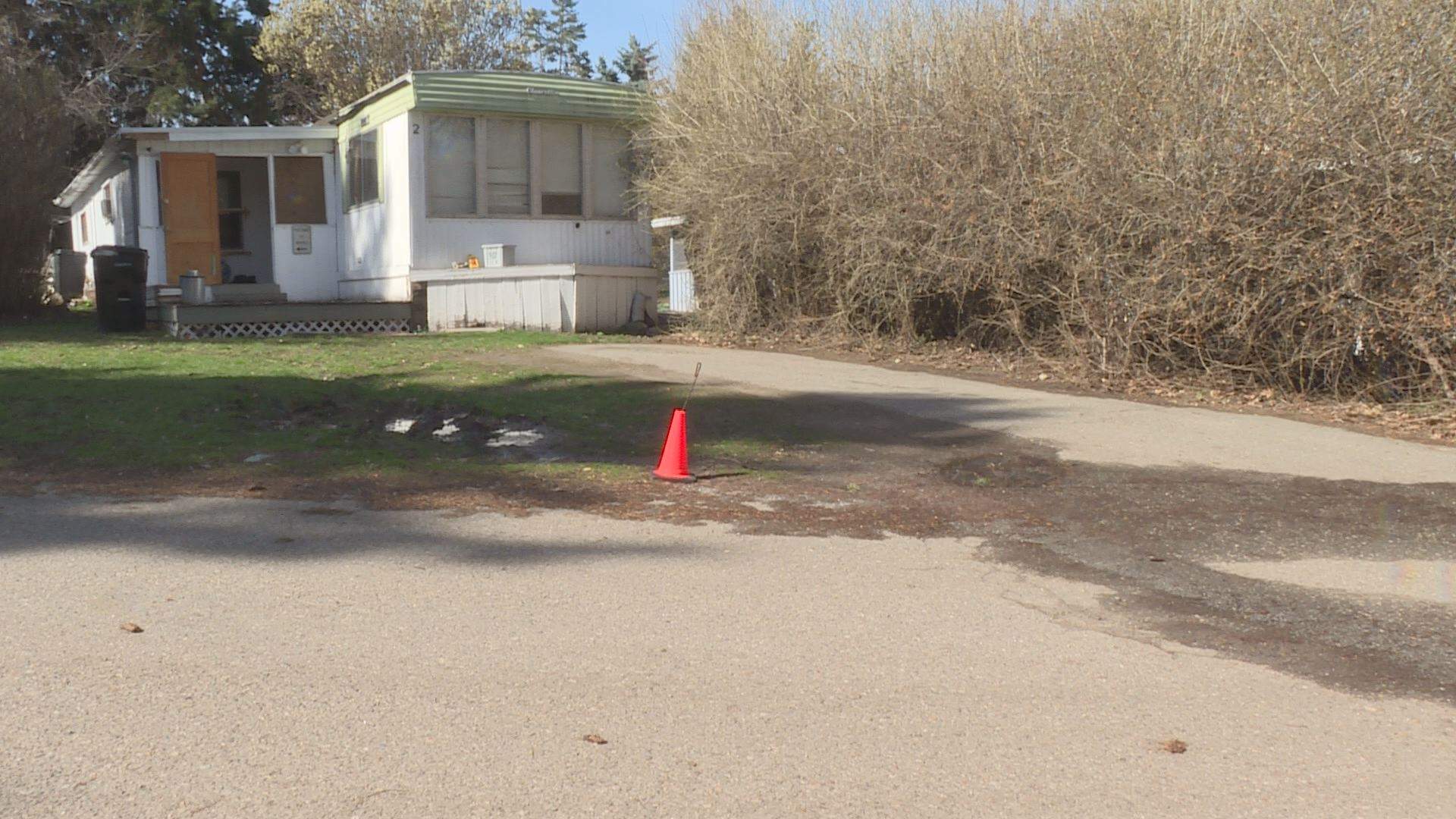
The utility disconnection at the Lawrence Heights trailer park in Vernon, British Columbia, serves as a definitive case study in the systemic collapse of decentralized housing infrastructure. This is not merely a localized tenant-landlord dispute; it is a manifestation of the Infrastructure Obsolescence Trap. When private entities manage critical utility distribution without the capital reserves of a municipal provider, the resulting failure is a mathematical certainty, not an anomaly.
The crisis highlights a fundamental mismatch between the physical life cycle of 20th-century electrical systems and the financial structures of low-income housing. To understand why residents are facing displacement, one must deconstruct the breakdown into its three constituent layers: the failure of the physical grid, the erosion of the capital expenditure (CapEx) model, and the regulatory vacuum governing private utilities.
The Mechanical Decay of the Private Microgrid
The primary catalyst for the current displacement is the degradation of the internal distribution network. Unlike municipal grids, which benefit from standardized maintenance cycles and a broad tax base, private trailer park grids are often isolated "islands" of infrastructure.
The failure at Lawrence Heights follows a predictable trajectory of Cumulative Mechanical Stress:
- Load Growth vs. Static Capacity: The electrical systems in many manufactured home communities were designed for 1970s or 1980s load profiles. Modern appliances, high-definition electronics, and increased climate control demands create a sustained load that exceeds the original ampacity of the sub-distribution panels.
- Environmental Degradation: Underground cabling and transformer pads in these developments often lack the protective conduit or drainage seen in modern residential builds. Moisture ingress and soil movement lead to insulation failure, causing the "ground faults" that trigger mandatory safety shut-offs by provincial authorities.
- The Safety Threshold Breached: Once an inspection by a regulatory body—in this case, Technical Safety BC—identifies a "hazard to life and property," the transition from operational to condemned is instantaneous. This creates a binary state where the utility is either 100% functional or 0% available, with no middle ground for gradual repair.
The disconnect occurs because the cost of localized repairs is often negligible compared to the cost of bringing an entire non-compliant grid up to modern code. Once the safety authority intervenes, the landlord is no longer fixing a wire; they are forced to rebuild a utility.
The Economic Barrier to Infrastructure Recovery
The central paradox of the Vernon situation is the Inversion of Capital Recovery. In a standard real estate model, capital improvements lead to increased asset value or higher rents. In a rent-controlled or low-income trailer park environment, the cost of a full electrical overhaul—often reaching seven figures—cannot be amortized through standard rent increases without violating provincial tenancy laws or pricing out the entire tenant base.
The financial impasse is defined by these variables:
- Asset Liquidity: Many trailer parks operate on thin margins where the land value significantly outweighs the value of the "business" of being a landlord. This creates a perverse incentive: if the infrastructure fails, the owner is financially incentivized to sell the land for redevelopment rather than reinvest in a low-yield housing model.
- The Funding Gap: Traditional lenders are hesitant to provide capital for infrastructure projects on land where the revenue stream is capped by aggressive tenancy regulations. This leaves the landlord with two choices: out-of-pocket expenditure that may never be recovered or the abandonment of the utility.
- Liability Displacement: By shutting off the power, the owner effectively shifts the burden of "occupability" onto the residents. Without power, the homes become legally uninhabitable, potentially triggering a "frustrated contract" in legal terms, which can be a shortcut to clearing the land of tenants without the standard eviction hurdles.
Regulatory Fragmentation and the Enforcement Gap
The British Columbia Residential Tenancy Act (RTA) and the Safety Standards Act operate in silos, creating a "grey zone" where residents are legally protected from eviction but physically removed from their homes due to safety hazards.
This regulatory friction is characterized by Asymmetric Enforcement. While Technical Safety BC can mandate a power shut-off for safety, the Residential Tenancy Branch (RTB) cannot physically force a landlord to repair a transformer. The RTB can award rent abatements or financial penalties, but these are reactive measures. They do not generate the immediate cash flow required to hire electrical contractors.
Furthermore, the legal definition of "essential services" is currently being tested. While heat and power are essential, the law does not account for a scenario where the infrastructure itself has reached the end of its functional life. This creates a legal bottleneck:
- The landlord claims "economic impossibility" of repair.
- The tenant claims "right to quiet enjoyment" and "provision of services."
- The municipality refuses to intervene because the grid is private property.
This triangle of inaction results in the permanent displacement of the most vulnerable population segments, as there is no mechanism for a "public takeover" of failing private utility nodes.
The Social Cost of Deferred Maintenance
The human element in Vernon is a direct result of the Displacement of Externalities. When a private system fails, the costs (emergency housing, healthcare for seniors in unheated homes, legal aid) are externalized to the taxpayer and the social safety net, while the landlord retains the underlying land value.
The residents of Lawrence Heights are caught in an Ownership Asymmetry. They own their units—often their only significant asset—but they do not own the ground beneath them or the wires that power them. This "split-interest" ownership makes them uniquely vulnerable to infrastructure failure. If a traditional homeowner's power fails, they fix it. If a park resident's power fails, they are legally barred from fixing the landlord's grid, yet they are the ones who lose their homes when the grid dies.
Strategic Path to Infrastructure Stabilization
To prevent the Vernon scenario from becoming a template for the thousands of aging manufactured home communities across North America, a shift from reactive litigation to proactive infrastructure management is required.
1. The Municipal Integration Model
Municipalities must begin the process of "dedicating" private trailer park roads and utilities. This involves the city taking over the maintenance of water and power lines, treating the park like a standard residential subdivision. This removes the "infrastructure island" risk but requires a one-time tax assessment or provincial grant to bring the systems to municipal standards.
2. Mandatory Capital Reserve Funds
Legislation should be amended to require private utility providers (including trailer park owners) to maintain a ring-fenced capital reserve fund, similar to a strata or condo corporation's contingency reserve fund. This ensures that the money for a new transformer is collected over twenty years of rent, rather than being demanded as a lump sum during a crisis.
3. The Emergency Receivership Mechanism
Provincial governments require the power to place a property into "utility receivership." If a landlord refuses or is unable to repair an essential service, the government should have the authority to appoint a third-party manager to oversee repairs, funded by a lien against the property's land value. This prevents the "frustrated contract" loophole where landlords benefit from their own negligence.
The situation in Vernon is a warning. As the infrastructure installed during the post-war housing boom hits its 50-year expiration date, the "private microgrid" model is proving to be a failure. Without a structural overhaul of how these utilities are funded and regulated, the decommissioning of low-income housing via utility neglect will become a standard, albeit brutal, method of urban land clearing.
The immediate move for stakeholders is the establishment of a Tri-Partite Infrastructure Audit. This involves provincial safety regulators, municipal planning departments, and tenant advocacy groups identifying "At-Risk Grids" before they reach the point of failure. Waiting for the power to go out is not a management strategy; it is a controlled demolition of the affordable housing stock.


