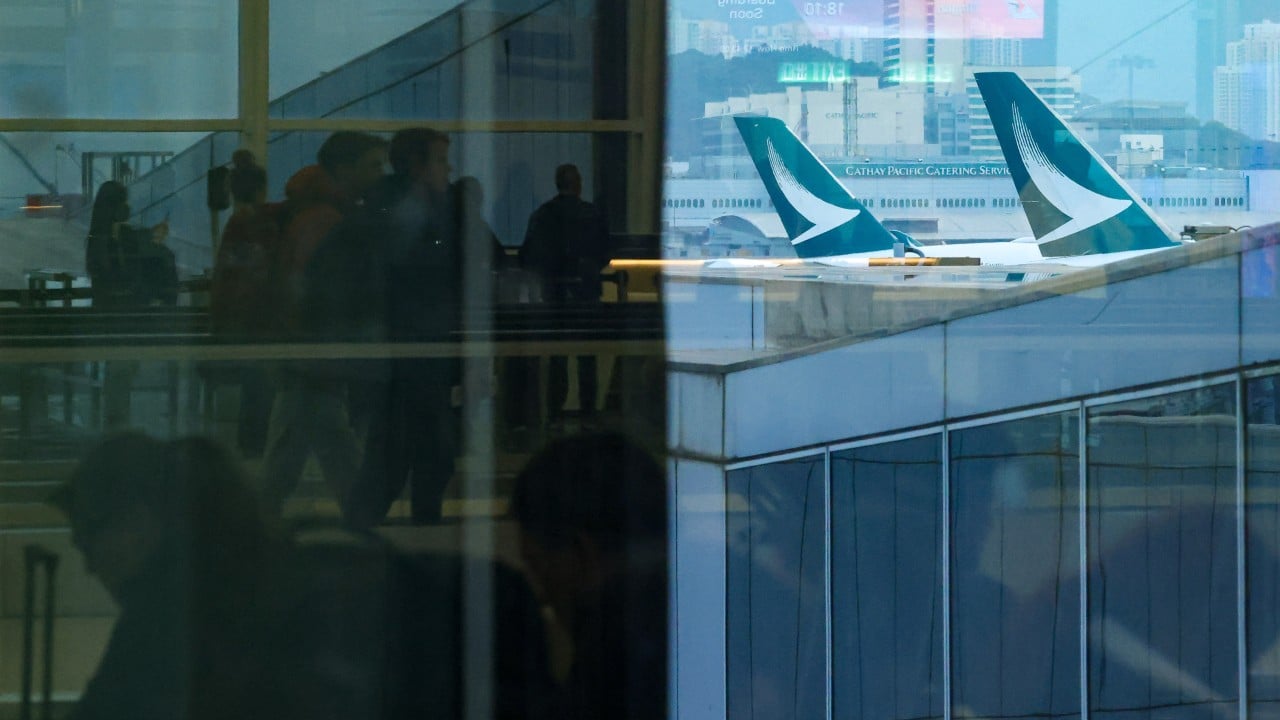
The headlines scream "suspension." The reality is a surrender. Cathay Pacific extending its flight freeze between Hong Kong and the Middle East until April isn't a measured response to regional instability. It is a strategic failure dressed up as a safety precaution. While competitors are busy eating their lunch, Hong Kong’s flagship is hiding in the hangar, betting that "caution" will save its bottom line. It won't.
Most analysts will tell you this is about risk mitigation. They’ll point to rising insurance premiums and the volatility of airspace near the Red Sea. They’re wrong. This isn't about the dangers of the sky; it’s about the fragility of a balance sheet that hasn't fully recovered from years of self-inflicted isolation. For a more detailed analysis into similar topics, we suggest: this related article.
The Safety Myth
Let’s dismantle the "safety" argument immediately. If the Middle East were truly an impassable no-fly zone, every major carrier would have shuttered their hubs in Dubai, Doha, and Abu Dhabi. They haven’t. In fact, capacity in the region is growing. Qatar Airways and Emirates aren't just flying; they are thriving.
Airlines manage risk for a living. They calculate $P(\text{event})$ against the cost of rerouting. When Cathay pulls out entirely, they aren't managing risk—they are admitting they lack the operational agility to navigate it. It is a signal of weakness to the global market. It says that at the first sign of friction, Hong Kong’s connection to the world’s fastest-growing economic corridor is negotiable. To get more information on this issue, in-depth analysis can be read at National Geographic Travel.
I’ve watched carriers navigate literal war zones for decades. You don't "suspend" for four months because of uncertainty; you adapt. You shift flight paths. You adjust timings. You pay the premium. You stay in the game. By vacating the space, Cathay isn't protecting its planes; it’s hand-delivering its premium passengers to the Gulf carriers on a silver platter.
The Yield Trap
The industry consensus is that Cathay is saving money by not flying half-empty planes. This is the "lazy consensus" of accountants who don't understand network effects.
Aviation operates on a hub-and-spoke model. Every canceled flight from Riyadh or Tel Aviv doesn't just lose the revenue for that seat. It kills the connecting revenue to Shanghai, Tokyo, and Sydney. When you cut the Middle East, you bleed out the rest of the network.
- Brand Erosion: Frequent flyers in the Middle East—the highest-spending demographic in the world—value reliability above all else. If you disappear for six months, you aren't an option anymore. You're a memory.
- Cargo Collapse: Hong Kong’s status as a logistics powerhouse depends on belly cargo. Every passenger flight grounded is a freighter-load of high-value electronics and perishables that now goes through Singapore or Dubai.
- The Opportunity Cost: While Cathay sits on the sidelines, Saudi Arabia is pouring billions into its "Vision 2030." Riyadh Air is coming. Neom is being built. The trade volume between the GCC and China is exploding. Cathay is retreating exactly when it should be doubling down.
A Thought Experiment in Opportunity
Imagine a scenario where a CEO decides to lean into the chaos. Instead of suspending, you launch a "Bridge to the East" campaign. You work with the Civil Aviation Department to fast-track alternative routes over Central Asia. You market the fact that you are the only non-Gulf carrier maintaining a stable link between the two financial centers.
What happens? You capture the entire market of travelers who are weary of the Gulf hubs. You command a premium for the directness and the defiance. You prove that Hong Kong is still the "World City." Instead, we get a press release about a delay.
The Real Crisis is Competence
The Middle East suspension is a symptom of a deeper malaise. Cathay has become a "fast follower" in an industry that requires leaders. They waited too long to reopen after the pandemic. They waited too long to address pilot shortages. Now, they are waiting for the world to become perfectly safe before they fly again.
Safety is the ultimate shield for a stagnant executive suite. It is unassailable. If you say "safety first," no one can argue with you. But in the aviation business, "safety" is the baseline, not a strategy. If your safety protocols result in a six-month service outage while your peers are flying 500 yards away from your intended flight path, your protocols aren't "robust"—they are restrictive.
The "People Also Ask" crowd wants to know: "Is it safe to fly to the Middle East?" The answer is yes. Thousands of flights land there every single day. The real question is: "Is Cathay Pacific capable of operating a global network in a complex world?"
Currently, the answer appears to be no.
Stop Blaming the Geopolitics
Geopolitics is the weather of the airline industry. It is always there. It is always changing. Blaming a suspension on "regional tensions" is like a sailor blaming the wind for staying in the harbor.
The competitors—the likes of Turkish Airlines—operate in far more volatile environments. They use that volatility to their advantage, becoming the indispensable link when others flee. They understand that in a crisis, the carrier that stays becomes the carrier that wins.
Cathay is trading long-term relevance for short-term cost-saving. By the time they decide to return in late April—if they don't move the goalposts again—the corporate contracts will have been signed with Qatar. The loyalty points will have been moved to Emirates. The "bridge" between Hong Kong and the Middle East will have been rebuilt, but it won't have "Cathay" written on the side.
This isn't an extension. it's an abdication.
Check the booking data for May. If the "suspension" isn't lifted with a massive surge in capacity, you’ll know the truth: this wasn't about a war. It was about an airline that forgot how to fight.
Would you like me to analyze the specific cargo revenue loss Cathay faces by ceding the Hong Kong-Tel Aviv-Dubai triangle to its competitors?