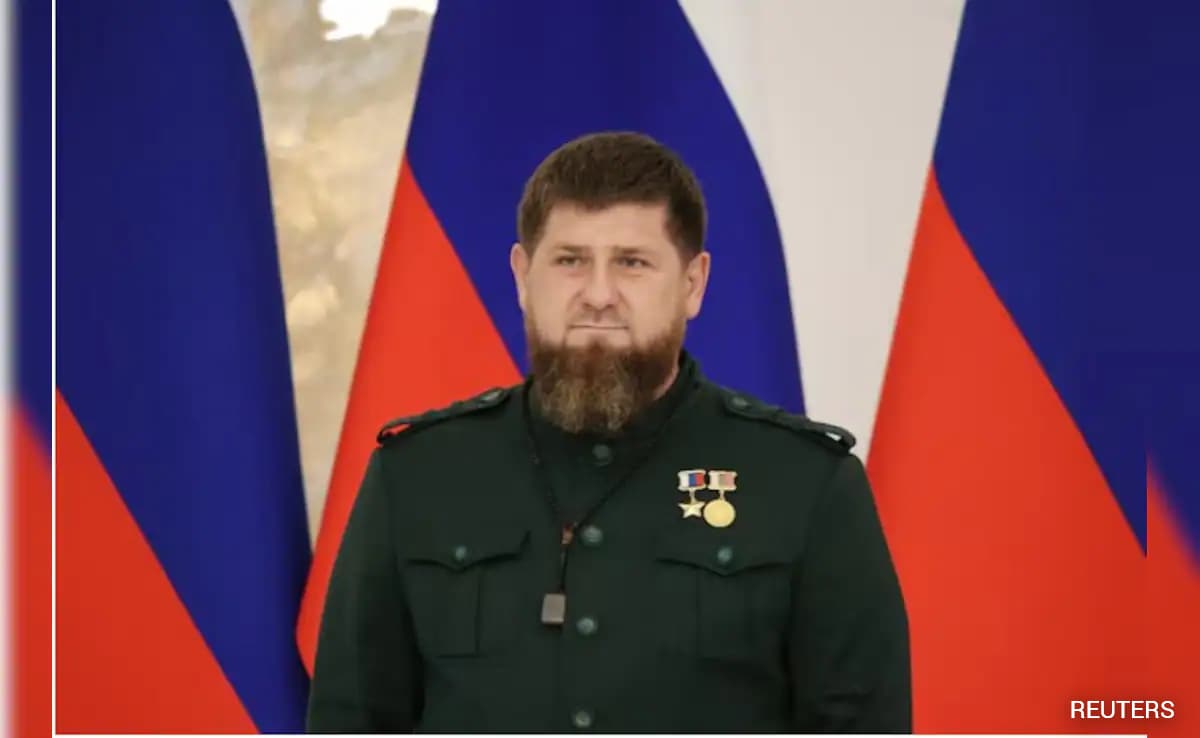
The idea of Chechen soldiers—Russia's most feared and controversial irregular units—deploying to the Middle East isn't just a rumor anymore. It’s a calculated geopolitical threat. Recently, reports from Iranian state media and statements from Chechen leadership suggest that the "Kadyrovites" are ready to join the fray if the U.S. moves toward a ground invasion of Iran.
But why would a regional Russian militia care about a war thousands of miles away? To understand this, you have to look past the headlines and into the messy overlap of religion, mercenary culture, and Vladimir Putin's global chess game.
The Soldiers Behind The Beard
When people talk about "Chechen fighters," they’re usually referring to the Kadyrovtsy. These aren't your standard Russian conscripts. They’re a paramilitary force loyal to Ramzan Kadyrov, the head of the Chechen Republic. While they technically fall under the umbrella of the Russian National Guard (Rosgvardia), they operate with a level of autonomy that makes them feel like a private army.
They’ve spent the last decade building a reputation for brutality and psychological warfare. You saw them in Mariupol. You saw them in Syria. They don't just fight; they perform. Their presence is designed to intimidate, often using social media to broadcast a version of "holy war" that blurs the lines between state military action and religious crusade.
Why Iran And Why Now
The timing of this "offer" to back Iran isn't accidental. With the U.S. and Israel ramping up pressure on Tehran in early 2026, Kadyrov has framed the conflict as a "jihad" against Western aggression.
For Kadyrov, this is a chance to solidify his status as a leading voice in the global Islamic community. He isn't just a Russian governor; he wants to be seen as a defender of the faith. By offering troops to Iran, he’s telling the Muslim world that while the West attacks, he—and by extension, Russia—is the only one willing to stand in the gap.
There's also a practical side. Iran and Russia have become incredibly tight. Iran supplied the drones that helped Russia in Ukraine, and now Russia is returning the favor with Su-35 fighter jets and advanced technical support. Sending Chechen "volunteers" is a low-cost way for the Kremlin to support an ally without declaring a full-blown war against the U.S.
The "Holy War" Narrative
Apti Alaudinov, the commander of the Akhmat special forces, didn't mince words recently. He stated he’s ready to transfer weapons and personally lead men into battle on Tehran's side. This kind of rhetoric transforms a geopolitical territorial dispute into a religious struggle.
It’s a smart play. It attracts volunteers who aren't just fighting for a paycheck, but for a cause. It also complicates the U.S. strategy. If American troops find themselves fighting "religious volunteers" from Russia on Iranian soil, the optics become a nightmare for Washington.
The Friction Points
It’s not all sunshine and roses between Kadyrov and Iran, though. Kadyrov recently slammed Iranian strikes that hit the UAE, calling them "unacceptable." Why? Because Kadyrov has spent years building personal, lucrative relationships with Gulf leaders like UAE President Mohammed bin Zayed Al Nahyan.
This shows the limits of his "jihad." He’s a businessman first. He wants to support Iran against the "Great Satan" (the U.S.), but he won't let Tehran mess up his ties with the wealthy Arab monarchies. It’s a delicate balancing act that proves these "holy warriors" are guided by pragmatism as much as piety.
What This Means For American Troops
If a ground invasion actually happens, the presence of Chechen units changes the math on the ground. These guys specialize in urban warfare and "mopping up" operations. They aren't going to win a tank battle against an American armored division, but they are experts at making an occupation miserable.
Think IEDs, snipers, and brutal counter-insurgency tactics. They bring a brand of warfare that is less about holding territory and more about breaking the will of the enemy.
The Kremlin's Deniability
The beauty of using Chechen units for Putin is "plausible deniability." If things go south, the Kremlin can claim these were just "volunteers" acting on their own religious convictions. It’s the same playbook Russia used in the Donbas in 2014.
By the time the international community figures out the chain of command, the damage is already done. It’s a "gray zone" tactic that keeps the U.S. guessing and avoids a direct NATO-Russia confrontation while still exerting Russian influence in the Middle East.
If you're tracking this conflict, don't just watch the missile counts or the carrier groups. Watch the Telegram channels coming out of Grozny. That’s where you’ll see the real temperature of the conflict. The arrival of the first "volunteer" transport planes will be the signal that this war has shifted from a regional skirmish to a global proxy battle.
Stop looking for a formal declaration of war. In 2026, war starts with a Telegram post and a "volunteer" unit crossing a border. Keep your eye on the Akhmat units; they're the canary in the coal mine for how deep Russia is willing to go to protect Tehran.


