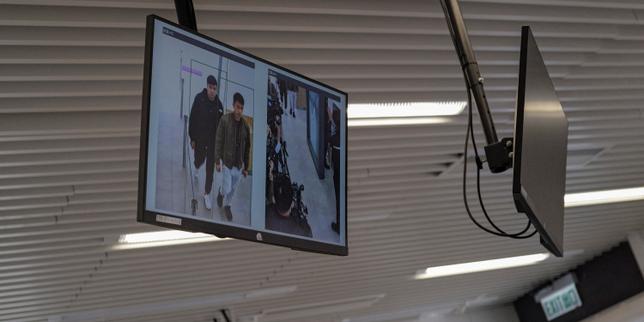
You’re walking across a busy intersection in Shenzhen, eyes on your phone, and you step off the curb before the light turns green. Within seconds, your face flashes on a massive LED screen above the street. Your ID number is partially blurred, but everyone knows it’s you. A notification pings on your phone. You’ve just been fined, and your social credit score might take a hit.
This isn't a scene from a sci-fi movie. It's the daily reality for millions of people in China. The government has turned its massive network of surveillance cameras into an automated ticketing machine. While Western cities debate the ethics of basic CCTV, Chinese tech firms are perfecting "shame-tech" that identifies, tracks, and penalizes citizens in real-time.
The death of the anonymous pedestrian
For decades, jaywalking was just a part of life in Chinese megacities. People crossed in swarms, ignoring lights because they knew the police couldn't catch everyone. That changed when companies like Intellifusion and Sensetime started deploying AI-powered cameras at major intersections.
These cameras don't just record video. They're linked to the national ID database. When the system detects a person crossing against the light, it captures several high-resolution photos and a short video clip. The AI cross-references the facial features with police records. The accuracy is terrifying. Even with a hat or glasses, the system usually gets its target.
The primary goal isn't just revenue. It’s behavioral modification. In cities like Jinan, the police claim that facial recognition has reduced jaywalking by over 90% at monitored crossings. People aren't just afraid of the fine, which is often as low as 20 yuan (about $3). They’re afraid of the public shaming. Having your face displayed on a "screen of shame" next to a busy subway entrance is a powerful deterrent in a culture that prizes social standing.
How the automated fine system actually works
The process is almost entirely hands-off for the police. Once the AI identifies the offender, it sends the data to a processing center. Within minutes, the jaywalker receives a text message via a platform like WeChat or Alipay. The message includes the time, location, and a link to pay the fine immediately.
If you don't pay? The consequences get weirder. In some provinces, the system is linked to your "Social Credit" profile. Repeated offenses can lead to restrictions on your ability to buy high-speed train tickets, get a loan, or even enroll your kids in certain schools. It's a frictionless loop of surveillance and punishment.
I've talked to people who live under this system. Most of them aren't outraged. They're resigned. There’s a sense of "well, if you didn't break the law, you have nothing to worry about." But that ignores the technical glitches. In 2018, a system in Ningbo "shamed" a famous businesswoman, Dong Mingzhu, for jaywalking. The problem? The camera had actually captured her face on an advertisement on the side of a passing bus. The AI couldn't tell the difference between a real human and a 10-foot-tall poster.
The tech stack behind the surveillance
This isn't just one camera on a pole. It's a multi-layered ecosystem of hardware and software. The cameras used are typically 4K or 8K resolution, capable of capturing clear images of moving subjects from hundreds of feet away.
- Edge Computing: The cameras themselves often handle the initial detection to save bandwidth. They only send the "crop" of the face to the central server.
- Neural Networks: The systems use deep learning models trained on billions of images. They’ve reached a point where they can identify individuals even when they're wearing masks—a tech that was fast-tracked during the pandemic.
- Big Data Integration: The real power comes from the backend. The facial recognition data is tied to mobile payment accounts, cellular location data, and criminal records.
This level of integration is something Western governments can only dream of—or dread. While San Francisco and Portland have moved to ban facial recognition by police, Chinese tech hubs are exporting this hardware to countries in Southeast Asia and Africa. It's a massive business.
Privacy is a luxury of the past
We often talk about the "Panopticon," the idea that people behave better when they think they’re being watched. China has built a digital Panopticon that actually works. It's effective, but it comes at a staggering cost to personal liberty.
In the West, we’re used to the idea that a police officer has to witness a crime to write a ticket, or at least a human has to review a speed camera photo. In China, the algorithm is the judge, jury, and executioner. There’s very little room for context. If you’re running across the street to help someone who collapsed? The camera doesn't care. It sees a body in the wrong place at the wrong time. You get a fine.
There’s also the issue of data security. These databases of facial biometrics are prime targets for hackers. If someone steals your password, you can change it. If someone steals your face, you’re stuck. There have already been reports of "black market" facial data being sold in China for as little as 10 cents per face.
The global ripple effect
Don't think this stays in China. The success of these systems in managing "social order" makes them incredibly attractive to city planners worldwide. We’re already seeing "lite" versions of this in the UK and Australia, where facial recognition is used to track "persons of interest" in crowds.
The difference is the transparency and the legal guardrails. In China, those guardrails are virtually non-existent. The tech moves faster than the law can keep up. If you're a developer or a city official, the lesson here is clear. Automation is great for efficiency, but it's terrible for nuance.
If you want to understand where urban living is headed, look at Shenzhen. The friction between convenience and privacy is disappearing because privacy is losing. You can pay for groceries with your face, enter your apartment building with your face, and get fined with your face. It's convenient until the system makes a mistake.
Watch your step or pay the price
If you're traveling to China or living there, you need to adapt. The days of "creative" pedestrian maneuvers are over.
- Look for the cameras: They’re usually mounted on white metal frames over the crosswalks, often with bright LED floodlights that stay on even during the day.
- Check your WeChat: If you think you might have messed up, check your official notifications. Ignoring a fine only makes the social credit penalty worse.
- Don't rely on masks: Modern AI in China is specifically tuned to identify people by the bridge of their nose and the area around their eyes.
- Appeal the errors: If you get hit with a fine for an image on a bus (like Dong Mingzhu), you can appeal, but it's a bureaucratic nightmare.
The tech is here to stay. It's making streets safer and traffic flow better, but it's also making the world feel a lot smaller and a lot more controlled. You're never really alone when you're outside. The algorithm is always watching, and it never forgets a face. Stop at the red light. Not because it’s the law, but because the wall is watching you.