The Invisible Pulse
Twenty-one miles. At its narrowest, that is all that separates the jagged Musandam Peninsula of Oman from the coast of Iran. It is a distance a marathon runner could cover in a few hours, yet it serves as the jugular of the modern world. When you flick a light switch in London or fill a gas tank in Tokyo, you are tethered to this thin ribbon of turquoise water.
The Strait of Hormuz is not just a geographical feature. It is a psychological barometer.
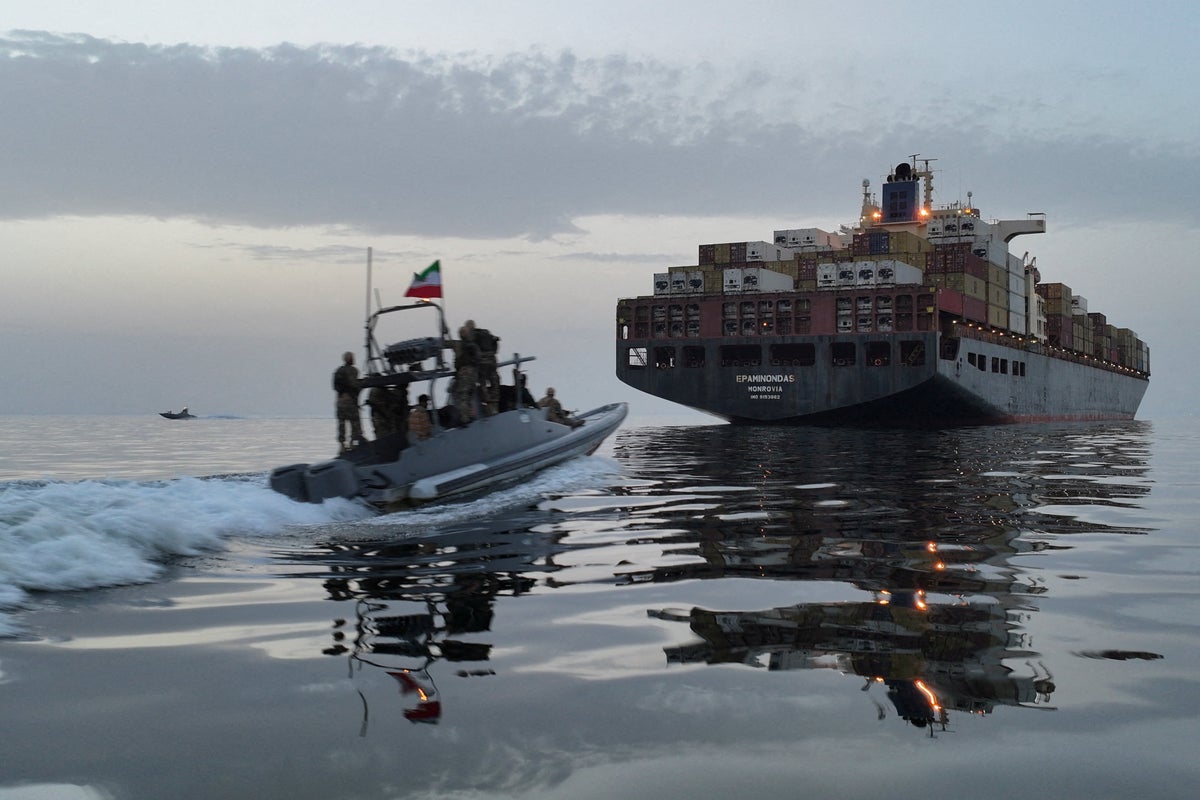
For weeks, the charts that track global shipping looked like a heart monitor flatlining. The data points—dry, clinical, and detached—showed a precipitous drop in tanker traffic. To an analyst in a glass tower in Dubai, it was a "sector slowdown." To the men and women on the bridge of a Very Large Crude Carrier (VLCC), it was a gauntlet. They watched the horizon for the silhouette of fast-attack craft and scanned the water for the glint of a limpet mine.
Fear has a specific scent on a ship. It smells like salt air mixed with the metallic tang of sweat and the constant, low-frequency hum of a diesel engine that cannot stop. If the engine stops here, the world stalls.
The Ghost Ships Return
The numbers are starting to move again. In the last few days, satellite imagery and transponder data show a tentative uptick in hull count. The "recovery" is here, if you believe the spreadsheets. Ships that had been lingering in the Gulf of Oman, hovering outside the mouth of the Strait like nervous children at the edge of a dark room, are finally making their move.
Consider a captain we will call Elias. He is not a political strategist. He is a mariner responsible for two million barrels of oil and the lives of twenty-four crew members. For three weeks, his owners kept him on "hold position." He watched the news cycles spin, heard the rhetoric of regional powers escalate, and waited for the insurance premiums to stop climbing into the stratosphere.
War risk surcharges are not just line items. They are the price of uncertainty. When insurance rates for a single transit through the Strait jump from thirty thousand dollars to nearly two hundred thousand, the global economy feels a tremor.
Elias finally got the "go" order yesterday. As his ship enters the Traffic Separation Scheme, he isn't thinking about the "early signs of recovery" mentioned in the morning briefing. He is looking at the radar. He knows that a few days of increased traffic does not mean the crisis has evaporated. It just means the world’s thirst for energy has finally outweighed its immediate fear of the fire.
The Fragility of the Flow
The problem with focusing on "recovery" is that it implies a return to a safe baseline. But there is no "safe" in the Strait of Hormuz; there is only "stable."
About one-fifth of the world’s total oil consumption passes through this needle's eye every day. That is roughly 20 million barrels. If you want to visualize that, imagine a line of oil drums stretching from New York to Los Angeles and back again. Every. Single. Day.
When analysts say the crisis is far from over, they are pointing to the reality that the underlying tensions have not changed. The geopolitical tectonic plates are still grinding. The recovery we see now is a functional necessity, not a diplomatic breakthrough. China needs the fuel. India needs the power. The tankers must move because the alternative is a global cardiac arrest.
The "invisible stakes" here aren't just about the price at the pump. They are about the delicate, high-stakes choreography of global logistics. A modern economy is built on the assumption of "just-in-time" delivery. We don't keep massive stockpiles anymore; we rely on the flow. When the flow stutters, the ripples move through the supply chain with terrifying speed.
A Sky Full of Shadows
It isn't just about what is in the water. It is about what is in the air.
Electronic warfare has turned the Strait into a hall of mirrors. Captains have reported GPS interference that places their ships miles away from their actual coordinates. Imagine navigating a vessel the size of an Empire State Building through a narrow corridor while your primary instruments are lying to you.
This is the "new normal" that the recovery charts don't show. The ships are back, yes. But they are sailing through a digital fog.
The analysts are right to be cautious. A recovery in volume is not a recovery in security. We are seeing a desperate return to business as usual because the global economy cannot afford any other way. The tankers are moving again not because the danger is gone, but because we have collectively decided to look away from it.
The Weight of the Horizon
The sun sets over the Musandam Peninsula, casting long, bruised shadows across the water. From the shore, the tankers look like toys—slow, steady, and invincible.
Up close, the reality is different.
The hulls are weathered by salt and the relentless sun. The crews are tired. They know that this stretch of water is the ultimate choke point. They know that if one major incident occurs—a collision, a seizure, a stray missile—the "recovery" will vanish in a heartbeat.
We watch the data points move up and down on our screens. We celebrate the "signs of life" in the shipping lanes. But beneath the statistics lies a fundamental truth we often choose to ignore: our entire way of life is balanced on the tip of a needle.
The Strait is open. The oil is flowing. The ships are crossing the line.
But out there, where the water turns deep and the radar begins to flicker, no one is exhaling. The silence of the Gulf isn't peace. It is a held breath.