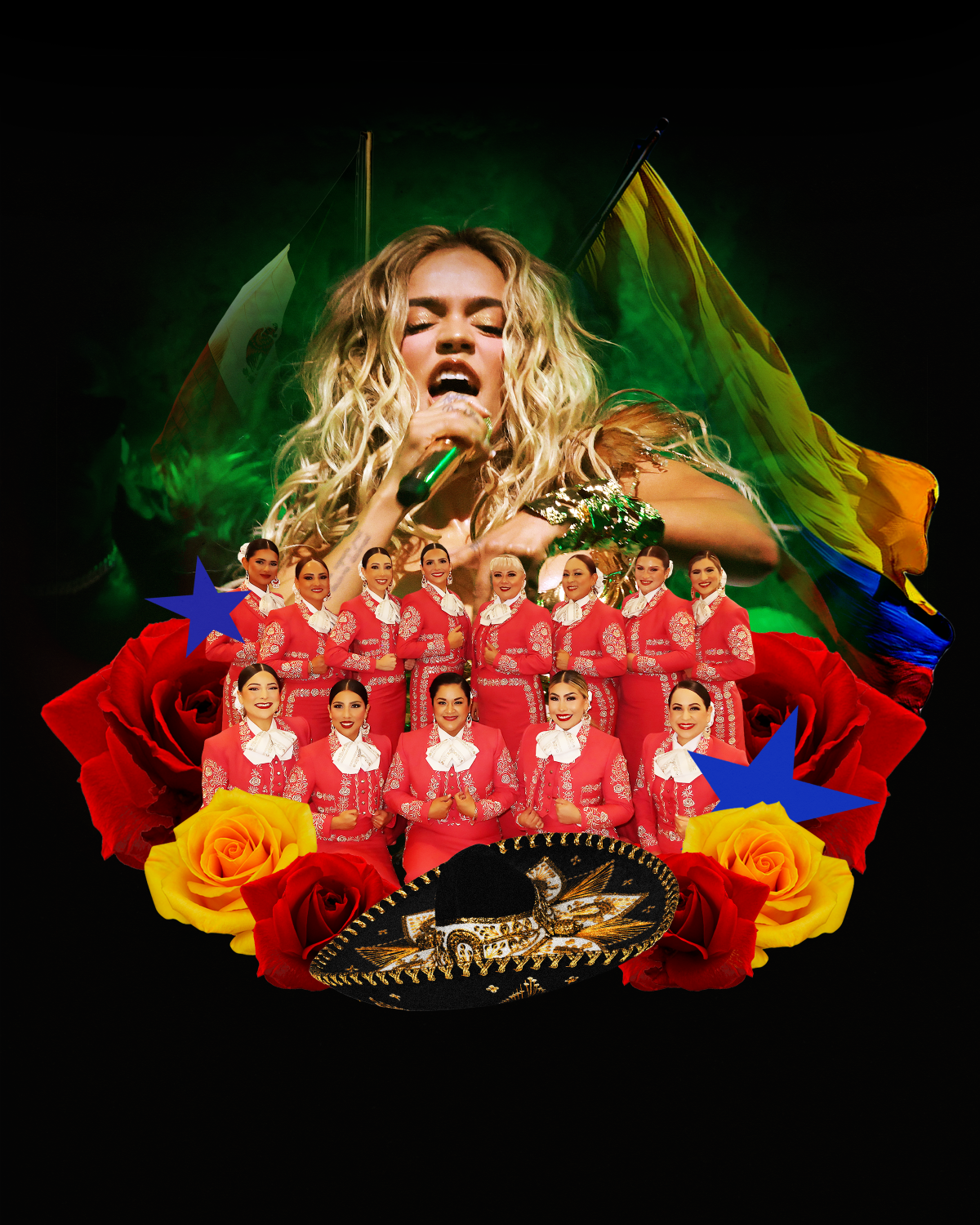
The mainstream media loves a "glass ceiling" narrative. When Mariachi Reyna de Los Angeles stepped onto the Coachella stage alongside Karol G, the press rushed to file their stories under the same tired label: a win for representation. They framed it as a marginalized group finally getting their dues on a global platform.
They are wrong.
By treating this performance as a milestone of "arrival," the industry reveals its own condescension. Mariachi Reyna didn't need Coachella to validate their existence. In fact, the mechanics of the modern festival circuit often do more to dilute the power of traditional ensembles than to elevate them. When a group with the technical precision and historical weight of Reyna acts as a backing track for a pop juggernaut, we aren't seeing the future of music. We are seeing the commodification of "vibe."
The Myth of the Big Break
The common consensus suggests that a guest spot at a massive festival is the ultimate career catalyst. This logic is flawed. For an all-female mariachi group that has been pioneering the space since 1994, a few minutes under the desert sun is not a "breakout moment." It is a cameo.
In my years tracking the movement of heritage acts into the pop sphere, I’ve seen this play out repeatedly. A pop star wants "authenticity" to ground their high-gloss production. They hire the best in the business—in this case, Reyna—and the media applauds the pop star for being inclusive. The actual musicians are often relegated to being high-end set dressing.
The data on "Coachella bumps" is notoriously fickle. While social media followers might tick upward for 48 hours, the conversion rate from a festival cameo to sustained, ticket-buying fans for a traditional ensemble is negligible. The audience isn't there for the intricate vihuela work or the nuanced vocal harmonies that define Mariachi Reyna. They are there for the headliner’s brand.
Technical Mastery vs. Pop Spectacle
Mariachi is a discipline of acoustic perfection. It relies on the physics of the room—or the plaza. The instruments are designed to project, to blend, and to vibrate with a specific frequency that is often lost when pushed through a stadium-grade PA system designed for 808 sub-bass.
- The Vihuela and Guitarron: These aren't just "folk guitars." They provide a rhythmic and harmonic skeleton that requires precise balance.
- The Trumpet Section: In a traditional setting, the "grit" of the brass provides the emotional peak.
- Vocal Range: Mariachi singers possess a power that rivals operatic training.
When you drop these elements into a pop set, you are forced to compromise the soundstage. To mix a mariachi band into a set with Karol G, the sound engineers have to "thin out" the acoustic instruments to make room for the digital tracks. You lose the soul of the genre to satisfy the requirements of the decibel meter.
Is it "progress" to see women playing instruments they’ve mastered if the audience can only hear 40% of their actual output? I’d argue it’s a regression. True respect for the craft would mean giving these women a 60-minute sunset slot where their own arrangements take center stage, not burying them in a medley.
The Gender Trap in Traditional Music
The "all-woman" hook is the easiest way for journalists to write about Mariachi Reyna. It’s lazy. By focusing almost exclusively on their gender, the industry ignores their technical superiority.
I’ve sat in rooms with veteran musicians who dismiss female ensembles as a "novelty." When the press focuses on the "first female group to do X," they inadvertently validate that dismissive attitude. They frame the gender of the performers as the most interesting thing about them, rather than the fact that Mariachi Reyna often outplays the most established male groups in the world.
The real disruption isn't that they are women. It's that they have maintained a standard of excellence for three decades in an industry that usually discards acts after three years. They have survived the shift from physical media to streaming, the decline of traditional radio, and the gentrification of the "Latin" music label—all while playing music that demands high-level musicianship.
Stop Asking for a Seat at the Table
The narrative needs to shift. We should stop asking when traditional groups will be invited to the "cool kids" table at Coachella and start asking why Coachella isn't built to house them properly.
The current festival model is a monoculture. It favors music that can be synced to a light show. Mariachi is organic. It’s breathing. It’s communal. By trying to fit Reyna into the Karol G box, we are forcing a square peg into a round hole for the sake of a "diversity" checkbox.
If you want to support these artists, stop celebrating their five-minute cameos. Start paying attention to their headlining tours. Buy the records where they are the primary architects of the sound, not the collaborators.
The industry doesn't want to admit that heritage acts like Mariachi Reyna actually have more longevity than most of the names on the Coachella poster. A pop star's relevance is tied to the current trend cycle. A mariachi group's relevance is tied to culture itself. One is a spark; the other is a constant flame.
The Cost of the Commercial Co-Sign
There is a hidden danger in this "mainstream" embrace. When a traditional group gets a taste of the massive pop audience, there is an immense pressure to "modernize." This usually means adding a drum kit, using electronic pickups on the violins, or shortening songs to fit a radio edit.
I've seen world-class ensembles lose their identity chasing this ghost. They trade their distinct, localized sound for a generic, globalized sheen.
Mariachi Reyna’s strength lies in their refusal to be anything other than what they are. Their inclusion in a Coachella set should be viewed with skepticism, not just celebration. We should be asking: what is being sacrificed for this exposure? If the answer is the integrity of the arrangement or the focus on their individual artistry, the price is too high.
Real Representation Isn't a Cameo
If the music industry actually cared about these women, we wouldn't be talking about them only when they appear next to a blue-haired superstar. We would be discussing the lack of infrastructure for traditional acoustic music in the modern touring landscape. We would be talking about the predatory nature of "collaborations" that serve the larger artist's image more than the smaller artist's bank account.
The "lazy consensus" says this was a win for Mexican culture. The truth is that Mexican culture—and these women specifically—have been winning for decades without the permission of a California festival promoter.
Stop treating Mariachi Reyna like a feel-good story. Treat them like the elite, high-performance athletes of the music world that they are. They aren't "breaking through" to our world. We are finally, slowly, and poorly catching up to theirs.
Don't clap because they were on stage with Karol G. Clap because they are still here, still sharp, and still better than the acts you're actually paying to see.