The energy market just flashed a warning sign that has nothing to do with supply and everything to do with fear. After oil surged to a four-year high, the immediate retreat suggests that the global economy is more fragile than the headlines imply. Traders spent weeks pricing in a direct military confrontation between Washington and Tehran, but when the rhetoric reached a fever pitch, the "war premium" evaporated. It was a classic case of the market overextending itself on a narrative that lacked the structural legs to support $100-a-barrel Brent.
The retreat wasn't a sign of peace. It was a realization that neither side can afford the economic wreckage of a blocked Strait of Hormuz.
The Myth of the Unstoppable Rally
Markets often move on a hair-trigger when Middle Eastern tensions flare, but this recent climb to four-year highs was built on a foundation of speculation rather than a genuine physical shortage. The narrative was simple. If the United States and Iran escalated toward open warfare, Iranian crude would vanish from the market and regional shipping lanes would become a graveyard for tankers.
This logic ignores the reality of global demand. While the supply side of the equation looked tight on paper, the consumption side is cooling. China’s industrial appetite has slowed, and European manufacturing remains sluggish. When oil hit that peak, it didn't find a wall of buyers; it found a wall of profit-takers who recognized that the world is currently better equipped to handle a disruption than it was a decade ago.
The surge was a fever dream. The retreat is the cold shower.
Weapons of Economic Mass Destruction
To understand why the price dropped so sharply, you have to look at the specific nature of the US-Iran friction. This isn't a traditional border dispute. It is a game of chicken played with the global financial system.
Iran’s primary leverage is its ability to harass or shut down the Strait of Hormuz, through which roughly 20% of the world’s liquid petroleum passes. However, if Tehran actually pulls that trigger, they don't just hurt the West. They commit economic suicide. China, Iran’s biggest customer, would see its economy crippled by such a move. Beijing is not about to let a regional proxy war destroy its domestic stability.
The Strategic Petroleum Reserve Factor
The US has a different kind of weapon. The Strategic Petroleum Reserve (SPR) has been a point of contention for years, but its psychological impact on the market cannot be overstated. When prices hit that four-year high, the implicit threat of another massive release from the SPR acted as a ceiling. Traders know that the current administration views high gas prices as a political liability. They won't let the market run wild during an election cycle or a period of high inflation.
The Invisible Ceiling of US Shale
Every time oil prices creep toward the triple digits, a sleeping giant wakes up in West Texas and North Dakota. US shale producers have become the world’s most effective "swing" producers. Unlike OPEC+, which operates through bureaucratic consensus and slow-moving quotas, American shale is driven by private equity and immediate profit.
As soon as Brent crude crossed the threshold of the four-year high, hedgers in the Permian Basin started locking in future prices. This creates a natural downward pressure. The market knows that at $90 or $95 a barrel, US production will ramp up regardless of what happens in the Persian Gulf. This creates a "buffer zone" that didn't exist during previous oil shocks.
Why Geography No Longer Dictates Price
The old rules of energy geopolitics are failing. In the 1970s, a conflict in the Middle East meant immediate, long-term scarcity. Today, the global energy map is fragmented. The rise of Brazilian production, the expansion of Guyanese offshore projects, and the efficiency of Canadian oil sands mean that the Middle East, while still vital, no longer holds a monopoly on the world's anxiety.
The market retreated because it realized that even a significant localized conflict wouldn't result in a global "dry out."
The High Cost of Debt and the Death of Demand
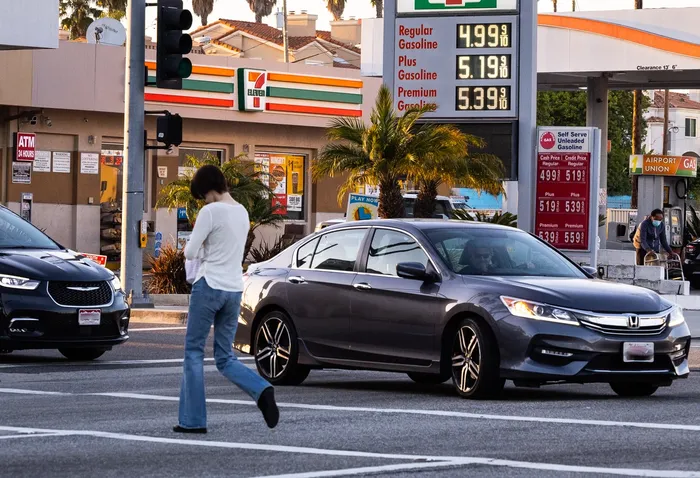
We cannot analyze oil prices in a vacuum. The broader macroeconomic environment is currently defined by high interest rates and a "higher for longer" stance by central banks. When oil prices spike, they act as a tax on the consumer.
If you raise the price of fuel in an environment where mortgages and credit card debt are already crushing the middle class, demand doesn't just dip—it craters. Professional analysts call this "demand destruction." When oil hit its peak, the data began to show that consumers were already pulling back. Travel plans were being reconsidered. Freight companies were slowing down. The market didn't retreat because the war threat ended; it retreated because it saw the cliff of a global recession staring back at it.
The Paper Market vs the Physical Reality
There is a massive disconnect between "paper oil"—the futures contracts traded on screens in London and New York—and "physical oil"—the actual barrels being loaded onto ships. The four-year high was largely a product of the paper market. Hedge funds and algorithmic trading bots chased the momentum of the war headlines.
Once the initial shock of the escalation faded, the physical realities took over. Refineries weren't screaming for more supply. Inventories in key hubs like Cushing, Oklahoma, were stable. The speculators got ahead of the tankers, and they paid the price for it when the correction hit.
The Algorithmic Trap
Modern trading is dominated by "black box" models that trigger buy orders based on keywords. Words like "missile strike," "sanctions," and "blockade" send the price up in milliseconds. But these models have no nuance. They don't understand the complexities of diplomatic backchannels. When the expected "hot war" failed to materialize in the subsequent 48 hours, the same algorithms flipped to sell.
The Shift Toward Efficiency and Alternatives
It is uncomfortable for many oil bulls to admit, but the world is simply more efficient than it used to be. The correlation between economic growth and oil consumption is decoupling. Every year, internal combustion engines get more miles per gallon, and the percentage of electric vehicles on the road increases.
This doesn't mean oil is dead. Far from it. But it does mean that the "scarcity spikes" of the past are harder to maintain. The threshold for what constitutes a "high" price is moving downward. What was once a sustainable $100-a-barrel market is now a volatile $80-a-barrel market.
The Geopolitical Chessboard is Reorganizing
We are seeing a shift where regional powers like Saudi Arabia and the UAE are more interested in their internal "Vision 2030" style developments than in participating in a destructive conflict. Stability is more profitable for Riyadh than a $150 oil price followed by a global depression.
This internal desire for stability across the Gulf acts as a moderating force that many western analysts miss. They see the headlines of war, but they don't see the billions of dollars in infrastructure projects that would be vaporized by a real escalation. The smart money saw this, and that is why the rally hit a ceiling.
The Volatility Trap for Investors
For the average investor, this retreat is a lesson in the dangers of "event-driven" trading. Chasing oil on the back of geopolitical headlines is a loser’s game. The real money is made by understanding the long-term supply-demand balance, which currently suggests a market that is well-supplied and increasingly sensitive to price.
The retreat from the four-year high isn't a fluke. It is the market's way of saying that the old playbook—where every Middle Eastern spark leads to a sustained price explosion—is officially obsolete.
The immediate task for anyone tracking this sector is to ignore the "war" noise and look at the storage data. Look at the refinery margins. Look at the Chinese manufacturing index. Those are the metrics that will tell you where the floor is, because we have already seen where the ceiling sits.
The era of the "permanent spike" is over, replaced by a cycle of sharp, violent bursts followed by equally rapid collapses. It is a market of nerves, not of fundamentals. If you want to understand the next move, stop looking at the map of the Persian Gulf and start looking at the balance sheets of the world’s major central banks. That is where the real war is being fought, and the casualty is the purchasing power of the global consumer.
Stop waiting for the big explosion. The real story is the slow, grinding erosion of demand that makes every price spike a temporary hallucination. Keep your eyes on the inventory levels in Rotterdam and Singapore, because they are the only truth left in a market saturated with speculative fiction.