The Pacific Ocean does not care about policy. At 3:00 AM, sixty miles off the jagged coastline of Southern California, the water is a bruised, suffocating black. It moves with a heavy, rhythmic violence that can make a sturdy naval cutter feel like a splinter. Now, picture a panga boat. It is a thin-shelled, open-air vessel, often overloaded with human weight and fuel drums, sitting so low in the swells that the salt spray is a constant, stinging passenger.
There is a specific kind of silence that exists out there before the engines are cut. It is the sound of desperation meeting the iron wall of the law.
Last week, that silence was shattered six times over. In a series of high-stakes interdictions, Department of Homeland Security (DHS) Task Force units intercepted half a dozen smuggling vessels. By the time the sun climbed over the coastal range, eighty-two people had been pulled from the abyss. To the spreadsheet-weary observer, these are just numbers—82 migrants, 6 boats, 1 operation. But to anyone who has felt the deck of a ship roll under their feet in a gale, those numbers represent eighty-two lives that were minutes away from becoming permanent fixtures of the seabed.
The ocean is the ultimate filter. It doesn't ask for papers; it only asks for strength.
The Mechanics of Shadow
Smuggling is rarely the cinematic high-speed chase people imagine. It is a grueling, slow-motion gamble. These vessels, often launched from remote beaches in Baja, are not designed for the open sea. They are disposable tools in a multibillion-dollar logistical machine. The "captains" are frequently young men lured by the promise of a payday that could change their family's trajectory, or they are seasoned criminals who view the human beings huddled in the hull as mere "cargo."
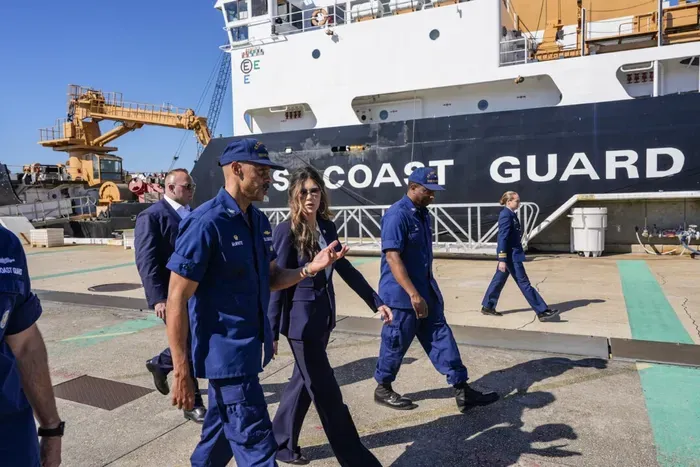
When a DHS maritime patrol aircraft spots a heat signature in a sector of the ocean where no one should be, a complex choreography begins. Coordination is the invisible thread holding these operations together. The Coast Guard, Customs and Border Protection (CBP), and local law enforcement must move as a single organism. If they are too slow, the boat disappears into the fog. If they are too aggressive, the panga capsizes, and a law enforcement action turns into a mass-casualty recovery mission.
Consider a hypothetical woman named Elena. She is not a statistic. In this scenario, she is thirty-four, carrying everything she owns in a plastic bag she has tied to her belt so it won't float away if the boat flips. She hasn't had fresh water in twelve hours. The smell of gasoline from the leaking outboard motor is making her nauseous, but she can't vomit because her stomach is empty. She is surrounded by fifteen others, their shoulders touching, their breaths shallow.
To Elena, the flashing blue lights of a Border Patrol boat aren't just an arrest. They are a terrifying rescue.
The Invisible Stakes
Why take the risk? The California coast is notoriously dangerous. Point Conception and the Channel Islands create a funnel of wind and current that can snap a small boat in half. Yet, the frequency of these maritime incursions is rising. As land borders become more saturated with technology—sensors, towers, and increased patrols—the pressure pushes the flow of migration into the graveyard of the deep.
The stakes are higher than the public realizes. These aren't just independent operators. The infrastructure required to launch six vessels simultaneously suggests a level of organized coordination that rivals legitimate shipping companies. When the DHS interdicts a vessel, they aren't just stopping eighty-two people; they are disrupting a supply chain. They are seizing the assets of cartels that treat human life as a depreciating commodity.
The reality of the maritime border is a constant state of friction. It is a battle of technology versus grit. On one side, you have multimillion-dollar radar arrays and satellite imagery. On the other, you have a man with a handheld GPS and a desperate hope that the fog stays thick.
The Human Cost of the "Easy" Route
There is a myth that the sea is the "easy" way in—a wide-open back door with no fences. This is a lethal misunderstanding. The ocean has no landmarks. Once you are out of sight of the shore, if your engine dies, you are a ghost. You drift until the sun blisters your skin or the cold shuts down your heart.
In this recent surge of captures, the DHS reported that many of those on board were found without life jackets. Some were suffering from the early stages of hypothermia. The Pacific, even in the summer, is a cold, unforgiving neighbor. The water temperature off the California coast rarely climbs high enough to sustain a human for more than a few hours.
The officers who perform these boardings describe a specific look in the eyes of the migrants. It is a mixture of profound relief and crushing defeat. They have spent thousands of dollars—money often borrowed from dangerous people—only to end up in a metal holding cell on a cutter.
But they are alive.
The Breaking Point
Every interdiction is a temporary dam against a flood. The DHS and its partner agencies are operating at a tempo that is difficult to sustain. Six boats in a single window of time is an anomaly that suggests a "surge" strategy by the smuggling organizations. They are testing the perimeter. They are looking for the gap in the radar, the moment when the crew is tired, or the night when the swell is just high enough to hide a low-profile hull.
The logistics of processing eighty-two people at sea are staggering. It requires medical screenings, identification, and the legal bureaucracy of deportation or asylum processing, all while maintaining the safety of the officers and the detainees. It is a floating city of tension.
We often talk about "border security" as a political concept, a talking point for a news cycle. But out there, past the kelp forests and the surf breaks, it is a visceral, physical struggle. It is the sound of a heavy diesel engine idling next to a fiberglass hull that is cracking under the pressure of the waves. It is the sight of a child being handed from a rocking panga to the steady arms of a Coast Guard petty officer.
The ocean does not have a "Conclusion" section. It simply continues to roll. As long as the disparity between the two sides of that water exists, the boats will keep coming. The tragedy isn't just that they are being caught; it is that the alternative—the silence of the deep—is the only other outcome for those the scanners miss.
A single orange life vest floated away from one of the seized boats, bobbing in the wake of the departing cutter. It drifted for a mile before the weight of the salt water pulled it under, leaving nothing but the black surface of the Pacific, indifferent and vast.