The tech press is allergic to math.
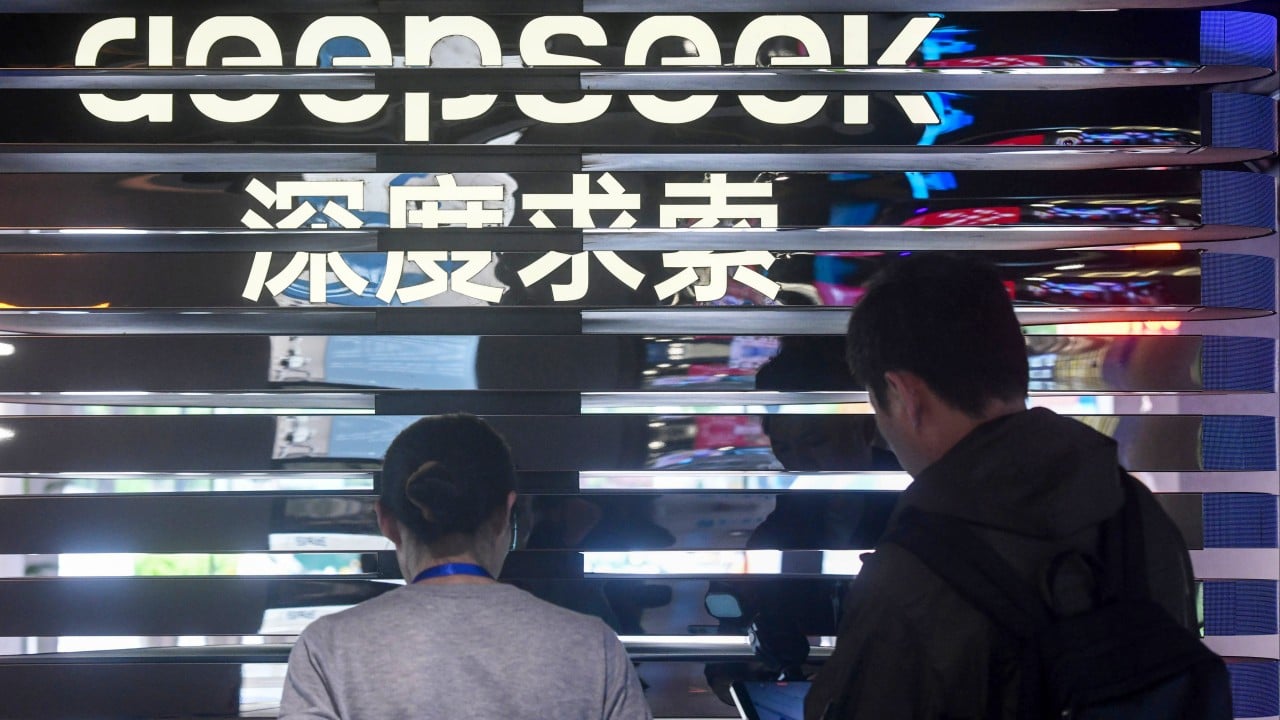
When DeepSeek went dark for twelve hours, the "experts" rushed to their keyboards to file the same lazy copy: "reliability crisis," "unstable infrastructure," and the inevitable "users fleeing to OpenAI." They treat a server crash like a funeral. In reality, it was a coronation.
If you think a 12-hour outage is a sign of failure in the current AI climate, you aren't paying attention to how scaling actually works. You are looking at a Ferrari that ran out of gas because it was going 200 mph and claiming the engine is broken.
DeepSeek didn't lose ground during those twelve hours. They proved they owned the ground everyone else is standing on.
The Myth of the Fragile User Base
The standard narrative suggests that a user who can’t access DeepSeek R1 will simply slide back into the warm, corporate embrace of ChatGPT or Claude and never look back. This assumes AI models are commodities like toothpaste. They aren't.
Users didn't complain because they were "cut off" from a utility; they complained because they were deprived of a specific, high-reasoning edge that the Silicon Valley giants have spent billions trying to gatekeep. When a free service goes down and the internet melts, that isn't a PR disaster. It's a demand validation.
Think about the economics of "churn" in this context. Most of the people complaining are developers and power users who have already integrated DeepSeek’s API because the cost-to-performance ratio makes GPT-4o look like a luxury tax for the unimaginative. These users don't "flee" because of a temporary outage. They wait. They refresh the page. They post memes.
They stay because $0.14 per million tokens is a gravity well that no amount of "99.9% uptime" marketing can escape.
Infrastructure Isn't Architecture
The "outage" narrative ignores the fundamental disruption DeepSeek introduced: Multi-Head Latent Attention (MLA) and the DeepSeek-V3 architecture.
Mainstream critics love to point at server stability because they don't understand the weights and biases underneath. They see a "Service Unavailable" screen. I see a model that achieved SOTA (State of the Art) performance with a fraction of the training compute used by the US-based labs.
The outage wasn't a flaw in the code. It was a physical limitation of hardware trying to keep up with a viral adoption curve that would have crushed any other startup in history. While OpenAI spent years building a brand through controlled, incremental releases, DeepSeek dropped a nuclear bomb on the pricing structure of the entire industry.
When you disrupt the market that violently, the pipes are going to burst.
The Latency Paradox
- The Lazy View: Slow response times and outages mean the tech is "unready for enterprise."
- The Reality: High latency is the "line at the club." It signifies that the value being offered is so significantly higher than the alternatives that users are willing to tolerate friction to get it.
I’ve spent fifteen years watching software rollouts. I’ve seen companies spend $50 million on "robust" infrastructure for products nobody wanted. They had 100% uptime and 0% impact. DeepSeek has the opposite problem, which is the only problem worth having in tech.
The Geopolitical Coping Mechanism
Let’s be blunt: a lot of the "DeepSeek is failing" commentary is just Western cope.
There is a desperate need in the valley to believe that hardware bottlenecks or regional restrictions will eventually handicap the competition. The 12-hour outage provided a convenient hook for that bias. Critics argued that the outage proved China's compute constraints are a death sentence.
They are missing the nuance of efficiency. If DeepSeek can cause this much market panic while supposedly "struggling" with hardware, what happens when they optimize the next iteration?
We are seeing a shift from "Who has the most GPUs?" to "Who can do the most with the GPUs they have?" DeepSeek is winning the second game. An outage is a temporary hurdle; an inefficient architecture is a terminal illness. OpenAI and Google are the ones who should be worried about their vitals, not the company that just proved it can steal the world's attention with a single repo.
The Fallacy of the "Reliable" Rival
The competitor article claims rivals are "gaining ground" during the downtime. This is a fundamental misunderstanding of how the AI stack is being built right now.
Engineers are moving toward model-agnostic pipelines. They aren't "switching" from DeepSeek to Gemini; they are using Gemini as a fallback. But the moment the DeepSeek API endpoint is live again, the traffic shifts back because the unit economics demand it.
You don't "gain ground" on a competitor who is 10x cheaper and 95% as capable just because they had a bad Tuesday. You gain ground by beating their math. And right now, nobody is beating the math.
Thought Experiment: The Ghost of AWS
Imagine a scenario where Amazon Web Services (AWS) had a major outage in 2010. Critics at the time screamed that the "cloud" was a dangerous fad and that companies would go back to on-premise servers.
Did they? No. They built better redundancy. They realized the cost savings of the cloud were too massive to ignore. DeepSeek is the "Cloud" moment for open-weights, high-reasoning models. The outage is just the growing pain that forces the ecosystem to build better wrappers.
Stop Asking if it’s "Down" and Start Asking Why You Care
If you are a CTO and you're steering away from DeepSeek because of one outage, you are failing your shareholders. You are prioritizing the "safety" of a higher bill over the competitive advantage of lean, aggressive intelligence.
The outage didn't show DeepSeek's weakness. It showed the world's total, frightening dependency on a newcomer. It exposed the fact that the "incumbents" are now the ones reacting, chasing, and trying to justify their existence.
The "outage" was the loudest possible signal that the monopoly is dead.
The next time the site goes down, don't look at your watch. Look at the stock prices of the companies trying to compete with them. That's where the real damage is being done.
Stop looking for "stability" in a revolution. Revolutions are messy, they break things, and they don't have 24/7 customer support. If you want a predictable, boring, and overpriced partner, stay with the giants. If you want to win, you plan for the outage and ride the lightning.
DeepSeek is back up. The industry is still down.