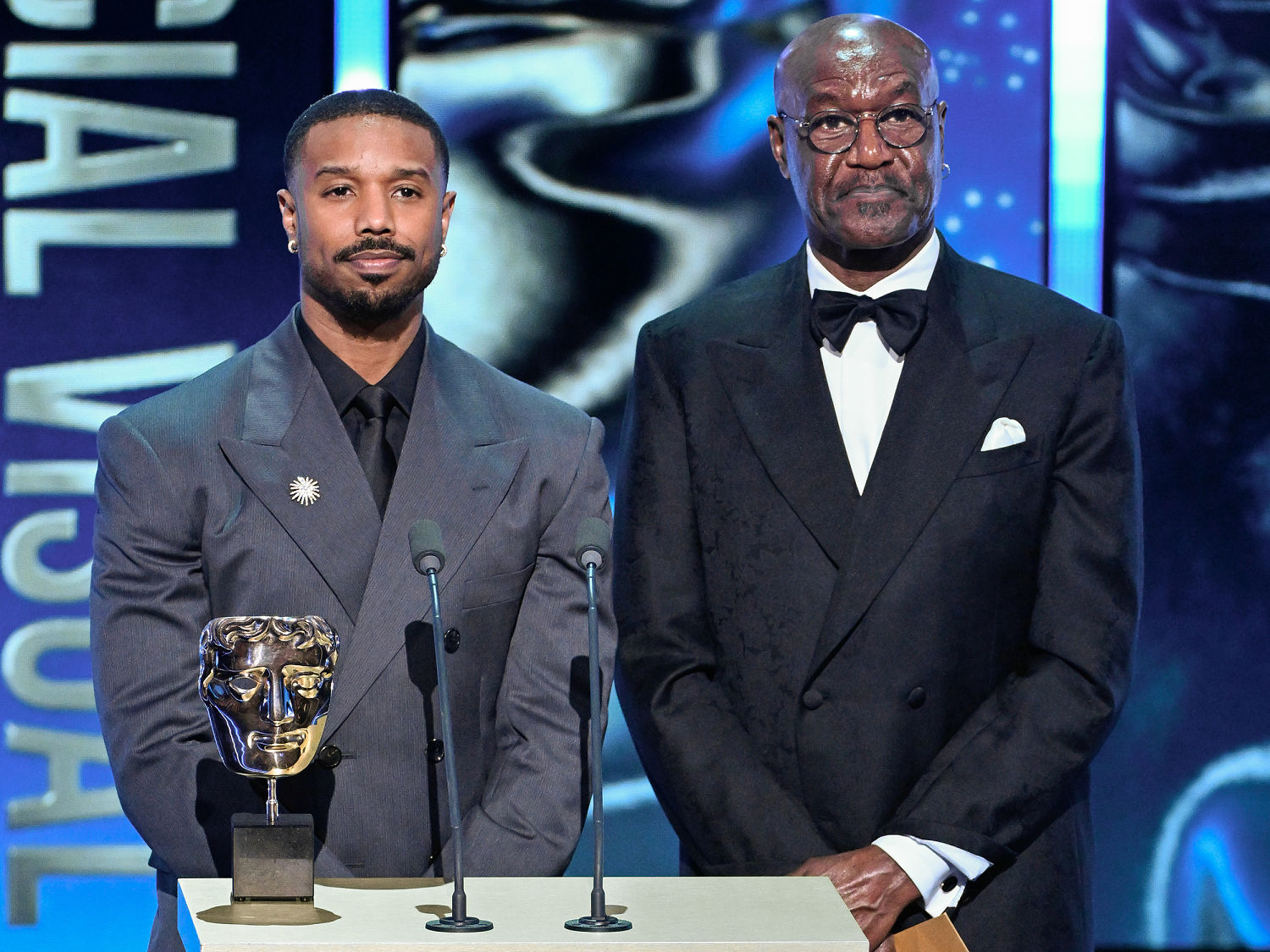
Delroy Lindo deserved a night of celebration, not a confrontation with the ugly undercurrents of the British film industry. Following the recent incident at the BAFTA Awards where a racial slur was directed at the veteran actor, Lindo has finally broken his silence. His response was not one of televised rage, but a measured, searing indictment of the security protocols and cultural gatekeeping that allow such vitriol to penetrate supposedly elite spaces. This wasn't just a lapse in decorum. It was a systemic failure that highlights the persistent gap between the industry's public-facing diversity initiatives and the lived reality of Black performers in high-stakes environments.
The incident occurred during an after-party following the main ceremony. According to eyewitnesses and Lindo’s subsequent statements, an unidentified individual—later confirmed to be a guest of a corporate sponsor—hurled a racial epithet at the actor during a crowded transition between rooms. The shock wasn't just the word itself. It was the fact that it happened in a room where every guest had been vetted, scanned, and credentialed.
The Illusion of the Inner Circle
We often treat awards season as a series of polished, untouchable moments. We see the tuxedos, the recycled speeches about "representation," and the gold-plated trophies. But for an actor like Lindo, whose career spans five decades and includes masterpieces like Da 5 Bloods and Malcolm X, the industry remains a place where seniority provides no shield against basic bigotry.
The central problem lies in the "sponsor guest" loophole. While actors and directors are scrutinized, the high-paying corporate partners who fund these galas often bring entourages that are not subject to the same cultural vetting. When you sell access to the highest bidder, you inevitably invite the rot along with the revenue. Lindo’s public comments underscored this reality. He didn't just point at the individual; he pointed at the organization that provided the individual with a badge and a drink.
Industry data suggests Lindo’s experience is far from isolated, even if it is the most high-profile case this year. In a 2024 survey of minority performers in the UK entertainment sector, 64% reported experiencing some form of microaggression or overt bias at industry-sanctioned events. When we look at the demographics of the voting bodies themselves, the disconnect becomes even more apparent. As of the last major audit, the BAFTA voting membership remains approximately 78% white. While the organization has made strides to diversify its board, the "boots on the ground" at these events—the security, the event staff, and the corporate hospitality tiers—often operate under a different set of rules.
The Mechanics of an Institutional Apology
When the news first broke, the BAFTA response followed a predictable script. There was the "deep regret" statement. There was the promise of an "internal investigation." But as any veteran journalist knows, an internal investigation is often just a way to wait for the news cycle to move on.
Lindo’s brilliance in his first public statement was his refusal to accept the apology as a conclusion. He questioned the physical layout of the event and the response time of the security detail. Reports indicate that the harasser was not immediately removed from the premises, but was instead "spoken to" by a floor manager before being allowed to drift back into the crowd.
Security vs Hospitality
In high-end event management, there is a constant tension between "hard" security and "soft" hospitality.
- Hard Security: Police, metal detectors, and credential checks.
- Soft Hospitality: Ushers, greeters, and VIP handlers.
At the BAFTAs, the breakdown happened because the staff on the floor were trained to be polite to "important" guests first and to protect the targets of abuse second. When a corporate donor's guest behaves poorly, the instinct of a hospitality worker is to de-escalate without causing a scene. For the person being called a slur, that de-escalation looks a lot like complicity.
Lindo highlighted that the individual felt emboldened. That is the key word. You do not use that language in a room full of cameras unless you feel, on some level, that the room belongs to you more than it belongs to the man on the screen.
The Economic Reality of Diversity
Behind the scenes, the British film industry is grappling with a massive talent drain. Black British actors have famously moved to Los Angeles in droves because the opportunities—and the treatment—at home remain stagnant. Lindo, though American-British, represents the pinnacle of what the industry claims to value: craftsmanship, longevity, and gravitas.
If the industry cannot protect a man of Lindo’s stature, what hope is there for the twenty-three-year-old lead of an independent film making their first appearance on the red carpet?
The financial stakes are significant. The UK film and TV industry contributes over £12 billion to the economy annually. A significant portion of that comes from international co-productions that rely on a global, diverse cast. When these incidents happen, they damage the "brand" of British excellence. They suggest that despite the "British Invasion" of Hollywood, the home base remains a hostile environment.
The Sponsor Problem
We have to talk about the money. The BAFTAs, like the Oscars or Cannes, are multi-million dollar productions. They are funded by luxury brands, telecommunications giants, and automotive companies. These sponsors buy "tables" and "access."
- Sponsors provide the liquidity for the event.
- In return, they receive a block of invitations.
- These invitations are often distributed to clients or executives with zero connection to the film industry.
- These guests enter the space without the professional "code of conduct" that binds actors and crew.
This creates a class of "untouchables" who are in the room but not of the industry. They are there for the spectacle, and occasionally, they bring the worst of the outside world with them. Lindo’s demand for accountability isn't just about one man’s banishment; it’s about a total overhaul of how these guest lists are managed.
Beyond the Viral Moment
The danger of the Delroy Lindo incident is that it becomes a "moment"—a three-day story that ends when the next trailer drops. But Lindo has signaled he isn't interested in being a temporary headline. He has called for a transparent report on the identity of the individual and the corporate entity that brought them.
This is where the real fight lies. NDA culture and corporate protectionism usually wrap these incidents in silence. If the public never knows which company was responsible for the guest, there is no consequence. There is no incentive for that company to vet their guests better next year.
The industry likes to talk about "safe spaces" for creativity. But a red carpet is not a creative space; it is a commercial one. Until the commercial side of the industry is held to the same moral standard as the creative side, these incidents will repeat.
We see the same patterns in sports, particularly in European football, where racial abuse from the stands is a recurring plague. The solution there has been increasingly harsh: lifetime bans, stadium closures, and point deductions for teams. In the world of cinema, the "point deduction" should be the loss of sponsorship rights. If your guest can't behave, your brand doesn't get the logo on the step-and-repeat.
The Weight of the Response
Lindo’s choice to wait before speaking was strategic. It allowed the initial "shock" to dissipate, leaving room for a more surgical critique of the evening. He didn't focus on his feelings. He focused on the logistics of the failure. He noted that the environment was "conducive to the behavior."
That is a damning phrase.
If an environment is "conducive" to racism, it means the racism is baked into the floor plan. It means the lighting, the alcohol flow, the security placement, and the guest list were all arranged in a way that prioritized the comfort of the aggressor over the safety of the guest of honor.
We are currently seeing a broader pushback against "DEI" (Diversity, Equity, and Inclusion) initiatives across various sectors. Critics call them performative. In this case, the critics are right, but not for the reasons they think. The initiatives are performative because they stop at the door. They exist in the HR manual but vanish the moment a high-net-worth individual walks into the room.
Concrete Steps for Reform
If the industry actually wants to fix this, the path is clear, though expensive.
- Mandatory Ethics Briefings: Not just for staff, but for every corporate guest receiving a badge.
- Third-Party Reporting: An independent body at events to handle harassment, removing the conflict of interest from event organizers.
- Sponsor Accountability: Contracts that include "moral turpitude" clauses for guest behavior, with heavy financial penalties for the sponsoring brand.
Lindo’s career has been defined by his ability to command a room. He shouldn't have to use that skill to demand basic human respect at a party meant to honor his craft. The "internal investigation" is ongoing, but the verdict is already in. The system is broken because it was designed to protect the money, not the people.
The next time a celebrity stands on a stage and talks about how much "progress" has been made, we should remember Lindo standing in a corner of a London ballroom, being reminded that for some people in that room, he is still just a target. The industry doesn't need more speeches. It needs a security detail that knows the difference between a donor and a dignitary.
Stop asking Black actors how they feel about being insulted. Start asking the organizations why the insults are still allowed in the building.