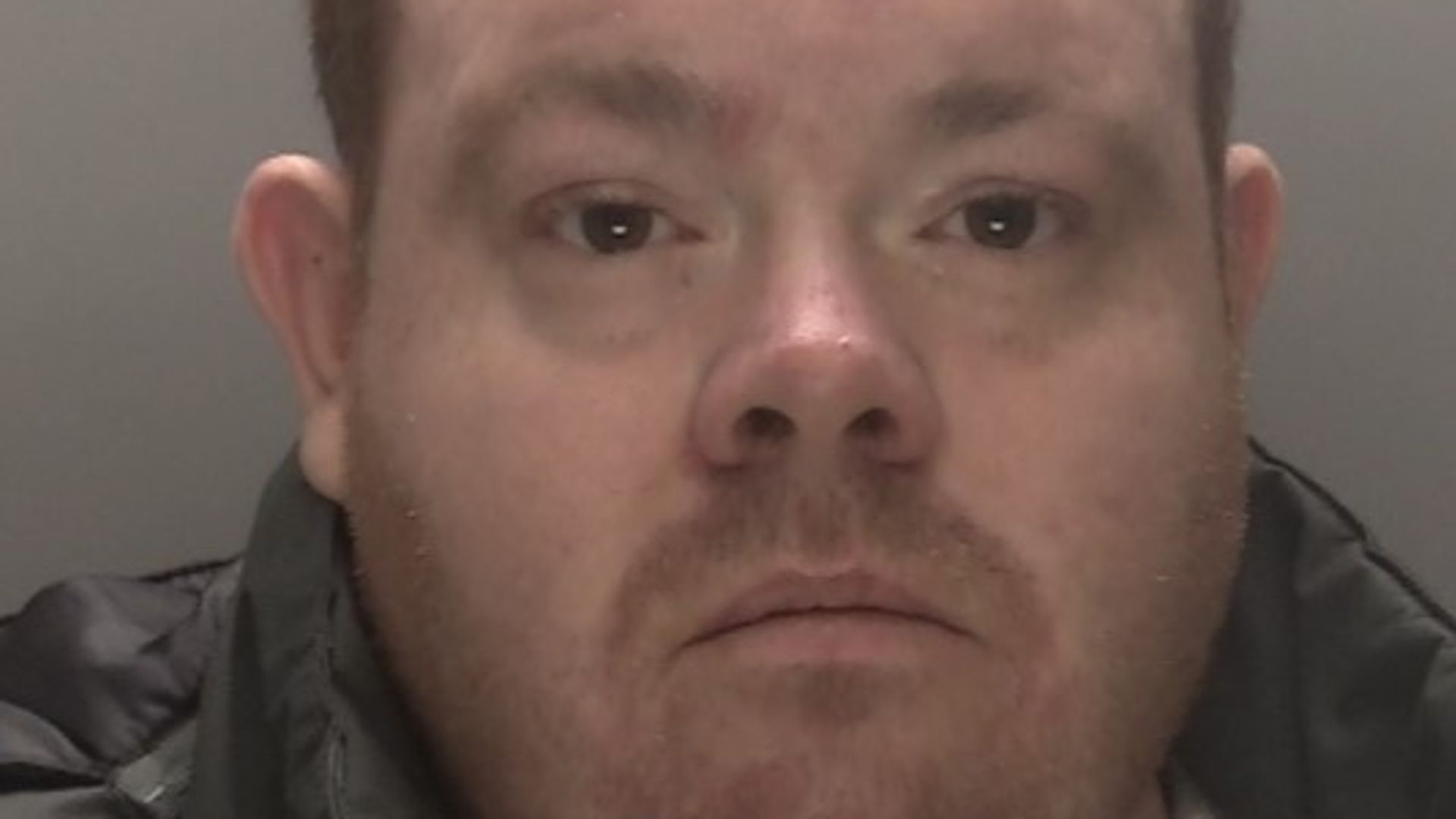
The British legal system recently collided with a case of such calculated artifice that it challenged the fundamental assumptions of how courts handle medical vulnerability. Alan Knight, a man who spent two years feigning a comatose state and quadriplegia to avoid prosecution for fraud, set a precedent for a particular brand of forensic performance. But a more recent case involving a predatory offender who adopted the persona of a mute, wheelchair-bound victim to evade justice highlights a deepening crisis. It reveals a structural weakness in how the Crown Prosecution Service and the courts balance the duty of care for the infirm with the cold reality of criminal manipulation. This wasn't just a man trying to hide his crimes; it was a man weaponizing the very empathy that defines a civilized society.
The Mechanics of a Long Con
Criminals have long used health as a shield. Usually, this manifests as a "sudden" chest pain during an arrest or a vague mental health crisis during sentencing. However, the case of the offender who faked mutism and mobility issues represents a sophisticated evolution of this tactic. By refusing to speak and remaining tethered to a wheelchair, the defendant created a layer of insulation between himself and the adversarial process. It is a gamble on the patience of the state.
Investigation into these cases often reveals a trail of digital breadcrumbs that contradict the physical performance. Surveillance footage, hospital logs, and even simple grocery store recordings often provide the breakthrough. In this instance, the facade collapsed not through a medical miracle, but through the mundane reality of human habit. The offender was caught on camera performing actions that his alleged condition made impossible. This highlights a critical failure in the preliminary stages of the case. Why was the medical evidence not scrutinized with the same vigor as the forensic evidence?
The answer lies in the institutional fear of being perceived as discriminatory. When a defendant claims a profound disability, the burden shifts. The state becomes terrified of breaching human rights or causing physical harm to a vulnerable person. This creates a vacuum where a determined manipulator can exist for months, or even years, delaying the inevitable while the system wrings its hands over the ethics of a forced medical evaluation.
The Psychological Profile of Medical Malingering
Malingering is not a mental illness; it is a conscious, goal-oriented behavior. In the context of sex offenders, it serves a dual purpose. First, it provides a practical delay. Time is the greatest ally of a defendant, as witnesses move, memories fade, and public interest wanes. Second, it serves a psychological need to control the narrative. By appearing helpless, the offender attempts to rewrite the power dynamic, shifting the focus from the harm they caused to the "suffering" they are currently enduring.
The choice of mutism is particularly telling. Speech is the primary method of cross-examination. By removing the ability to speak, the defendant forces the court to rely on intermediaries, written statements, or hushed whispers. It is a passive-aggressive dominance of the courtroom. When this offender was eventually jailed, the court heard how his "condition" was a complete fabrication. The sheer commitment required to maintain such a ruse—remaining silent during hours of interrogation and sitting motionless during multiple hearings—suggests a level of sociopathic discipline that makes the underlying crimes even more concerning.
Flaws in the Medical Gatekeeping System
We must look at the clinicians who are dragged into these charades. Often, a general practitioner or a hospital doctor is asked to provide a note based on a brief observation. They are trained to believe patients. The medical profession operates on a foundation of trust; the legal profession operates on a foundation of skepticism. When these two worlds meet, the criminal finds the gap.
Doctors are rarely forensic experts. They see a man in a wheelchair who doesn't speak, and they document "a man in a wheelchair who doesn't speak." They do not necessarily look for the muscle tone that suggests recent walking or the neurological inconsistencies that mark a fake. The court then accepts this documentation as a verified fact rather than a subjective observation.
To fix this, the judiciary requires a dedicated unit of forensic medical evaluators who are specifically trained to spot malingering. These shouldn't be the same doctors who provide therapeutic care. There needs to be a "red team" approach to high-stakes medical claims in the dock. Without it, we are essentially allowing the defendant to set the rules of their own trial.
The Cost of Empathy Weaponization
The most damaging aspect of this case isn't the delay in justice, though that is significant. It is the long-term erosion of trust for genuinely disabled people within the legal system. Every time a "fake" wheelchair user is unmasked, the skepticism toward the next person—who may truly be suffering—increases. This offender didn't just mock the court; he endangered the rights of every disabled individual who relies on the system for protection or accommodation.
The sentencing of this individual to a significant term of imprisonment was not just a punishment for his predatory acts, but a rebuke of his attempt to defraud the court. The judge’s comments reflected a growing frustration with "performance art" in the witness box. However, a prison sentence after the fact is a reactive measure. We need a proactive filter.
Identifying the Red Flags
High-end investigative analysis of similar cases across the UK and Europe suggests three primary indicators that a disability claim might be fraudulent:
- Selectivity: The disability only appears when legal pressure is applied and vanishes or lessens in private settings.
- Medical Inconsistency: The symptoms do not follow known neurological or physiological patterns (e.g., "paralysis" that doesn't result in muscle atrophy).
- Refusal of Objective Testing: A marked resistance to undergo MRIs, nerve conduction studies, or evaluations by court-appointed independent experts.
When these three factors align, the court must be empowered to move forward regardless of the defendant’s "condition." The assumption of truth must be stripped away.
Institutional Resistance to Change
The legal community is slow to adapt. There is a "wait and see" attitude that often allows these cases to drag on for years. In the case of this specific offender, the charade lasted long enough to cause significant distress to the victims, who were forced to watch their abuser play the victim. This is a form of secondary victimization that the state is currently ill-equipped to prevent.
We see a pattern where the defense leverages the "fitness to plead" protocols to stall. If a defendant cannot communicate, they cannot be tried. It is a perfect stalemate. The solution is a legal shift that allows for "trials of the facts" to occur much sooner when malingering is suspected, rather than waiting for a medical confession that will never come.
The Forensic Evidence that Broke the Case
In the end, it was the digital tail that caught him. We live in an age of total surveillance, a fact that this offender seemingly ignored in his quest to appear infirm. The police didn't need a medical degree to solve this; they needed a CCTV technician.
Footage showed the "disabled" man walking, carrying items, and engaging in perfectly normal physical activity when he thought the world wasn't watching. This is the brutal truth of modern malingering: it is nearly impossible to maintain a 24-hour lie in a world of smart doorbells and dashcams. The prosecution's ability to play this footage in court turned the defendant's wheelchair into a prop for his own conviction.
Impact on Victim Recovery
For the victims of this predator, the "mute" act was an additional layer of trauma. It suggested that even in the hands of the law, the offender held the power. He could choose when to speak, how to move, and how the trial would proceed. Breaking that power dynamic was essential for any semblance of justice. The moment the offender was forced to stand and face his sentence, the illusion of his control was finally shattered.
The judicial system must now decide if it will continue to be a reactive body or if it will develop the "forensic teeth" necessary to bite through these deceptions early on. We cannot afford to have the courtroom turned into a theater for the sociopathic.
The next time a defendant rolls into court in a brand-new wheelchair, refusing to utter a word, the question shouldn't be "How can we accommodate this?" The question must be "Where is the evidence that this is real?" Anything less is an insult to the victims and a gift to the guilty.
Demand that the Ministry of Justice implement mandatory independent forensic audits for any defendant claiming a total loss of speech or mobility that was not present at the time of the offense.