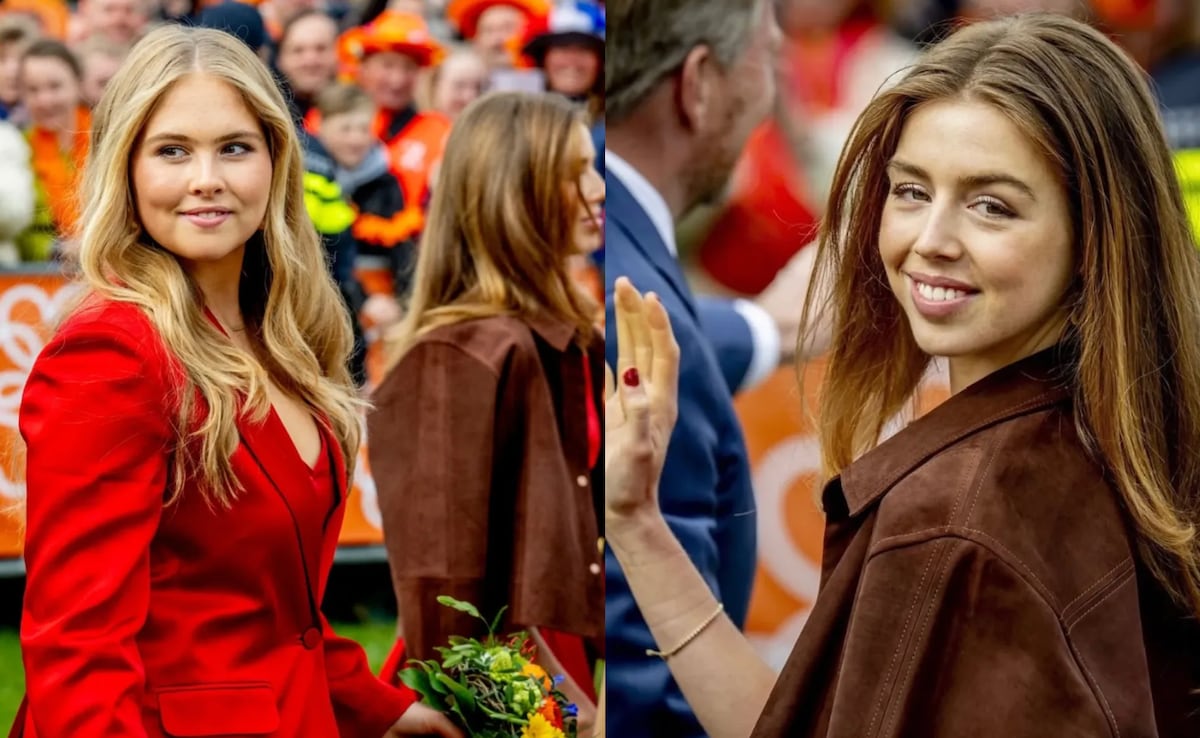
Dutch security forces aren't taking any chances. When you hear about "Nazi" murder plots targeting a royal house, it sounds like a bad historical thriller or some fringe internet fever dream. But for the House of Orange-Nassau, the reality is far more grim. Recent reports have surfaced regarding chilling, extremist threats directed at the Dutch Princesses—Amalia, Alexia, and Ariane. This isn't just about a few angry tweets. We're talking about organized, ideology-driven hatred that has forced the most prominent young women in the Netherlands to live under a level of surveillance that would break most people.
Security experts and Dutch intelligence (AIVD) have been on high alert because these threats don't exist in a vacuum. They're tied to a rising tide of far-right extremism and organized crime that sees the monarchy as a symbolic target. Princess Amalia, the heir to the throne, has already had her life turned upside down. She had to move out of her student housing in Amsterdam and move back into the palace because the risk of kidnapping or an attack was deemed too high. It’s a total mess.
Why the Nazi Imagery is Being Used Now
It's tempting to think of Nazi rhetoric as a relic of the 1940s. It isn't. Radicalized groups use this specific brand of "blood and soil" ideology to intimidate those they view as figureheads of a modern, liberal state. By targeting the Dutch Princesses with Nazi-themed threats, these groups are trying to signal a "cleansing" or a violent reset of the national identity. It’s psychological warfare meant to rattle the core of Dutch society.
The "bloodbath" rhetoric mentioned in recent leaks isn't just colorful language. It’s a direct reference to the violent overthrow of established order. Security analysts believe these threats often come from a cocktail of neo-Nazi accelerationism and "Mocro Maffia" interests. That's a weird, dangerous overlap. On one hand, you've got the ideological extremists who hate the monarchy for what it represents. On the other, you've got high-level drug cartels who want to destabilize the government to make their own operations easier. When these two worlds collide, the threat level spikes.
The Heavy Price of Protection
Imagine being 20 years old and unable to walk to a cafe without a tactical team. That's Amalia's life. The Dutch royal family has always tried to maintain a "down-to-earth" image. You’ve probably seen the photos of King Willem-Alexander or Queen Máxima riding bikes like normal citizens. That era is effectively over for the daughters.
The sheer cost of this security is staggering. We're talking millions of euros annually to maintain a protective bubble around three young women. This includes:
- Constant 24/7 armed escorts.
- Advanced cyber-surveillance to track extremist forums.
- Armored transport for even the shortest trips.
- Frequent sweeps of university buildings and public spaces.
It’s a claustrophobic way to live. Princess Amalia has been remarkably candid about it, admitting in interviews that she misses the "normal" life of a student. She's essentially a prisoner of her own status because some people have decided her existence is an affront to their twisted ideology.
Organized Crime and the Royal Connection
You can't talk about these threats without talking about Ridouan Taghi. While the "Nazi" angle is the one that grabs headlines because of its sheer vileness, the background noise of organized crime is just as loud. For years, the Dutch authorities have been battling the so-called "Mocro Maffia." This isn't your grandfather’s mob. They’re tech-savvy, incredibly violent, and they don’t care about the traditional "unspoken rules" of crime.
In 2022, rumors swirled that Taghi’s organization was plotting to kidnap or attack Princess Amalia. While Taghi has denied this from his high-security cell, the government isn't taking his word for it. The Nazi-themed threats might be coming from a different corner of the dark web, but the result is the same: the Princesses are in the crosshairs. It creates a multi-front security nightmare where the state has to defend against both ideological terrorists and cold-blooded narco-terrorists at the same time.
How the Netherlands is Fighting Back
The Dutch government hasn't just sat back and watched. They’ve beefed up the DKDB (the Royal and Diplomatic Security Service). They’re also coordinating more closely with international agencies like Interpol and Europol. You don't stop a Nazi-themed murder plot by just putting more guards at the gate. You stop it by infiltrating the digital basements where these people hang out.
They’re using sophisticated data mining to identify "lone wolf" actors who might be inspired by this rhetoric. The scary part is that it only takes one person to act on a "bloodbath" manifesto. The intelligence community calls this "stochastic terrorism"—where mass media or internet rhetoric demonizes a target so much that an attack becomes statistically likely, even if the leaders didn't give a direct order.
The Symbolism of the Dutch Monarchy
Why them? Why not a politician? Well, politicians come and go. The monarchy represents the "long game" of Dutch history. For a neo-Nazi or an anarchist, the House of Orange is the ultimate "boss level" target. If you can strike at the Princesses, you aren't just hurting a family; you're wounding the national psyche.
The Dutch Princesses—Amalia, Alexia, and Ariane—represent the future. By targeting the youth of the royal house, these extremists are trying to say that the future doesn't belong to the current democratic system. It's a disgusting tactic, but it's effective at spreading fear. It’s also why the public's reaction has been so protective. There's a general sense of "leave the kids alone," even among those who aren't particularly fond of the monarchy as an institution.
Real World Implications for Global Royals
This isn't just a Dutch problem. Look at the UK, Spain, or Sweden. Every royal house is watching this play out with a knot in their stomach. The "Nazi" plot in the Netherlands serves as a blueprint for what could happen elsewhere. It shows that the traditional boundaries of security are no longer enough.
In the past, you worried about a stray protester throwing an egg. Now, you worry about a coordinated strike from an underground cell using encrypted comms and military-grade planning. The threat landscape has shifted from "annoyance" to "existential."
Living with the Threat
The Princesses are trying to carry on. Amalia has continued her studies, albeit under a heavy veil of security. Alexia and Ariane are also navigating their teens and early twenties with the knowledge that there are people out there who wish them harm for things they can't control. It takes a certain kind of grit to keep smiling for the cameras when you know your security detail is scanning every rooftop for a sniper.
The Dutch public remains largely supportive, though there's a growing debate about how much transparency the government owes the taxpayers regarding these threats. Some argue that being too open just gives the extremists the attention they crave. Others say we need to know the true cost of keeping the monarchy safe in a radicalized world.
If you're following this story, the best thing you can do is look past the sensational "bloodbath" headlines and recognize the human cost. These are young women trying to find their footing in a world that feels increasingly hostile.
For those interested in the safety and security of public figures, stay updated on official reports from the AIVD. Don't fall for every conspiracy theory you see on X or Telegram. The real story is often buried in the court documents and the quiet, professional movements of the security teams who keep the Princesses safe every single day. Keep an eye on the upcoming legislative changes in the Netherlands regarding domestic terrorism; those will be the real indicators of how serious the government thinks this threat has become.