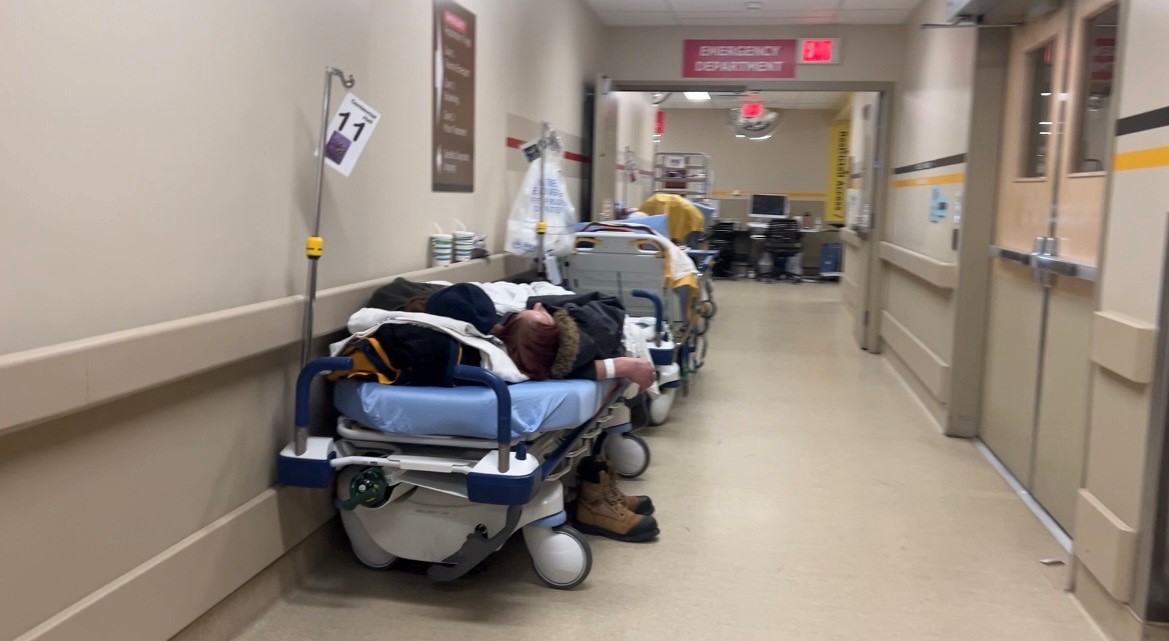
You’re doubled over on the bathroom floor. It feels like a serrated knife is twisting in your gut. When you finally crawl into a doctor’s office, desperate for help, they look at your chart, look at your face, and ask if you’ve been "stressed lately." This isn't just a bad medical encounter. It’s a systemic failure. For decades, millions of women have been told their excruciating period pain is actually just a side effect of generalized anxiety or a "low pain threshold."
It’s a lie.
The reality is that debilitating menstrual pain—the kind that makes you vomit, faint, or miss work—is almost never "just stress." We’re seeing a massive gap between clinical research and frontline primary care. While science has identified clear inflammatory markers and structural conditions like endometriosis and adenomyosis, the "it’s all in your head" narrative persists. It’s easier to prescribe an SSRI or a yoga class than it is to perform a diagnostic laparoscopy or a deep-dive hormonal panel.
The Gaslighting Gap in Modern Medicine
Medical gaslighting isn't a buzzword. It’s a documented phenomenon where healthcare providers dismiss a patient’s physical symptoms as psychological. When it comes to pelvic pain, this happens at an alarming rate. Research published in journals like Human Reproduction shows that it takes an average of seven to ten years for a woman to receive an accurate endometriosis diagnosis.
Why the delay? Because the first five years are usually spent being told that "periods are supposed to hurt" or that "anxiety is making you hyper-focused on your body."
When a doctor attributes physical agony to anxiety without ruled-out testing, they're reversing the cause and effect. Chronic pain causes anxiety. It’s exhausting to live in a body that feels like a war zone. Of course you’re anxious—you’re waiting for the next flare-up that will ruin your week. But the anxiety is the symptom, not the source.
Why the Nervous System Gets Blamed
There’s a kernel of truth that doctors hide behind. The nervous system is connected. Stress can indeed make you perceive pain more intensely because cortisol levels affect your inflammatory response. However, using this as a primary diagnosis for "excruciating" pain is lazy medicine.
If a man walked into an ER with a kidney stone, no one would ask him if he’s had a tough week at the office before ordering a scan. Yet, with dysmenorrhea (the medical term for painful periods), the psychological evaluation often comes before the physical one. This creates a dangerous environment where life-altering conditions grow untreated while patients doubt their own sanity.
The Real Culprits Doctors Miss
If it’s not anxiety, what is it? Usually, it’s one of several concrete, physical conditions that don’t show up on a standard five-minute pelvic exam. You have to know what to ask for because, frankly, many GPs aren't looking for these things unless you push.
Endometriosis
This is the big one. It’s where tissue similar to the lining of the uterus grows elsewhere—on the ovaries, the bowel, or even the diaphragm. It creates its own internal bleeding and scar tissue. You cannot see "endo" on a regular ultrasound most of the time. It requires a specialist.
Adenomyosis
Often called the "sister" to endometriosis, this happens when the uterine lining grows into the muscular wall of the uterus. It makes the uterus heavy, hard, and incredibly painful. It’s often misdiagnosed as fibroids or, you guessed it, psychosomatic pain.
PCOS and Hormonal Imbalances
Polycystic Ovary Syndrome isn't always about cysts. It’s about a hormonal "storm" that can lead to heavy, painful cycles. If your doctor hasn't checked your testosterone, fasting insulin, and DHEA-S, they haven't finished the job.
Pelvic Floor Dysfunction
Years of guarding your body against period pain can cause the muscles of the pelvic floor to stay in a permanent state of contraction. This creates a feedback loop of pain that feels like a dull, constant ache. It’s physical. It’s structural. It can be fixed with physical therapy, not "calming down."
How to Fight Back in the Exam Room
You shouldn't have to be a litigator to get healthcare, but here we are. If you’re being told your pain is anxiety, you need to change the conversation immediately. Don't play nice. Don't minimize your symptoms to make the doctor feel comfortable.
- Bring a Pain Diary
Don't just say "it hurts." Bring data. "On day two of my cycle, I used six overnight pads, vomited twice, and my pain was an 8/10 despite taking 800mg of Ibuprofen." It’s much harder to blame anxiety when faced with cold, hard numbers. - The "Differential Diagnosis" Move
Ask this specific question: "What else could this be besides anxiety, and how are we ruling those things out today?" This forces the provider to think through a list of physical possibilities. - Request the Refusal be Documented
If a doctor refuses to order an ultrasound or refer you to a specialist, say: "I’d like you to note in my chart that I requested a referral for pelvic pain and you are denying it because you believe the cause is psychological." Watch how fast they change their mind. They don't want that liability on paper.
Finding the Right Specialist
A regular OB-GYN is great for pap smears and birth control. They are often out of their element with complex chronic pain. You need a MIGS (Minimally Invasive Gynecologic Surgery) specialist or a reproductive endocrinologist. These experts spend their entire day looking at the "invisible" causes of period pain.
Moving Toward Real Recovery
Stop apologizing for your body. If your pain prevents you from living your life, it is pathological. It is not a character flaw, and it isn't a sign that you’re "stressed."
Start by finding a provider who uses the term "multidisciplinary." This means they look at your hormones, your surgery options, and your physical therapy needs all at once. If the first thing they hand you is a prescription for an antidepressant without doing an internal ultrasound, walk out.
Your next step is to get a copy of your recent bloodwork. Look at your inflammatory markers like CRP (C-Reactive Protein). If they’re high, you have physical inflammation. Take those results to a specialist who actually listens. You know your body better than anyone with a lab coat. Trust that instinct over their dismissal. Look for an excision specialist through networks like Nancy's Nook or the Endometriosis Foundation of America. They keep databases of doctors who actually understand that "anxiety" is a lazy excuse for a missing diagnosis.
Demand the imaging. Demand the bloodwork. Demand to be heard.