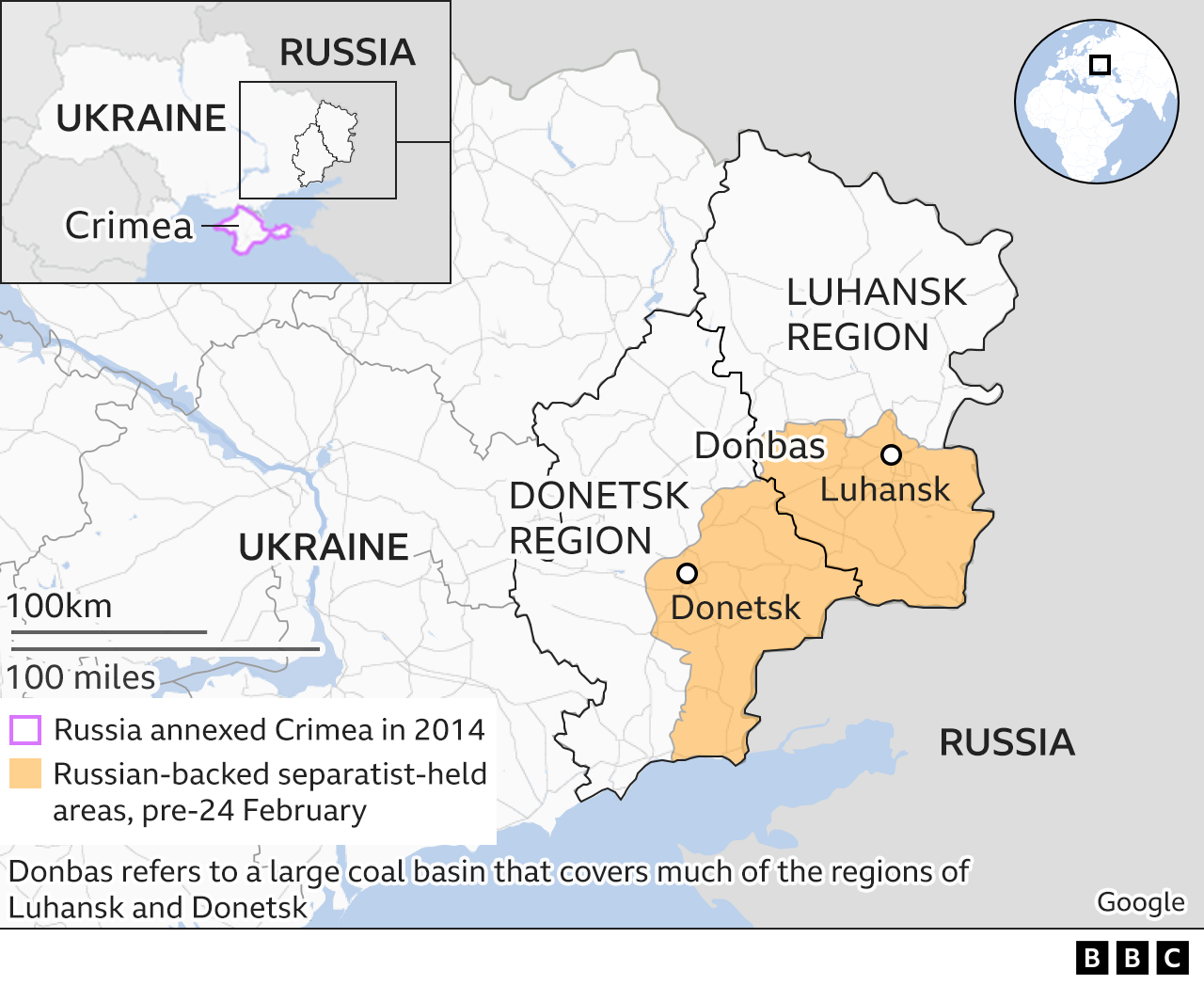
The mainstream media is currently obsessed with the Kremlin’s latest "yesterday" deadline for Ukrainian withdrawal from the Donbas. They treat it like a diplomatic blunder or a moment of unhinged aggression. They are missing the math. When Dmitry Peskov says Ukraine should have left 24 hours ago, he isn't just posturing for a domestic audience or trying to rattle Kyiv. He is signal-jamming the very concept of "territory for peace."
Stop looking at the map through the lens of 20th-century sovereignty. Start looking at it as a hostile takeover where the "buyer" has already moved the furniture into the house and is now charging the "seller" for the privilege of leaving.
The Myth of the Negotiating Table
Western analysts keep waiting for a "pivotal" moment where both sides sit down and draw lines on a piece of paper. That reality died in 2022. What we are seeing now is the erasure of the buffer zone. The Kremlin’s demand for an immediate pull-out is a tactical move to devalue Ukraine's greatest remaining asset: time.
In any high-stakes restructuring, the party with the most liquid assets dictates the pace. Russia has shifted its economy into a war footing that functions more like a grim, perpetual-motion machine. Ukraine, conversely, is operating on a subscription model funded by the West. By demanding a withdrawal "yesterday," Moscow is telling the "subscribers" that their investment is already a sunk cost.
It is a psychological liquidation.
Sovereignty is No Longer the Primary Currency
The "lazy consensus" suggests this war is about borders. It isn't. It's about the total degradation of the neighbor's ability to exist as a functional economic competitor.
If you look at the industrial heartland of the Donbas, you see more than just coal mines and steel plants. You see the backbone of what made Ukraine a viable state. By demanding a total exit now, the Kremlin isn't looking for a "win" in the traditional sense; they are seeking a permanent foreclosure.
I’ve watched venture capitalists strip companies to the bone, selling off the intellectual property and leaving the shell to rot. This is the geopolitical version of that. Russia doesn't need to govern a thriving Donbas. It just needs to ensure that Ukraine can never use it again.
Why the Yesterday Deadline is Pure Logic
Critics call the "yesterday" comment absurd. It’s actually the most honest thing Peskov has said in months.
In a standard conflict, you negotiate for what you might get. In a war of attrition, you "negotiate" for what you have already taken. By setting a deadline in the past, Russia is attempting to reset the baseline of reality.
- Baseline A: Negotiate from the current line of contact.
- Baseline B: Treat the current line of contact as an administrative error that should have been corrected "yesterday."
If you accept the premise of Baseline B, you have already lost the negotiation before it begins. You are no longer arguing about where the border is; you are arguing about how much of a penalty you owe for still being there.
The Strategic Failure of Incrementalism
The West’s strategy has been one of "calibrated escalation." It’s a term used by people who have never had to manage a crisis on the ground. Calibrated escalation is just a fancy way of saying "too little, too late."
Every time a new weapons system is debated for six months, the value of that system drops. By the time the tanks or the jets arrive, the "yesterday" deadline has moved. Russia is moving at the speed of a command economy; the West is moving at the speed of a committee.
Imagine a scenario where a CEO waits for a quarterly board meeting to decide whether to fight a patent infringement. By the time the board votes, the competitor has already launched the product and captured 40% of the market. That is the Donbas in a nutshell.
Dismantling the People Also Ask Nonsense
Is there a path to a ceasefire?
Only if you define a ceasefire as a permanent surrender of the industrial base. Anyone telling you there is a "middle ground" where Ukraine keeps the mines and Russia keeps the glory is selling you a fantasy.
Will Russia stop at the Donbas?
Why would they? In business, if you find a strategy that works—attrition, devaluation, and forced liquidation—you don't stop after the first acquisition. You keep going until the cost of the next acquisition exceeds the benefit. Right now, the West is making sure the "cost" is high, but they aren't making it "unaffordable."
The Attrition Trap
We need to stop talking about "stalemate." A stalemate implies a balance. This is a meat-grinder by design.
The Kremlin knows that every day the war continues, Ukraine’s demographic and economic future is being burned for fuel. They aren't just fighting soldiers; they are fighting the 2040 Ukrainian GDP. By demanding a withdrawal "yesterday," they are highlighting that every day Ukraine stays is a day they are spending capital they don't have.
The Hard Truth About Western Support
Let's be brutally honest: Western support is not designed for a Ukrainian victory. It is designed to prevent a Russian romp. This distinction is where the "yesterday" rhetoric finds its teeth.
When the goal is "not losing," you are always on the defensive. You are always reacting to the other guy's timeline. The Kremlin is set on a 10-year horizon. The West is set on a two-year election cycle. You cannot win a liquidation battle when your backers are checking the exit door every six months.
High-Stakes Gaslighting
The demand for a "yesterday" withdrawal is the ultimate form of geopolitical gaslighting. It forces the international community to engage with a reality that doesn't exist. It makes the defender look like the aggressor for simply staying in their own house.
It is a masterclass in shifting the burden of proof. Suddenly, the world isn't asking "Why did Russia invade?" they are asking "Why won't Ukraine just leave so the shipping lanes can open back up?"
The Cost of the Moral High Ground
Ukraine is holding the moral high ground, but the problem with the high ground is that it’s very expensive to maintain and offers no cover from artillery.
The "nuance" the competitor article missed is that this isn't a diplomatic standoff. It’s a market correction. Russia is attempting to "correct" the post-1991 map through a forced sale. The price is blood, and the deadline has already passed.
If you want to understand the next six months, stop reading the UN resolutions. Start reading bankruptcy filings. Look at the energy costs in Germany. Look at the grain prices in North Africa. Look at the recruitment numbers in Kyiv.
The Kremlin isn't waiting for a deal. They are waiting for the check to bounce.
Stop asking when the war will end. Start asking what will be left to govern when the "yesterday" demands become the "last year" reality.
Get off the fence. The house is already sold. The only question is how many people are still inside when the bulldozers start the engine.